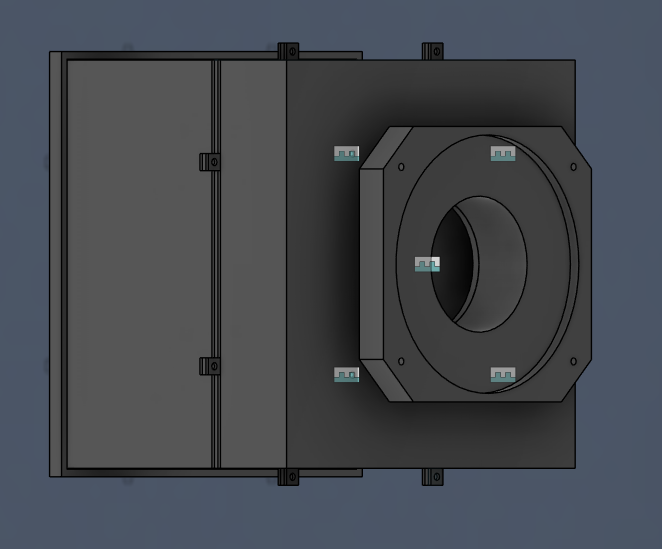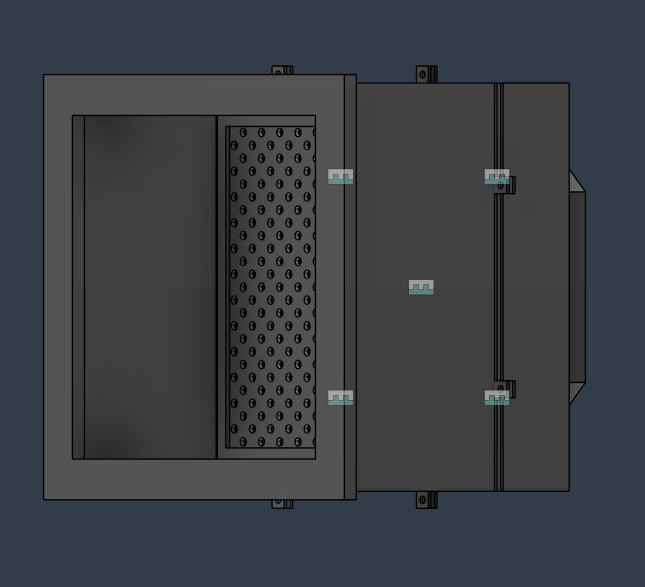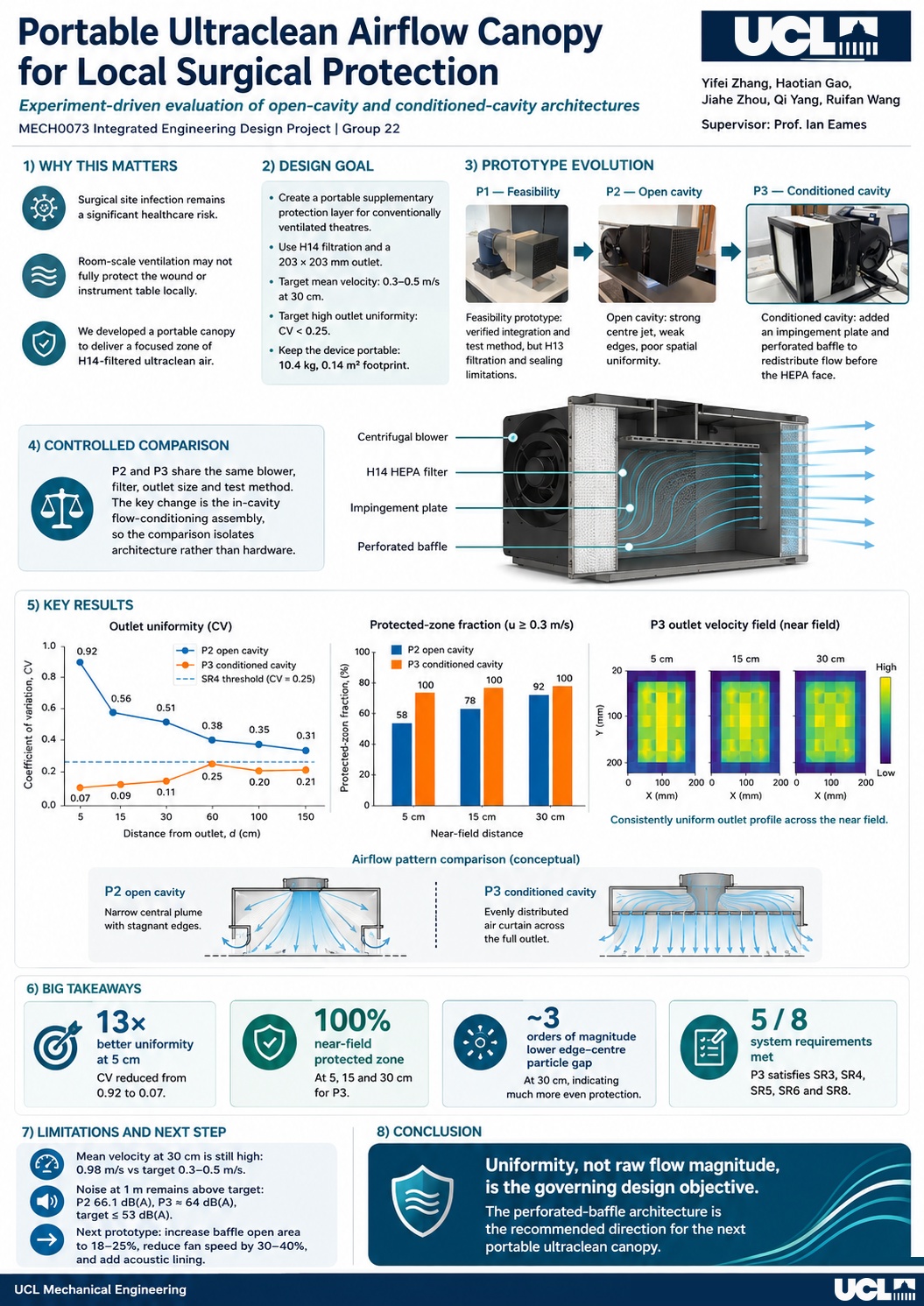
A portable, H14-filtered device that delivers a uniform, downward sheet of ultraclean air directly over the surgical field — supplementing conventional operating-theatre ventilation.
Surgical site infection (SSI) affects 2–5% of inpatient surgical procedures in high-income countries (WHO 2018). Airborne bacteria-carrying skin squames shed by theatre staff are a key transmission route.
Room-level ventilation alone cannot guarantee clean conditions at the wound — lamps, drapes, and staff create local stagnant zones right where protection matters most.
Commercial mobile devices exist, but no study has compared internal flow-conditioning architectures on the same platform. That is our gap.
Operating theatres already filter the whole room, but the air directly above the wound can still go stagnant where lamps, drapes and staff get in the way — exactly where cleanliness matters most. This device stands over the operating area and pushes a gentle, even “curtain” of medical-grade filtered air straight down onto it, keeping that spot cleaner than the room around it.
We built three prototypes to answer one question: what shape of airflow protects best? The key finding is that you don’t need a stronger fan — you need a more even flow. Our final design adds two simple plates inside the housing that spread the air out, turning a narrow central jet into a wide, uniform sheet with almost no extra weight or power.
Built to answer one question: can a portable, fan-driven, HEPA-filtered canopy produce measurable airflow?
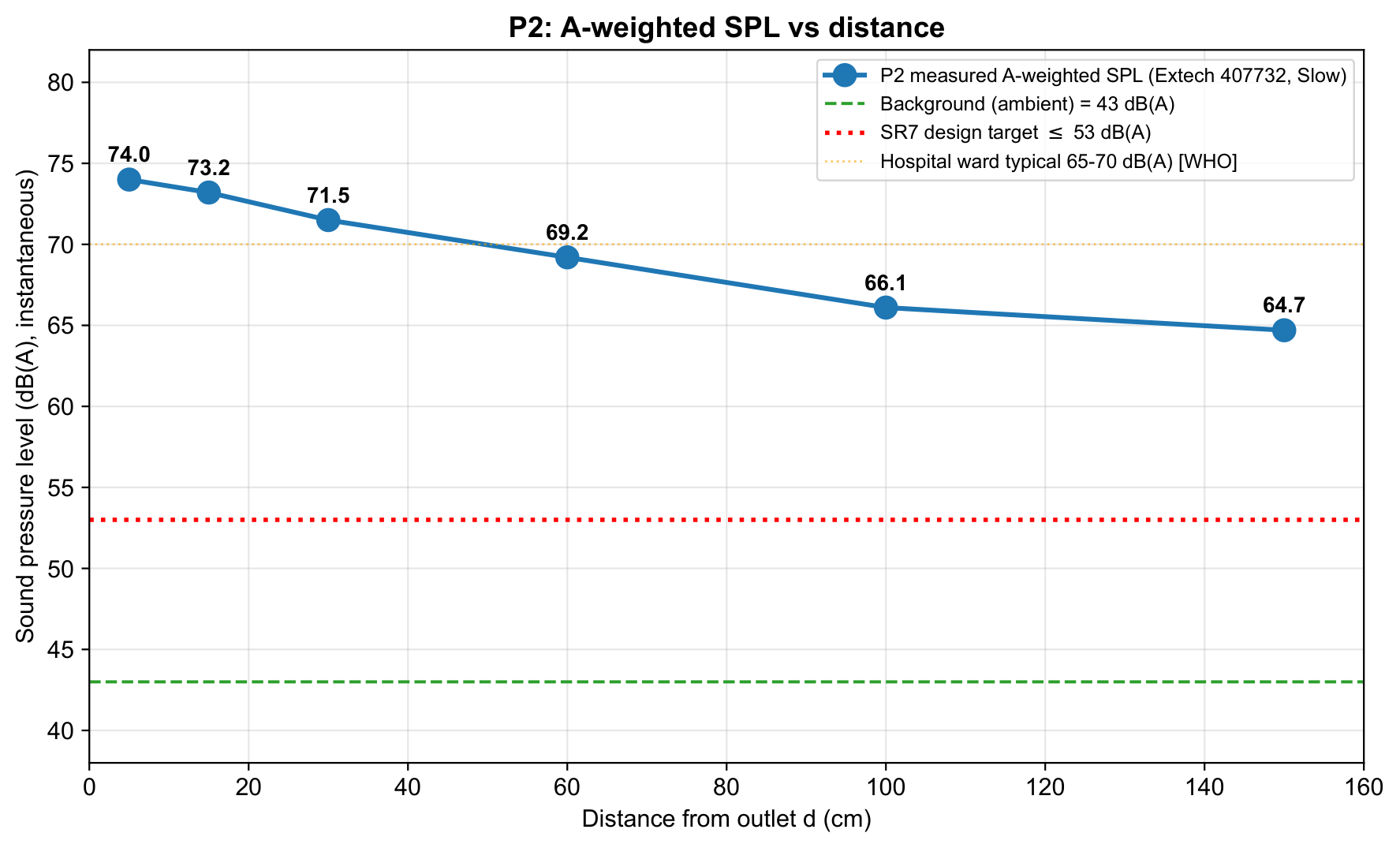
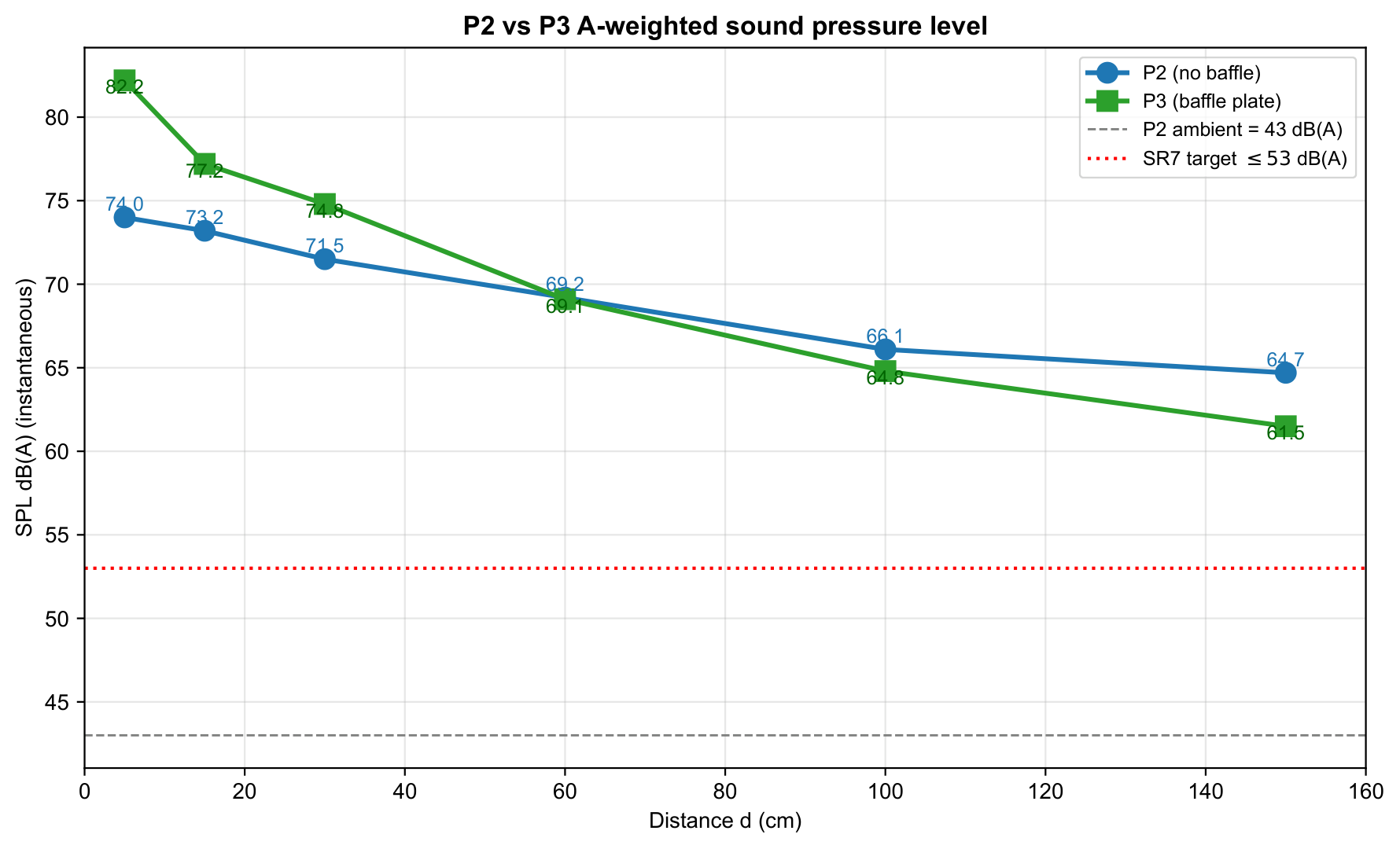
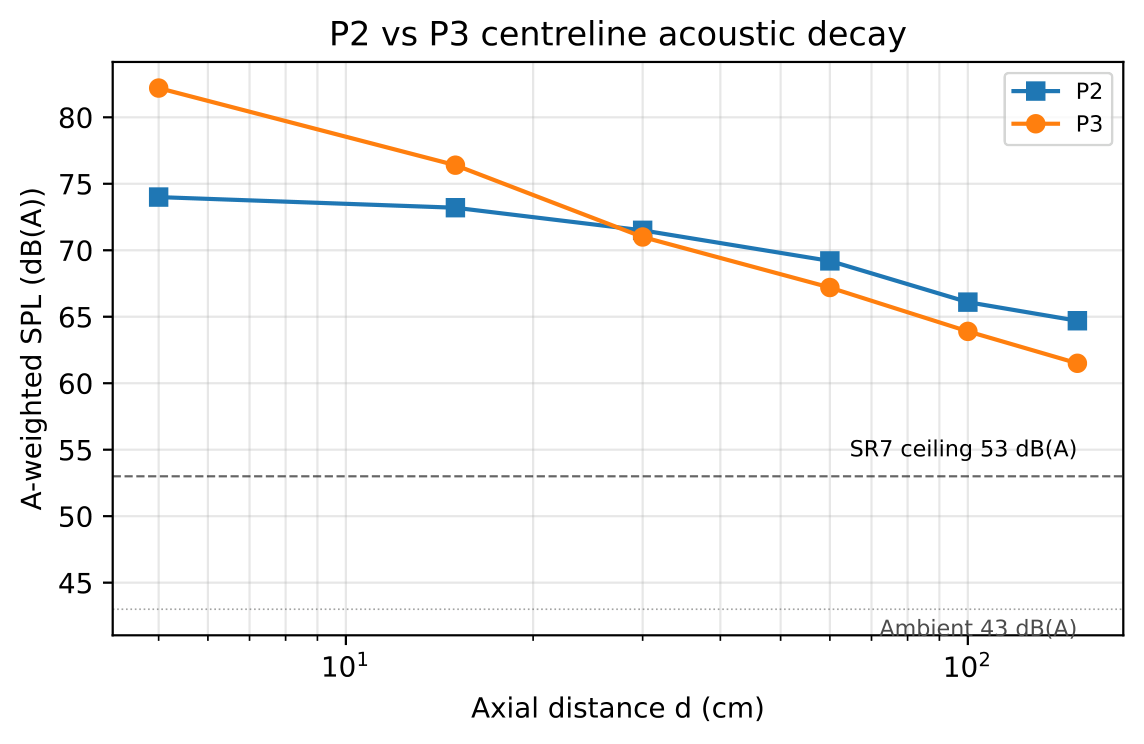
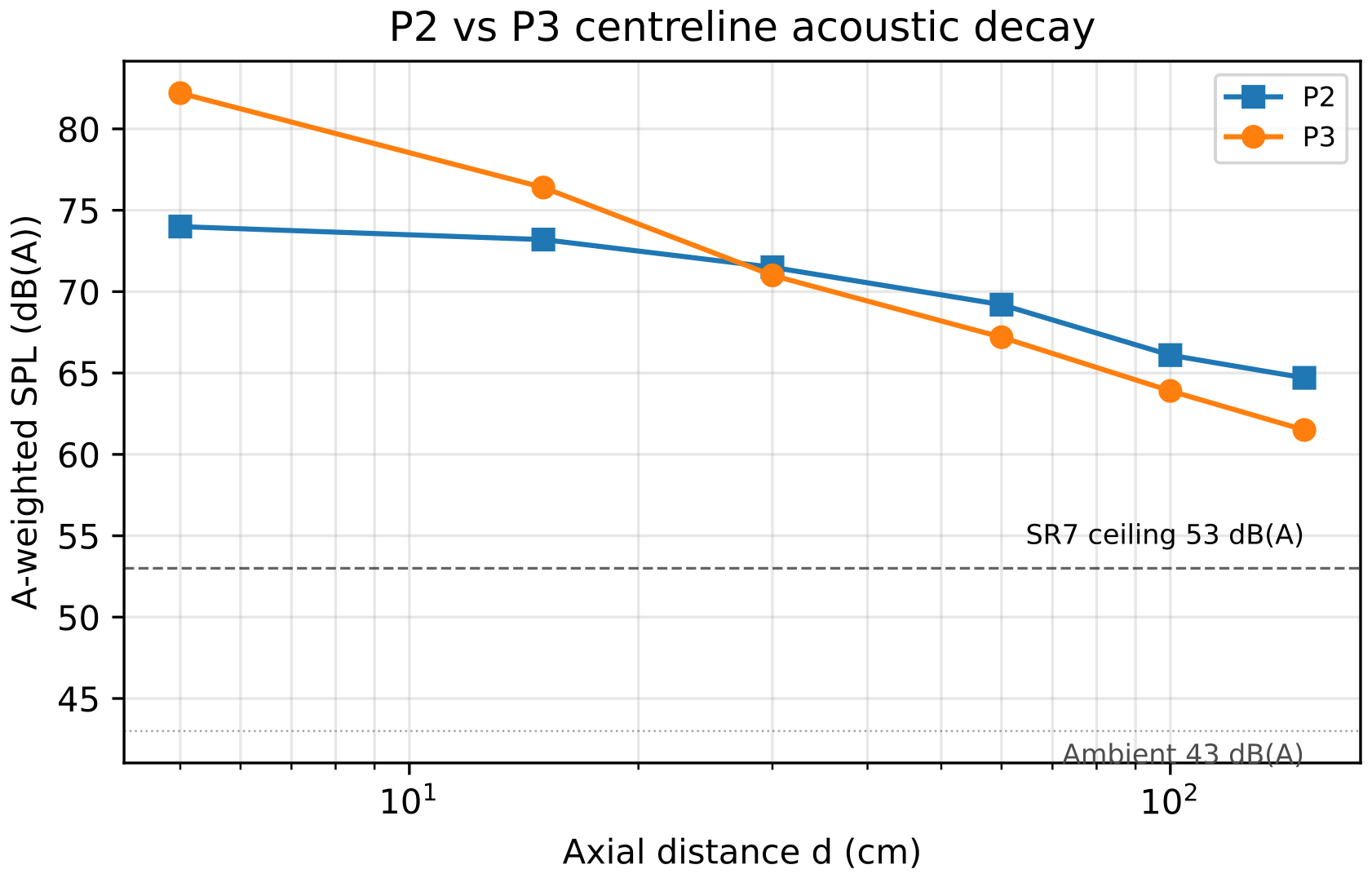
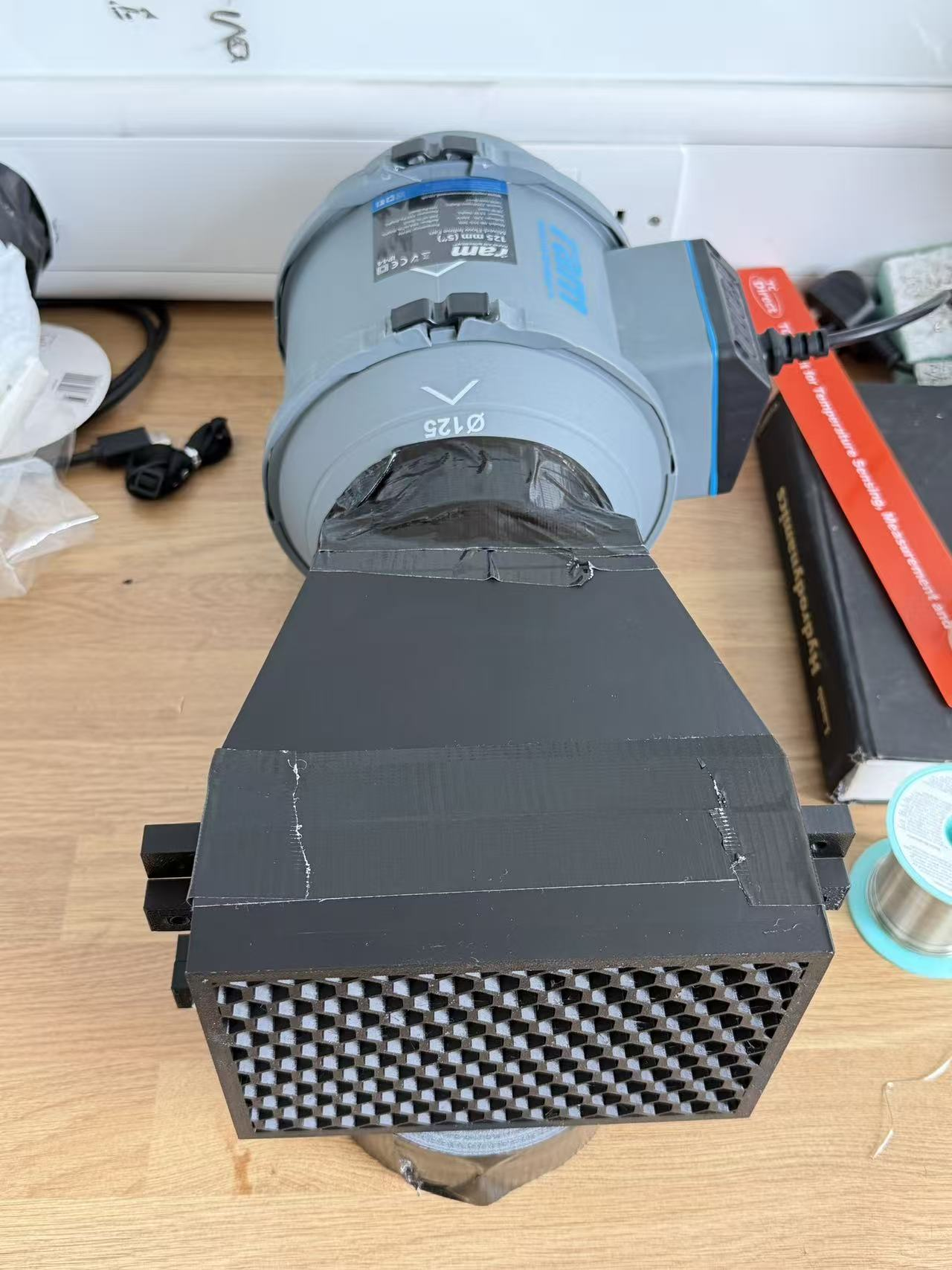
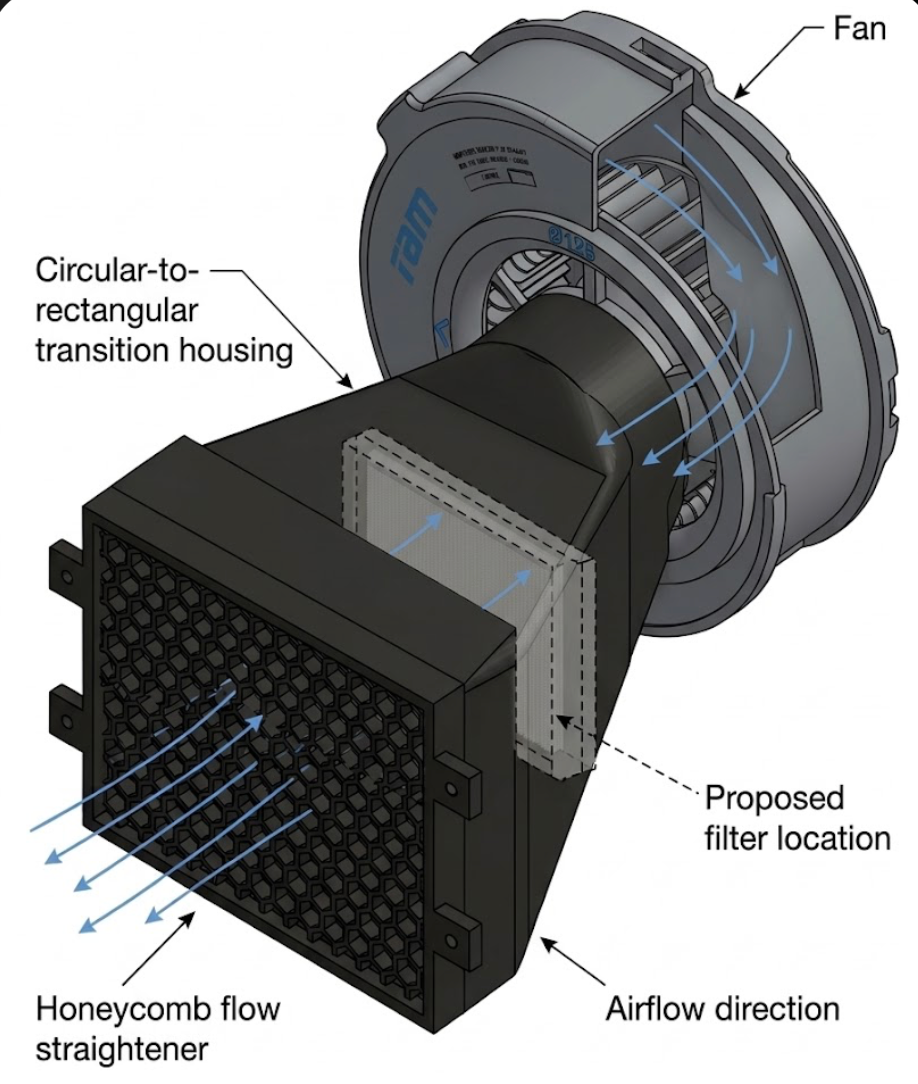
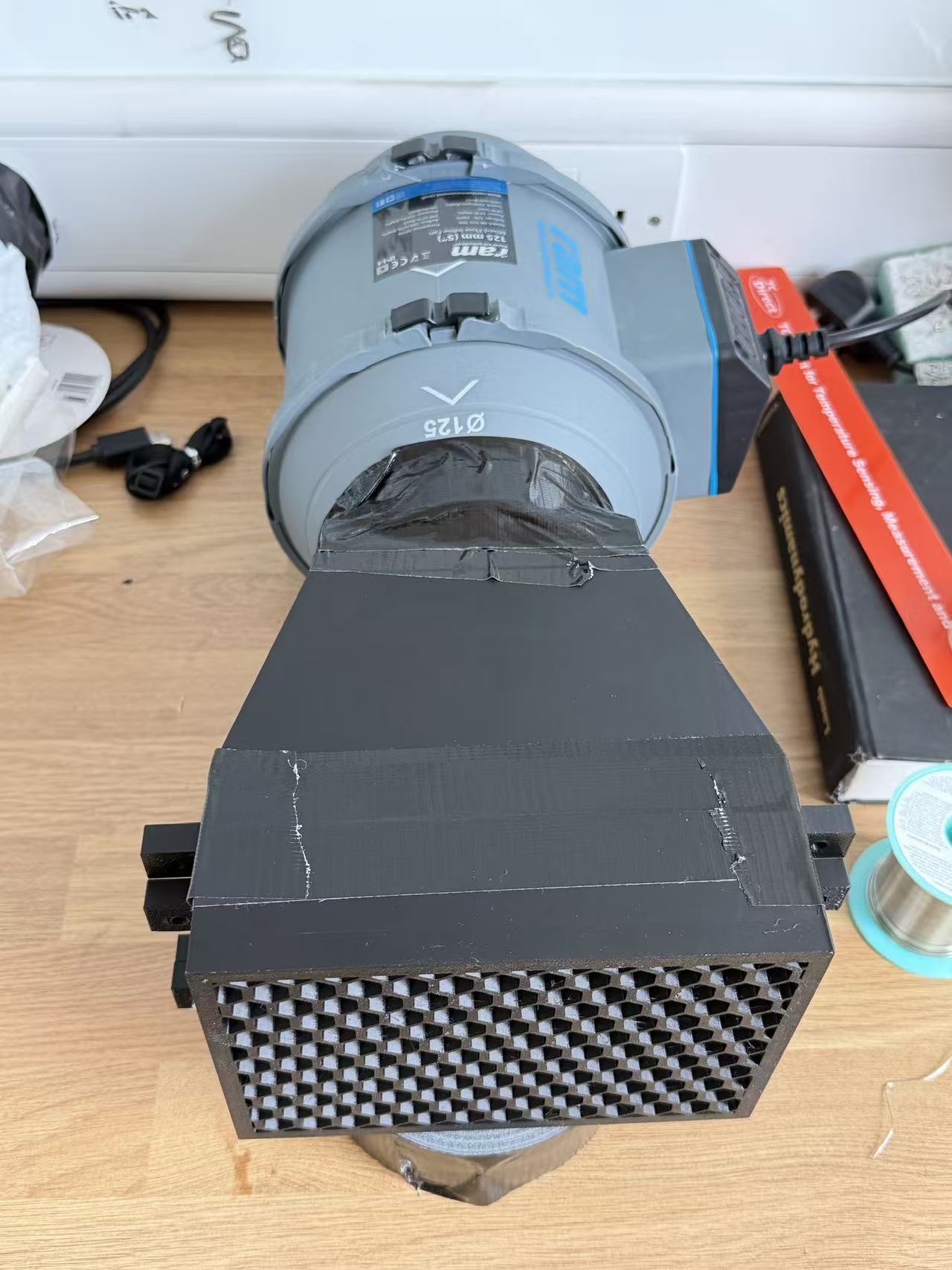
P1 used a 5-inch mixed-flow hobby fan and an H13 filter — failing the H14 specification requirement (SR3). Noise at 60 dB(A) exceeded the SR7 ceiling. The concept was validated, but critical hardware limitations were identified.


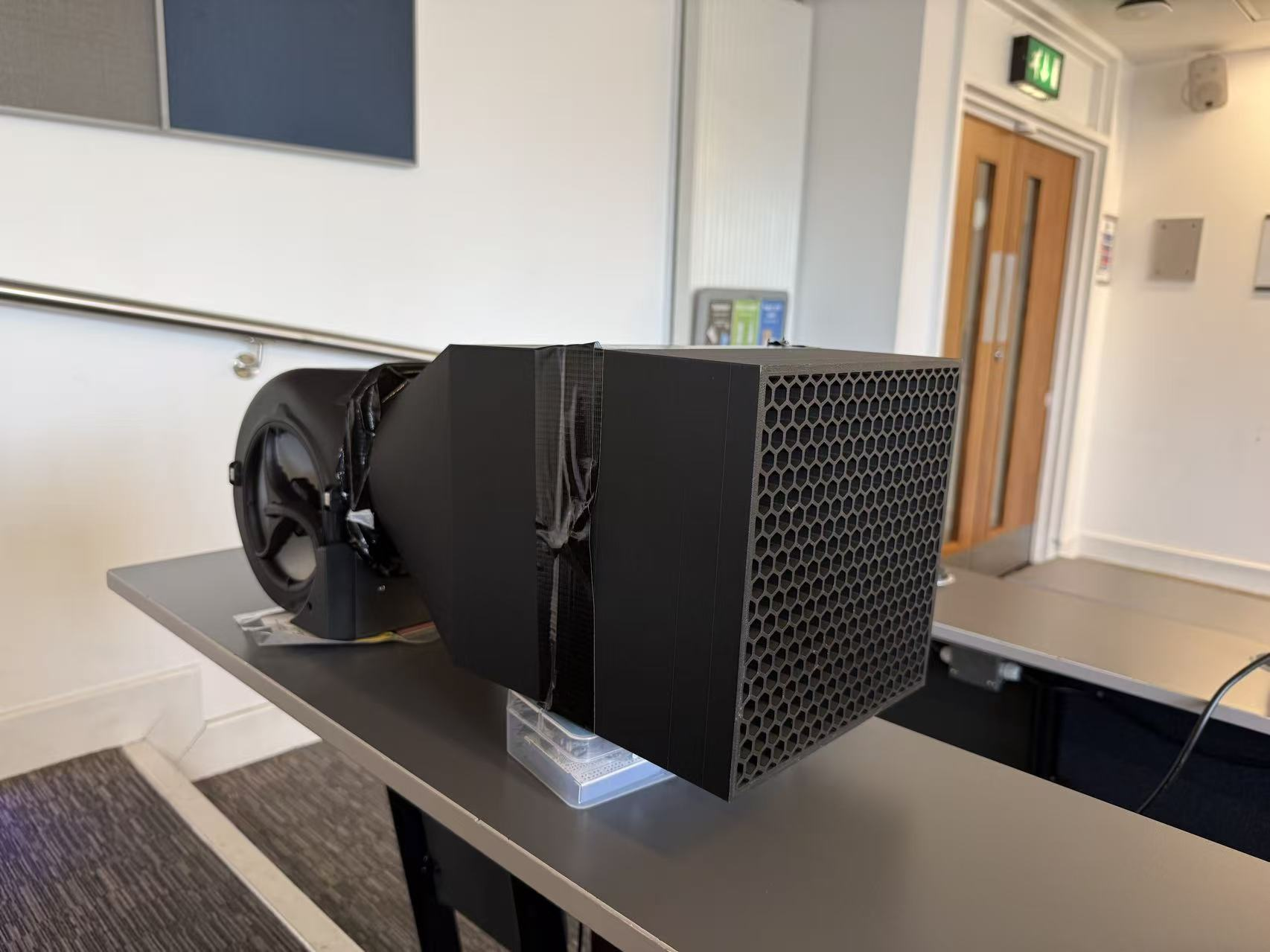
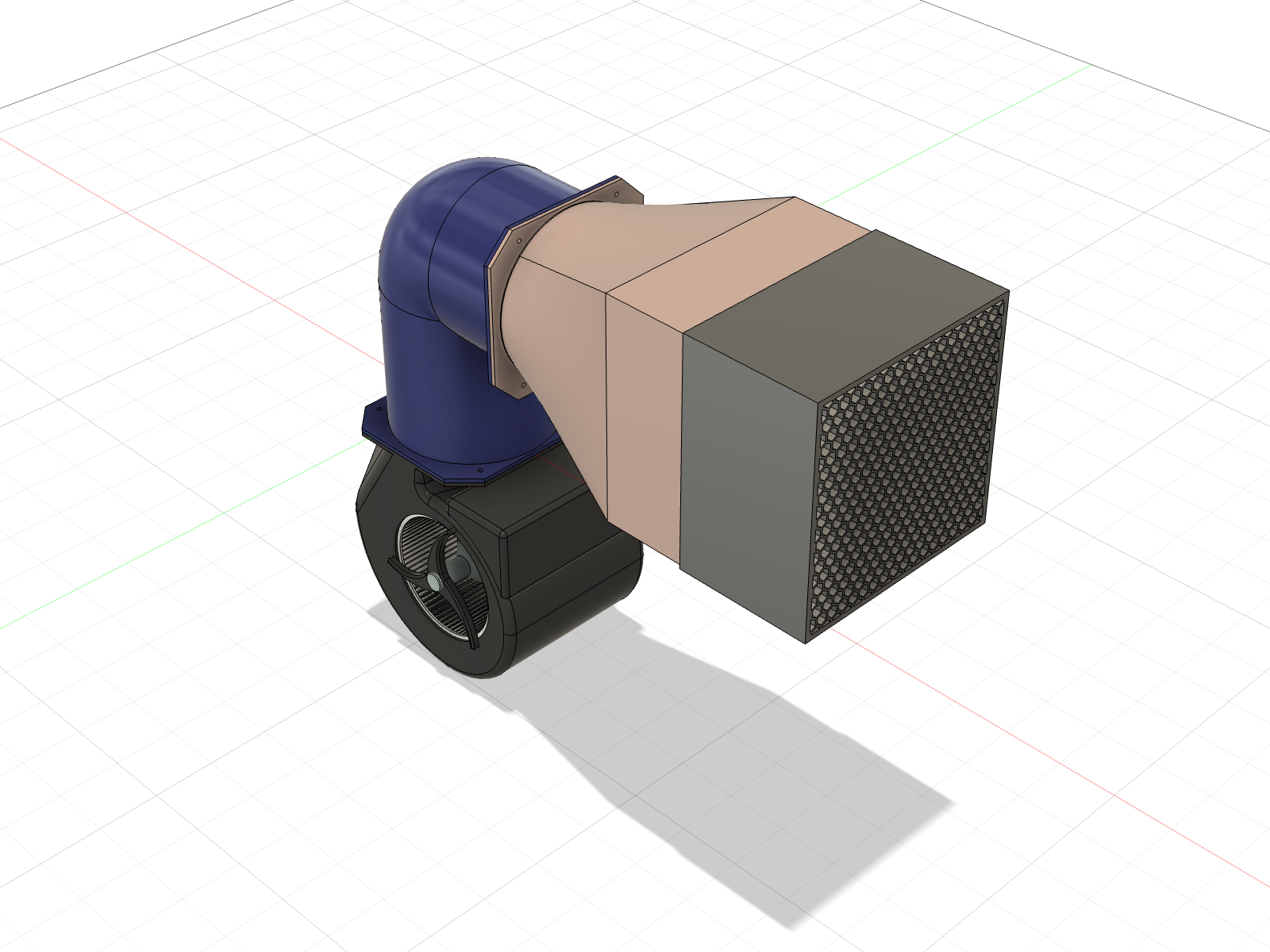
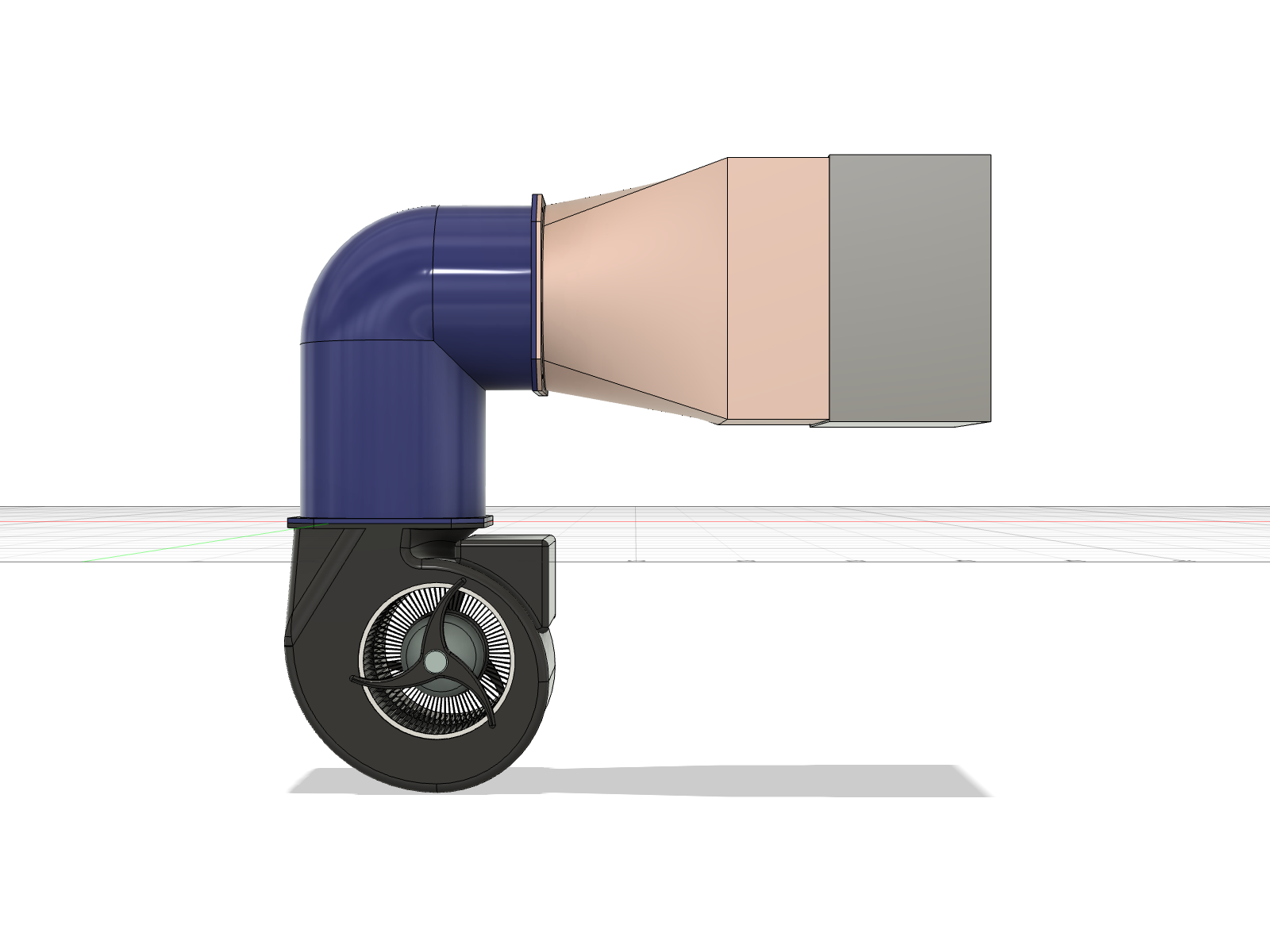
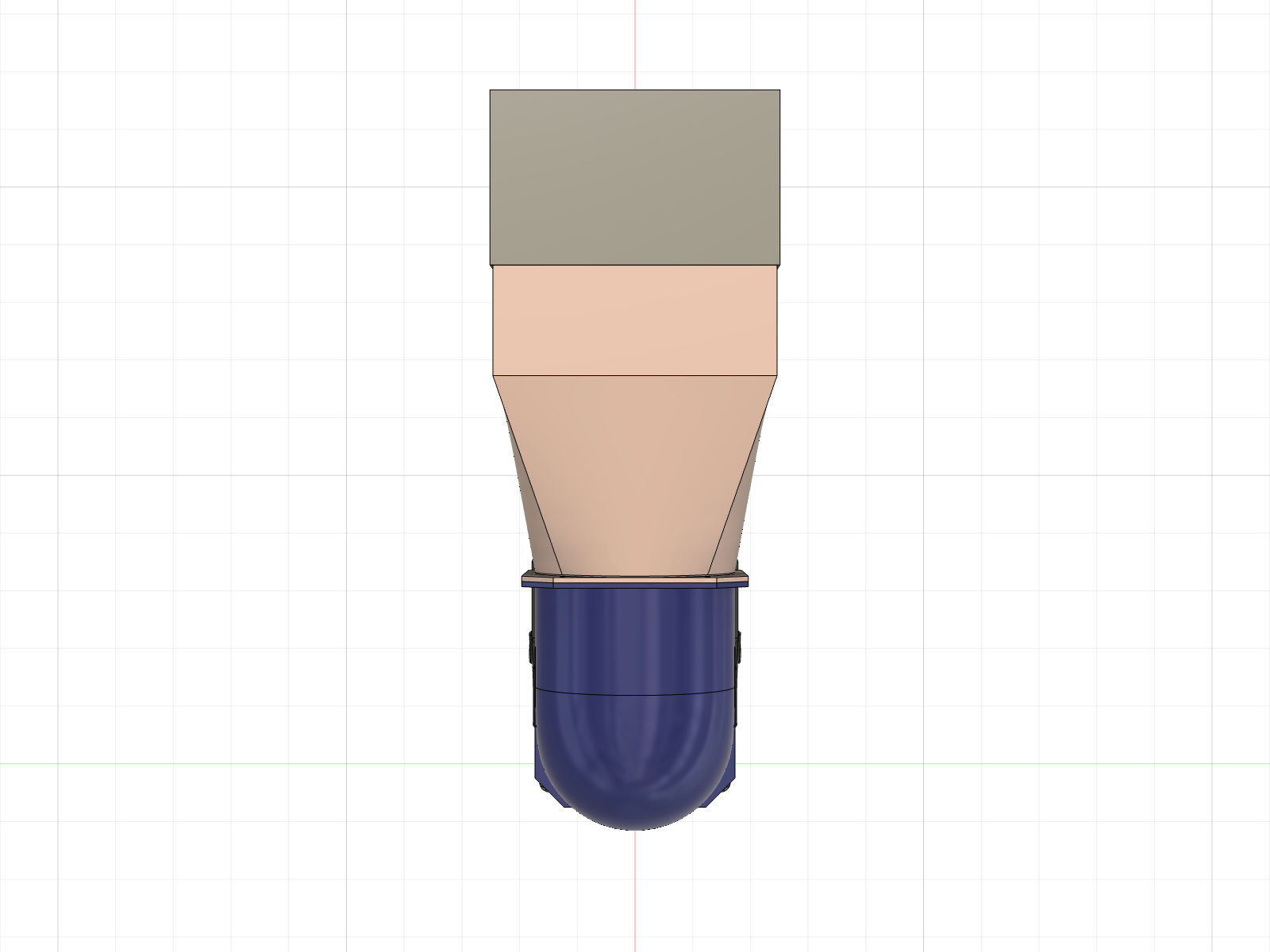
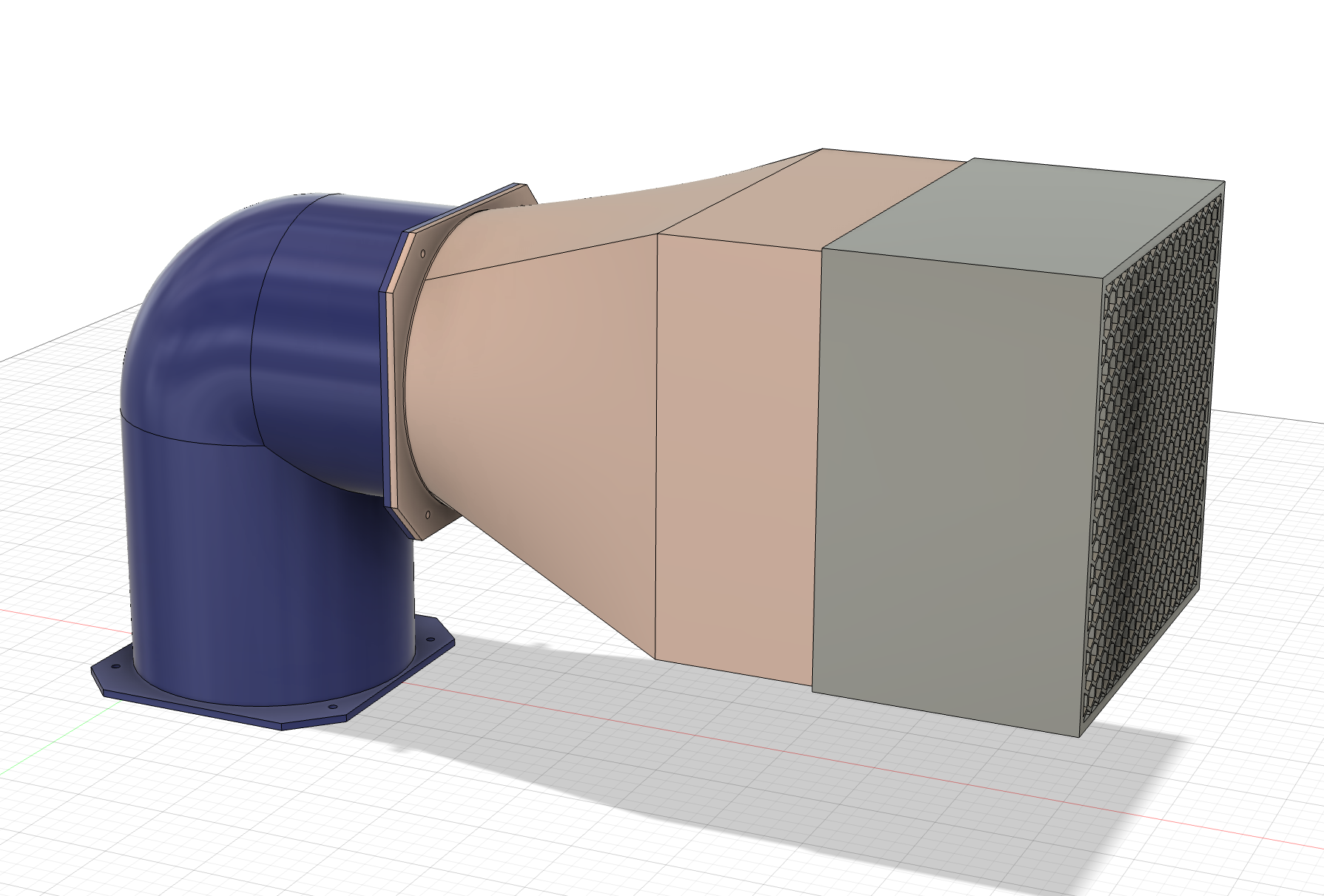
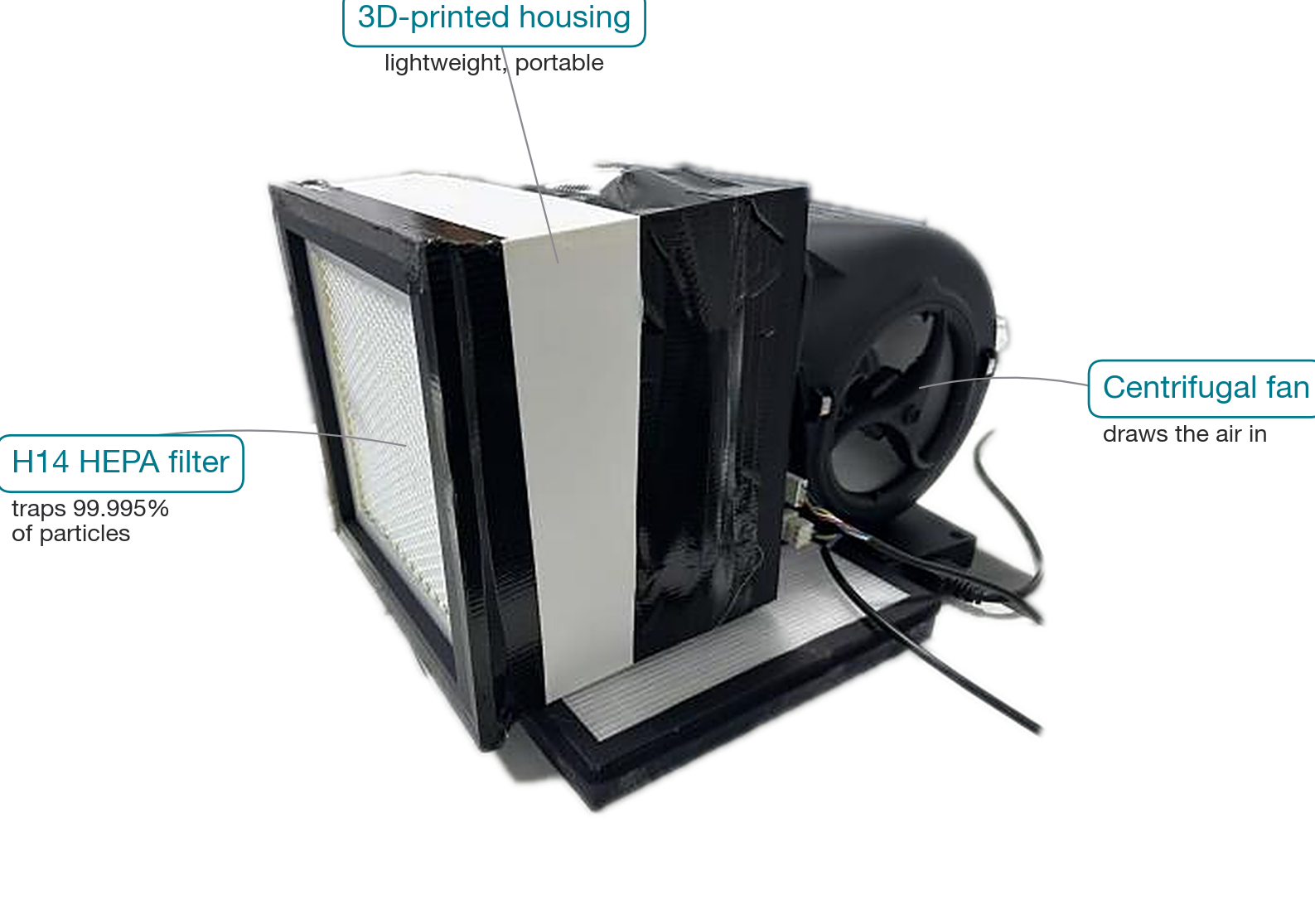
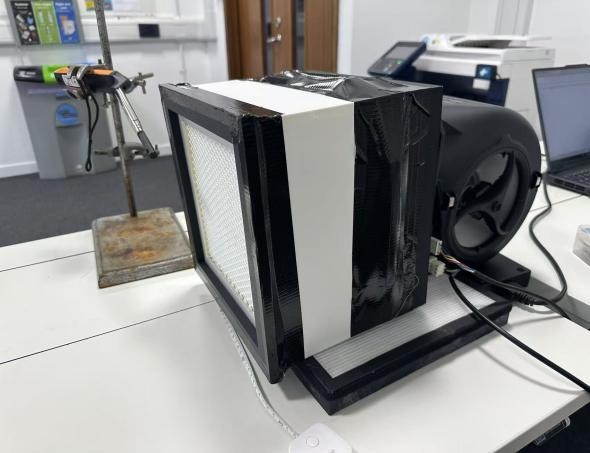
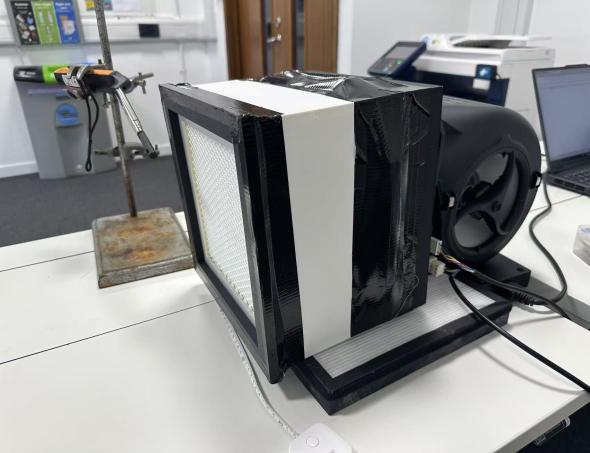
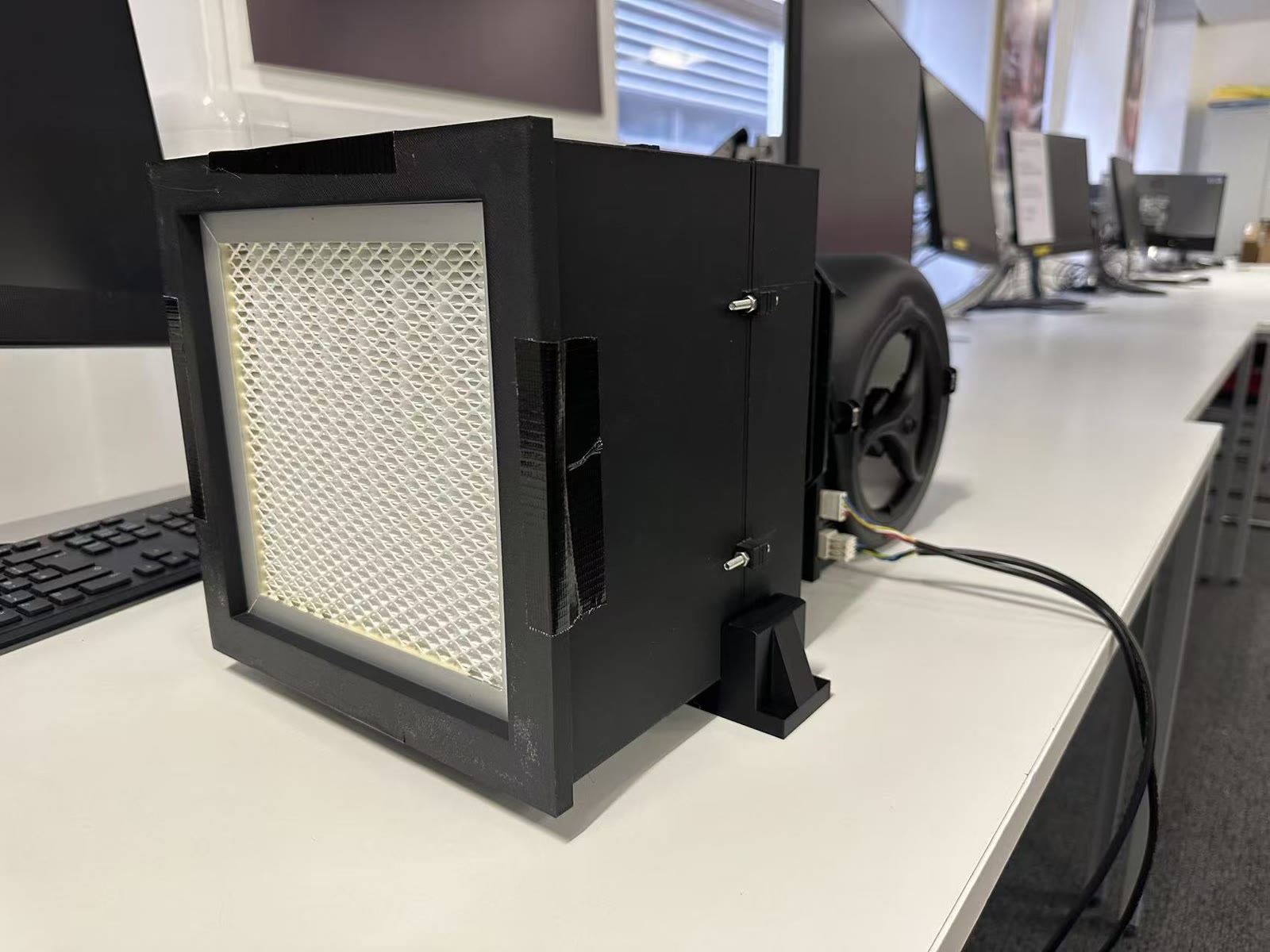
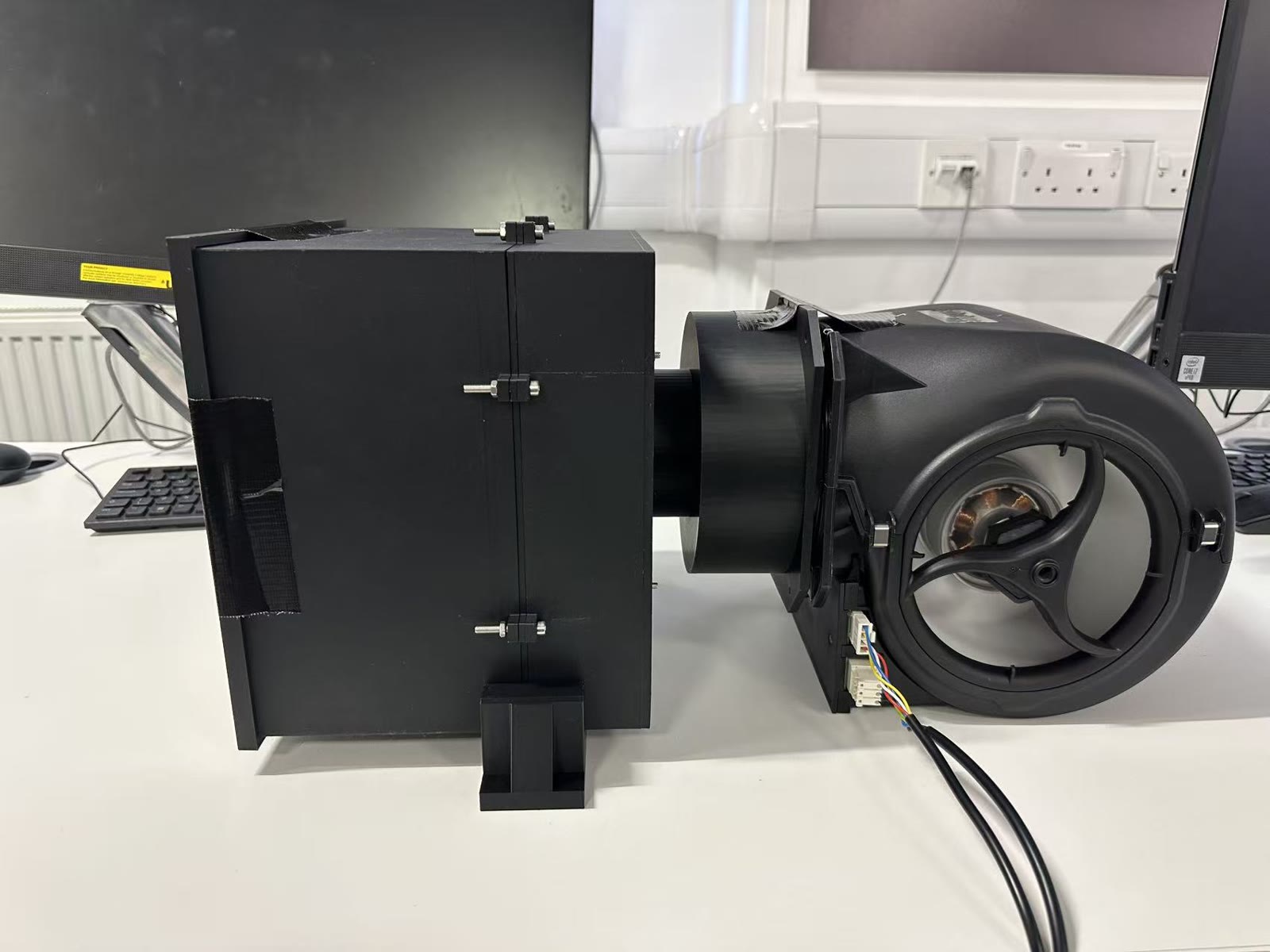
Upgraded to the ebm-papst D3G146-HQ13-34 centrifugal blower and SPCB Bespoke H14 filter (EN 1822-4). 3D-printed PLA housing designed in Fusion 360.
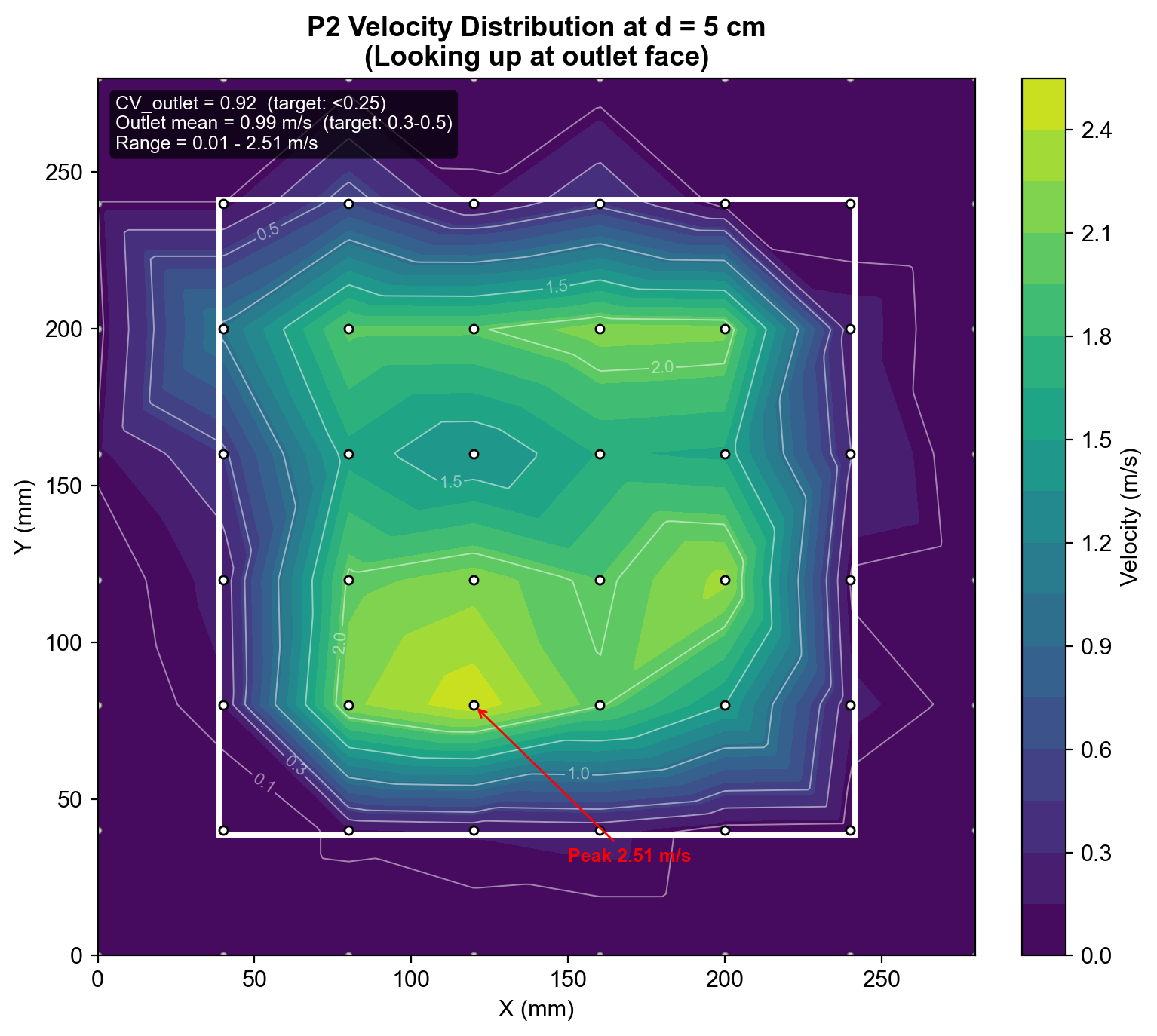
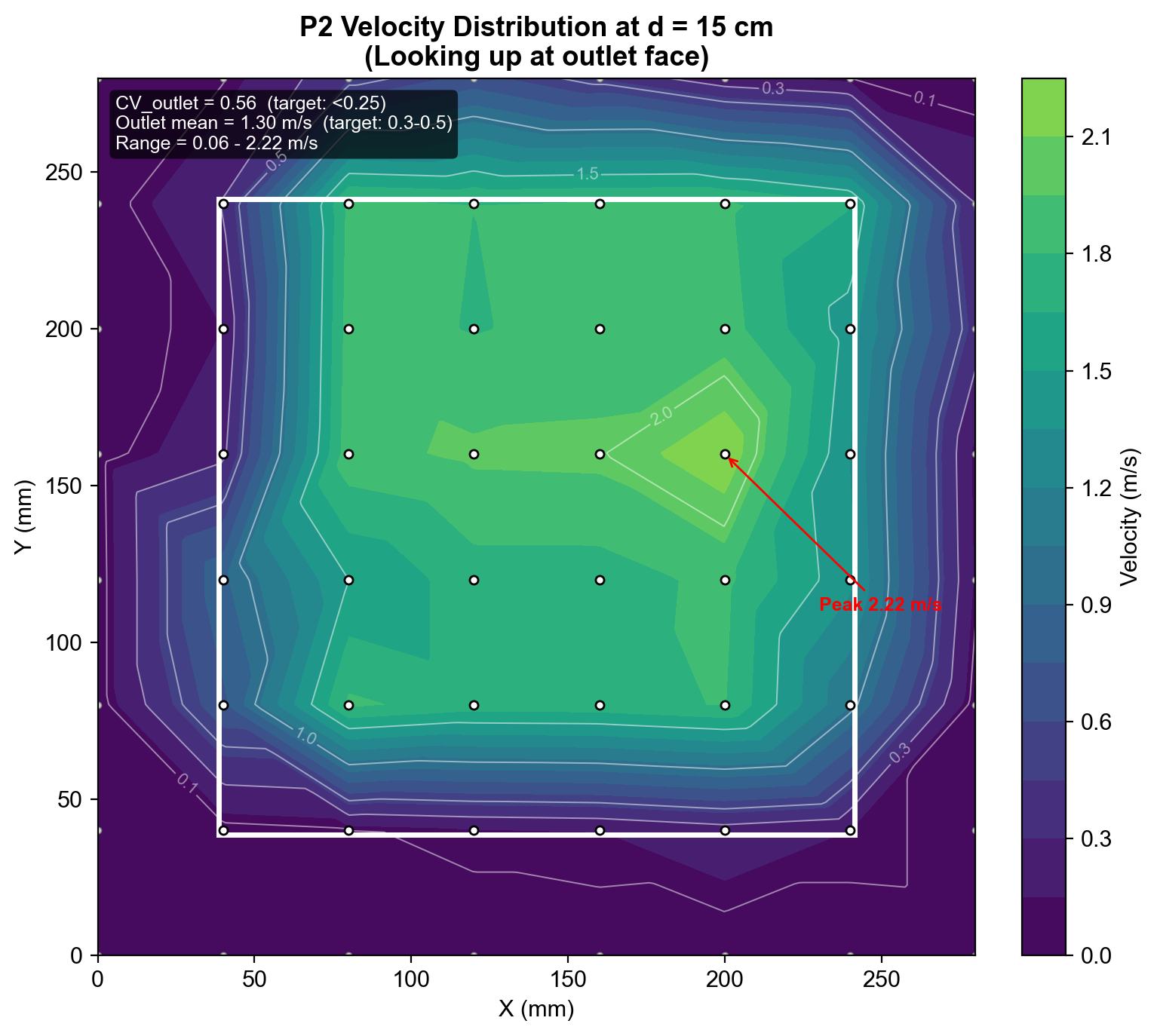
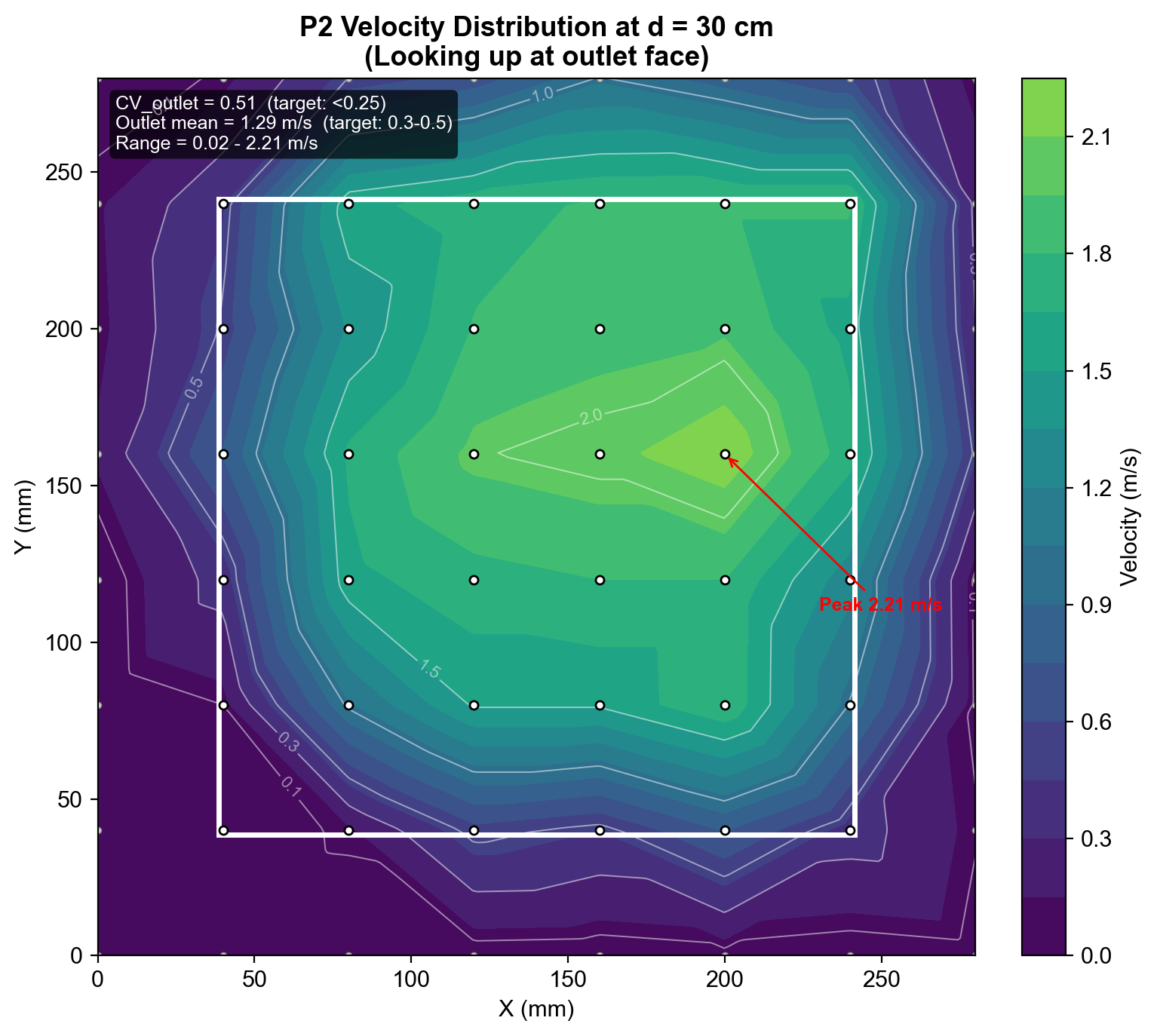
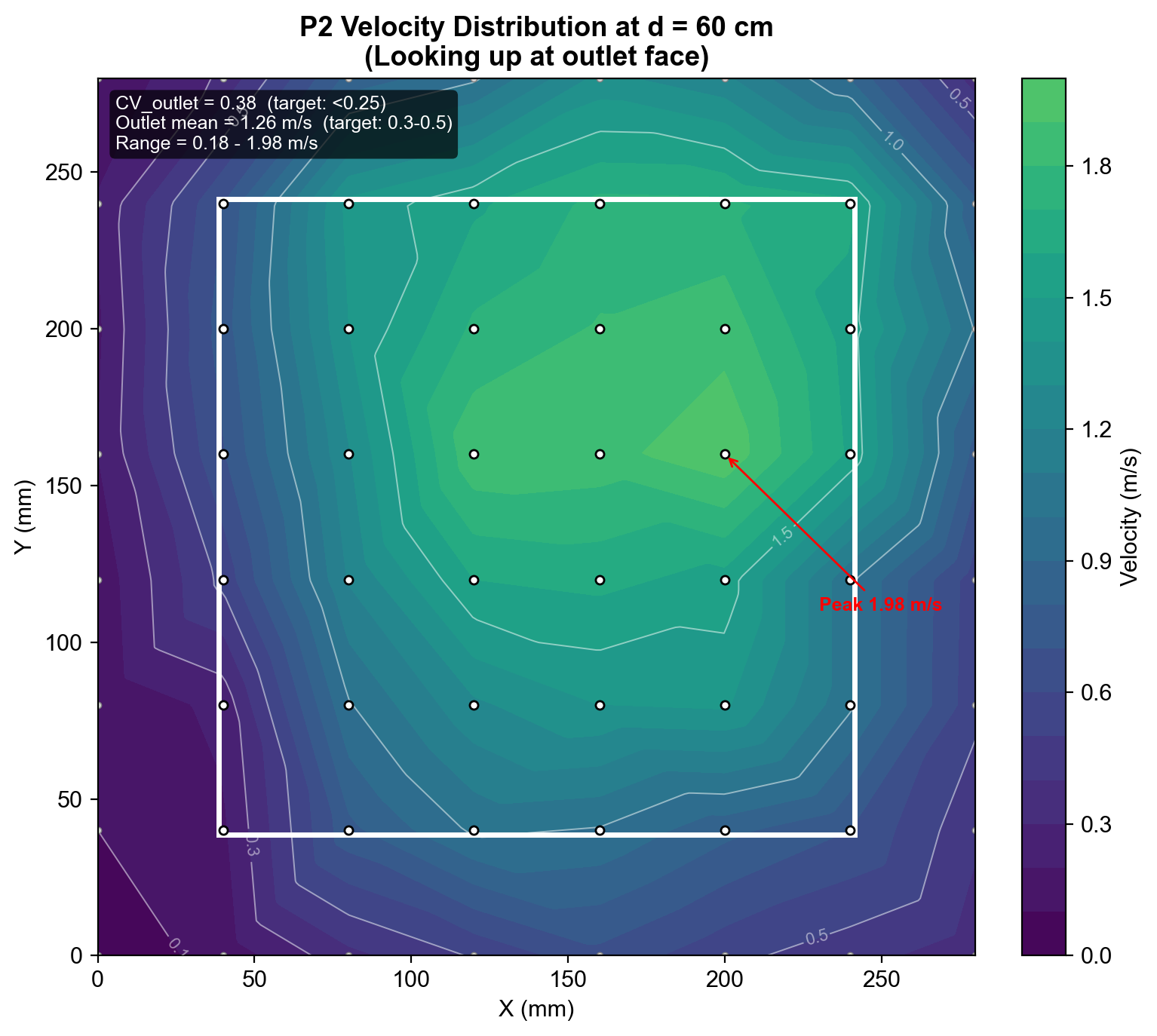
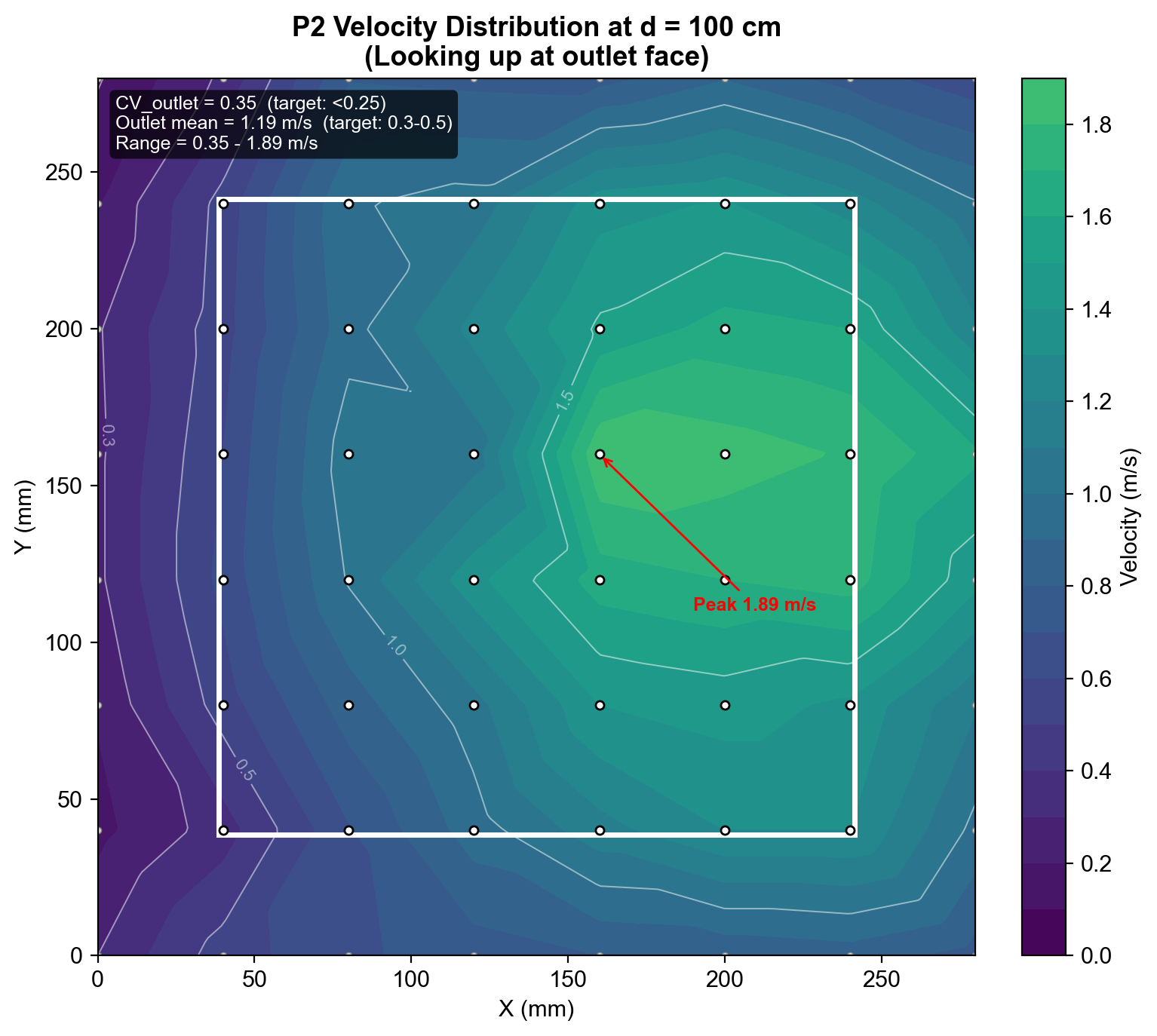
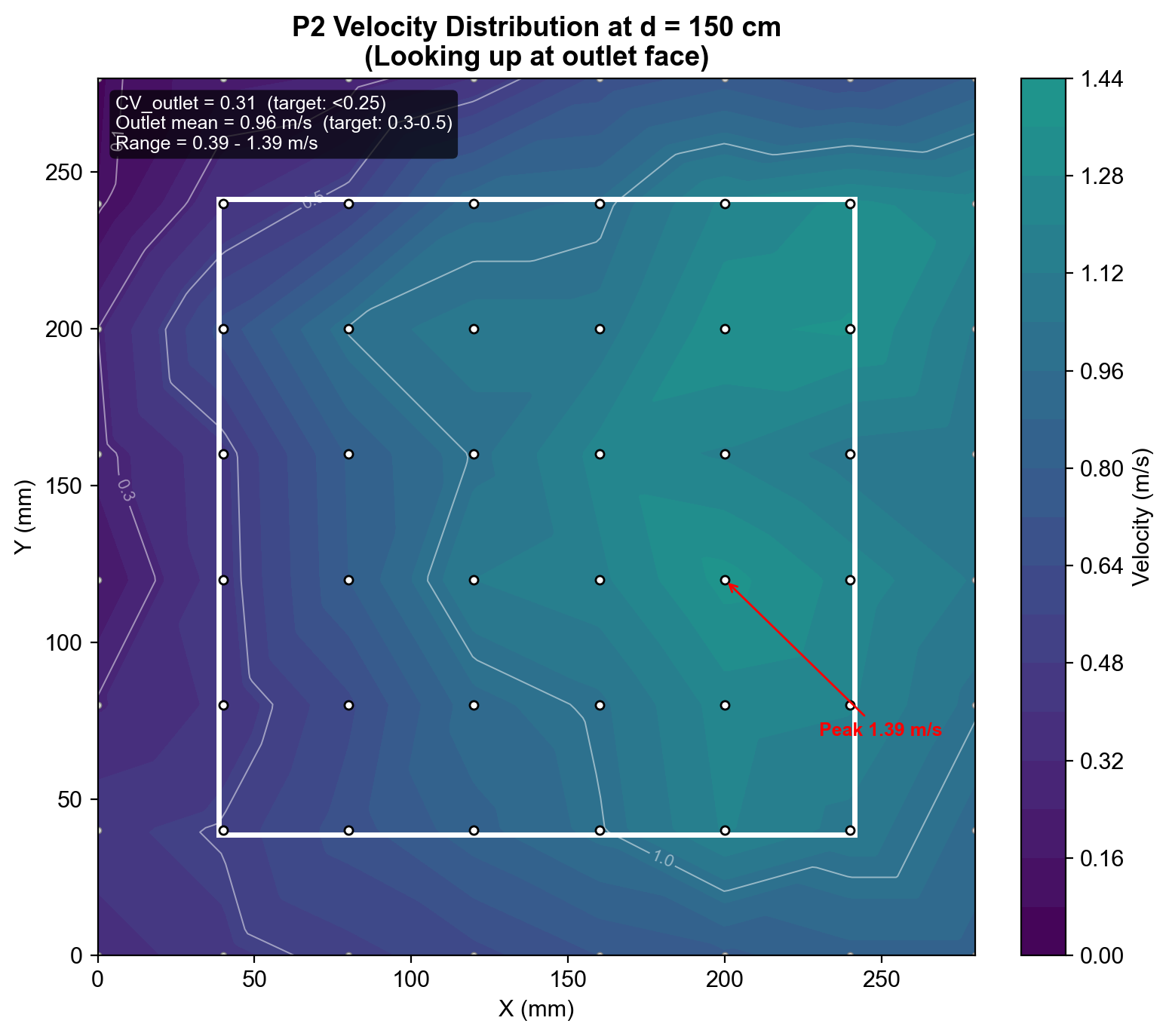
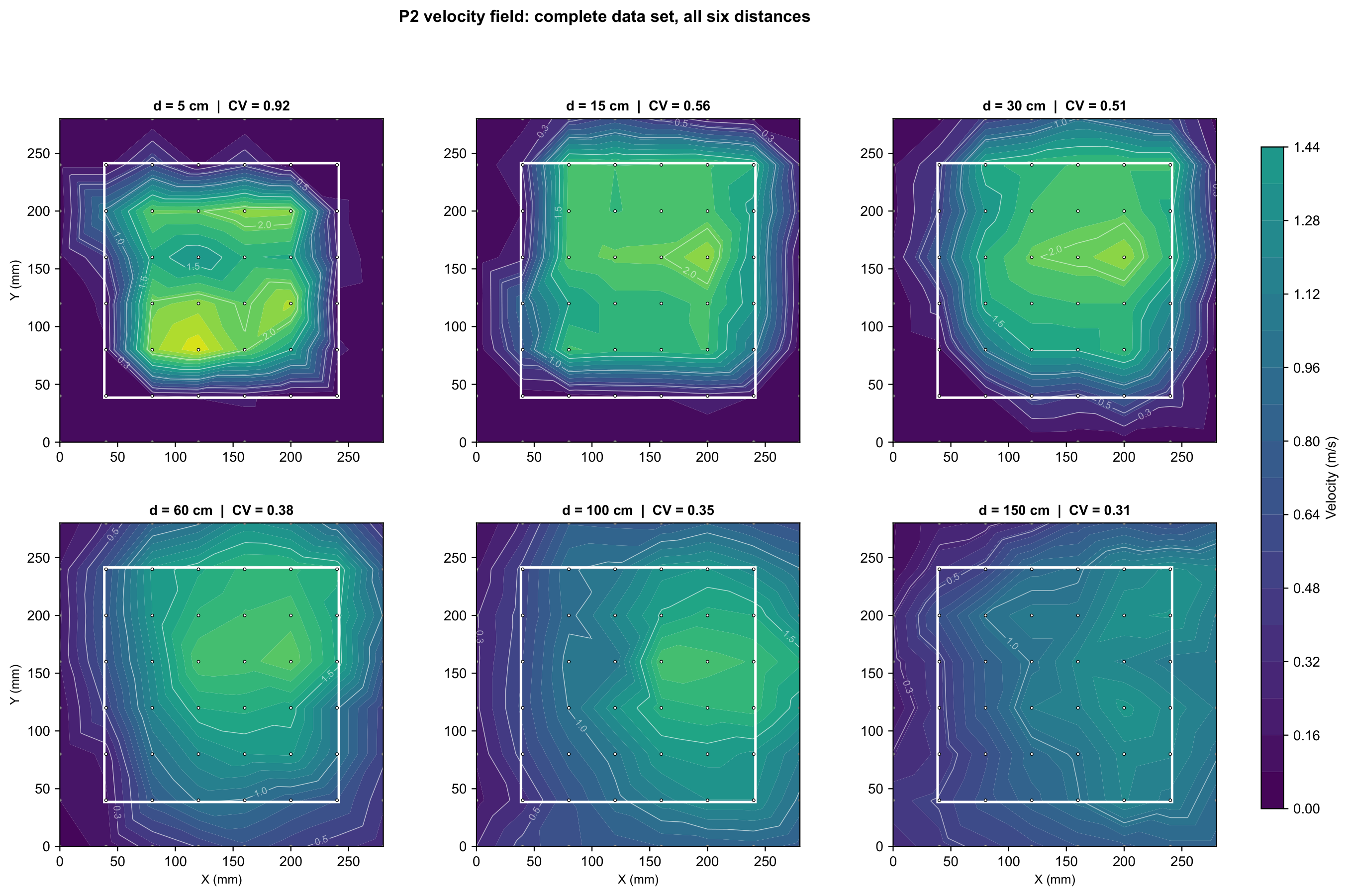
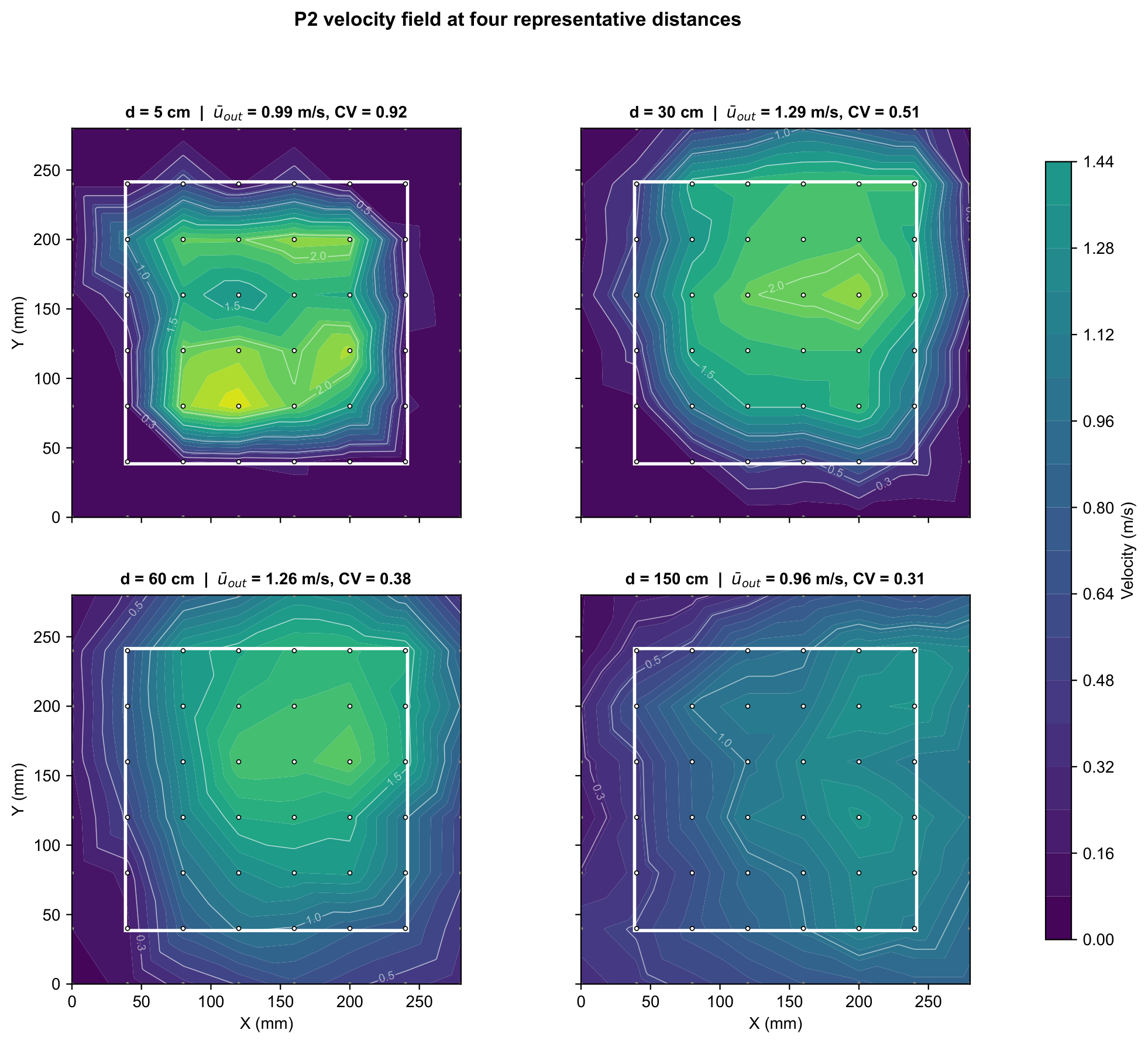
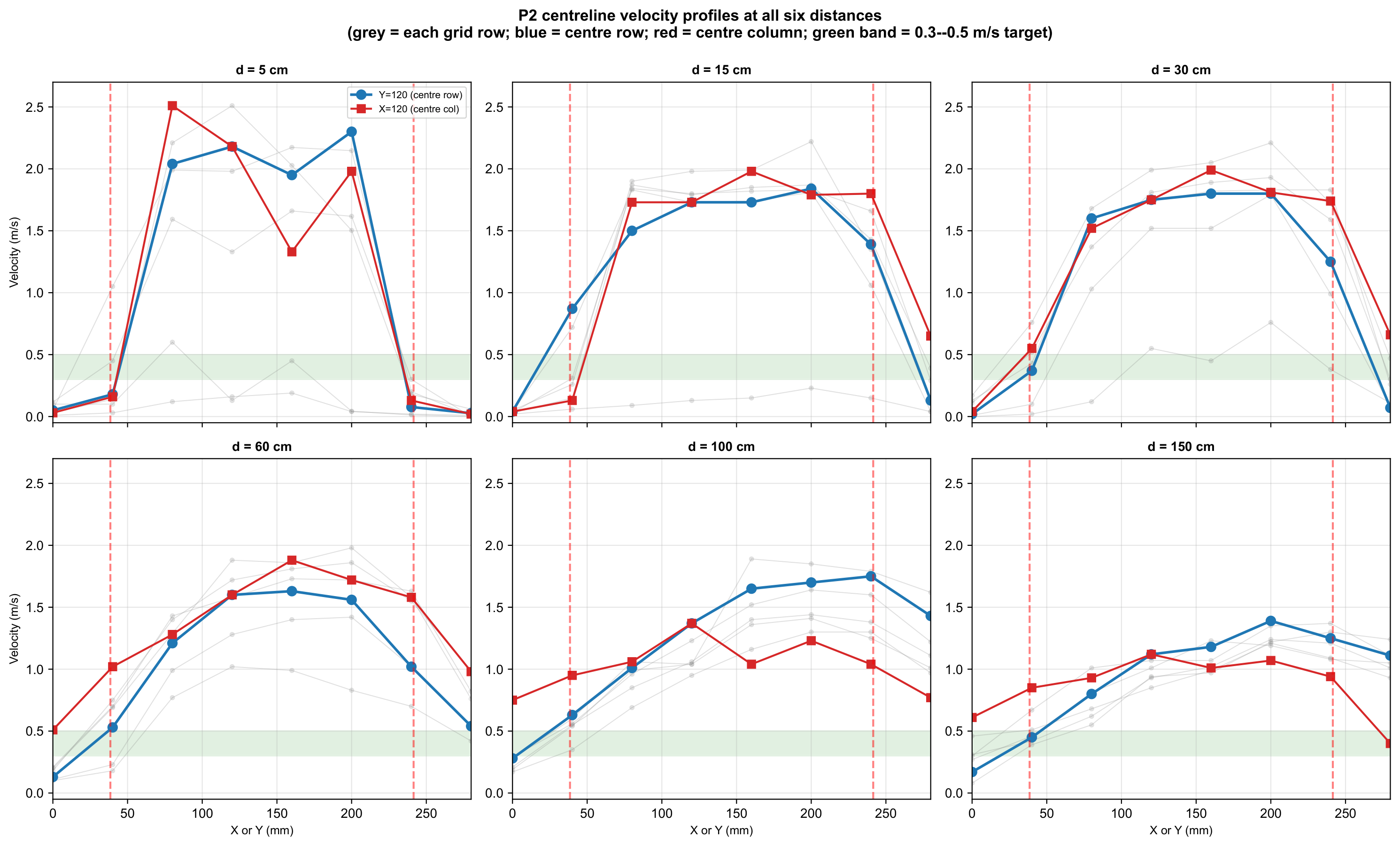
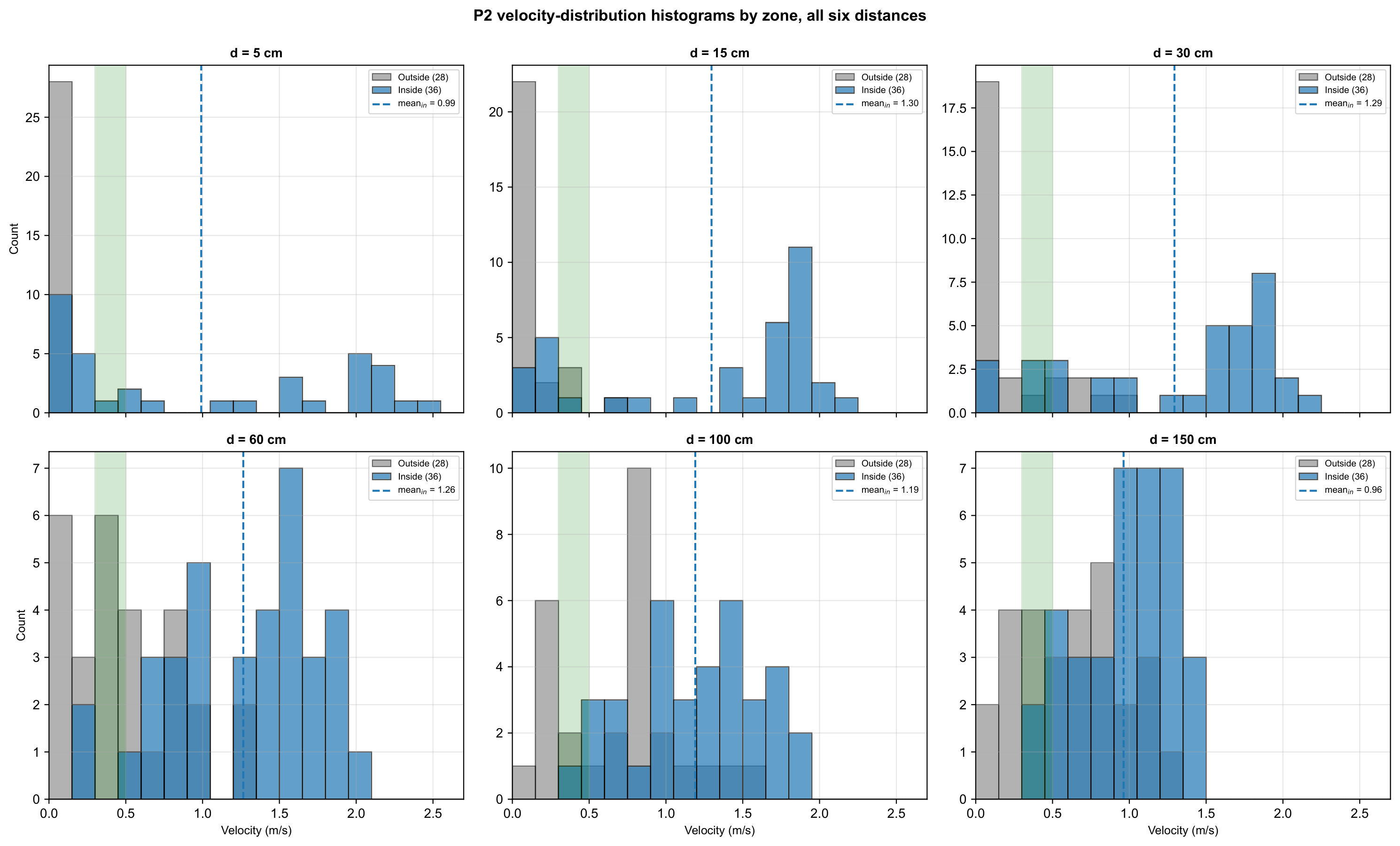
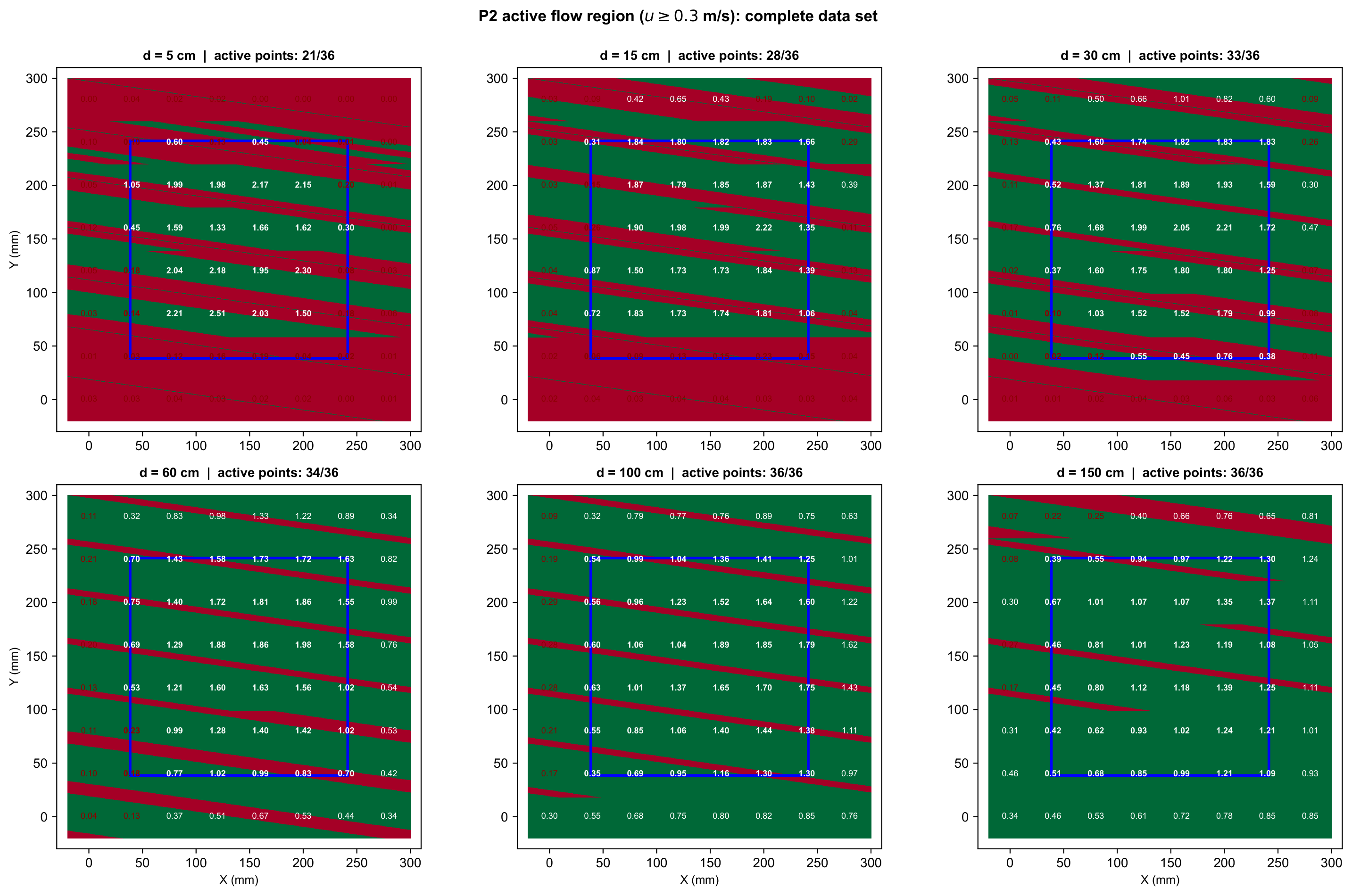
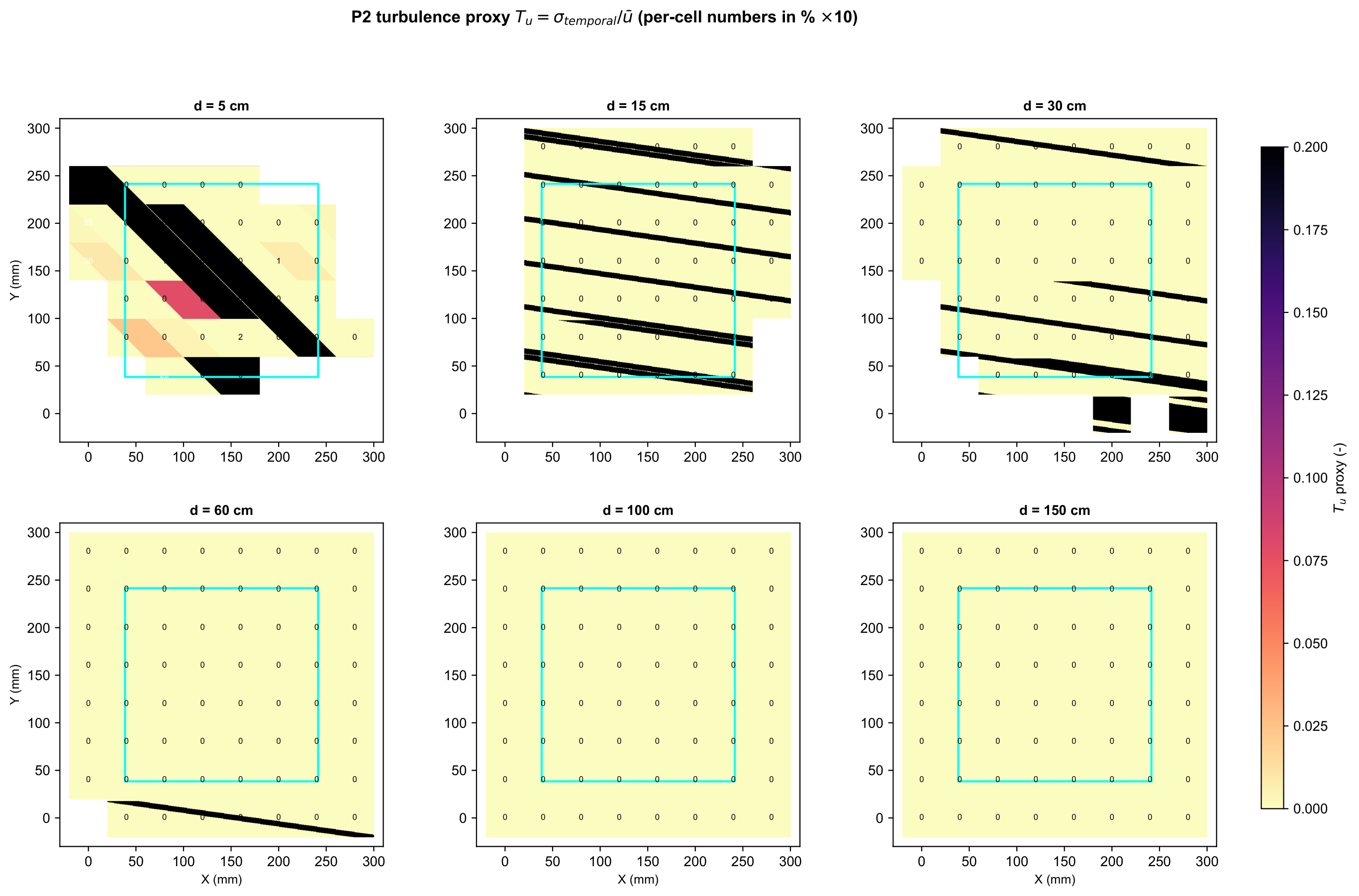
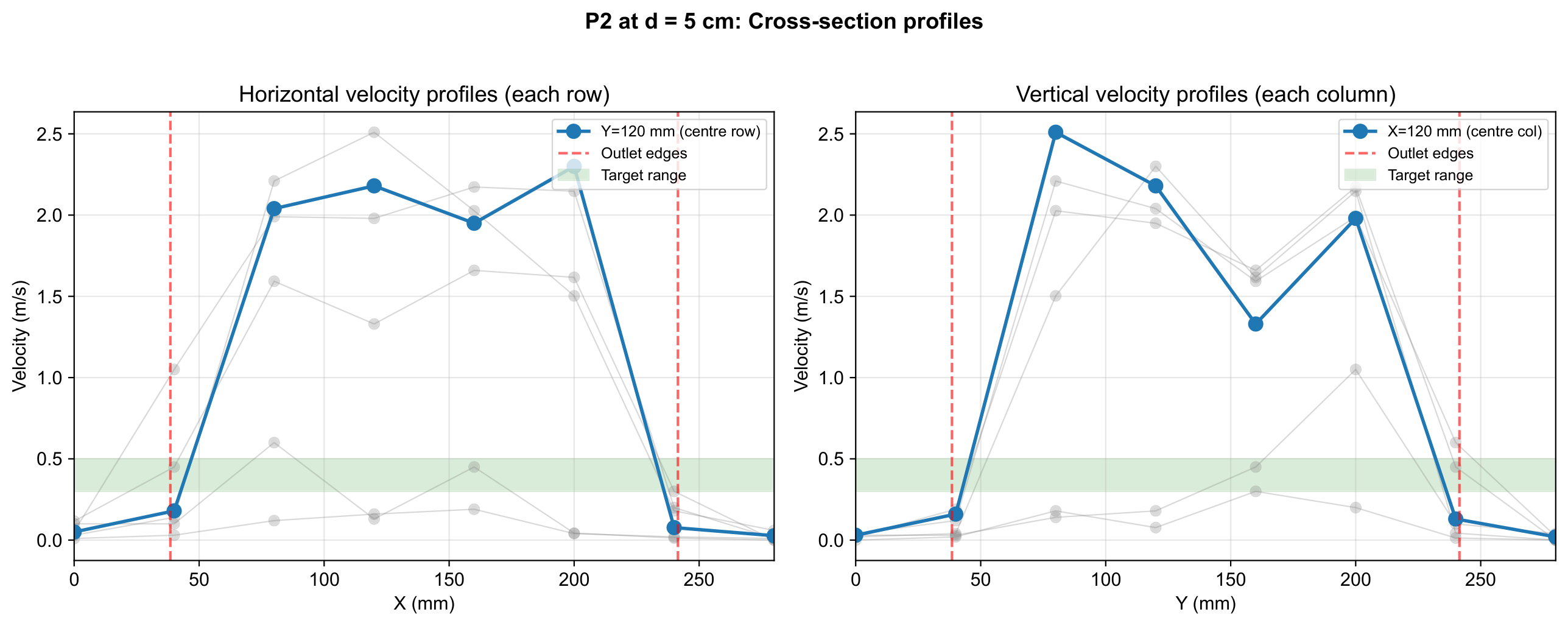
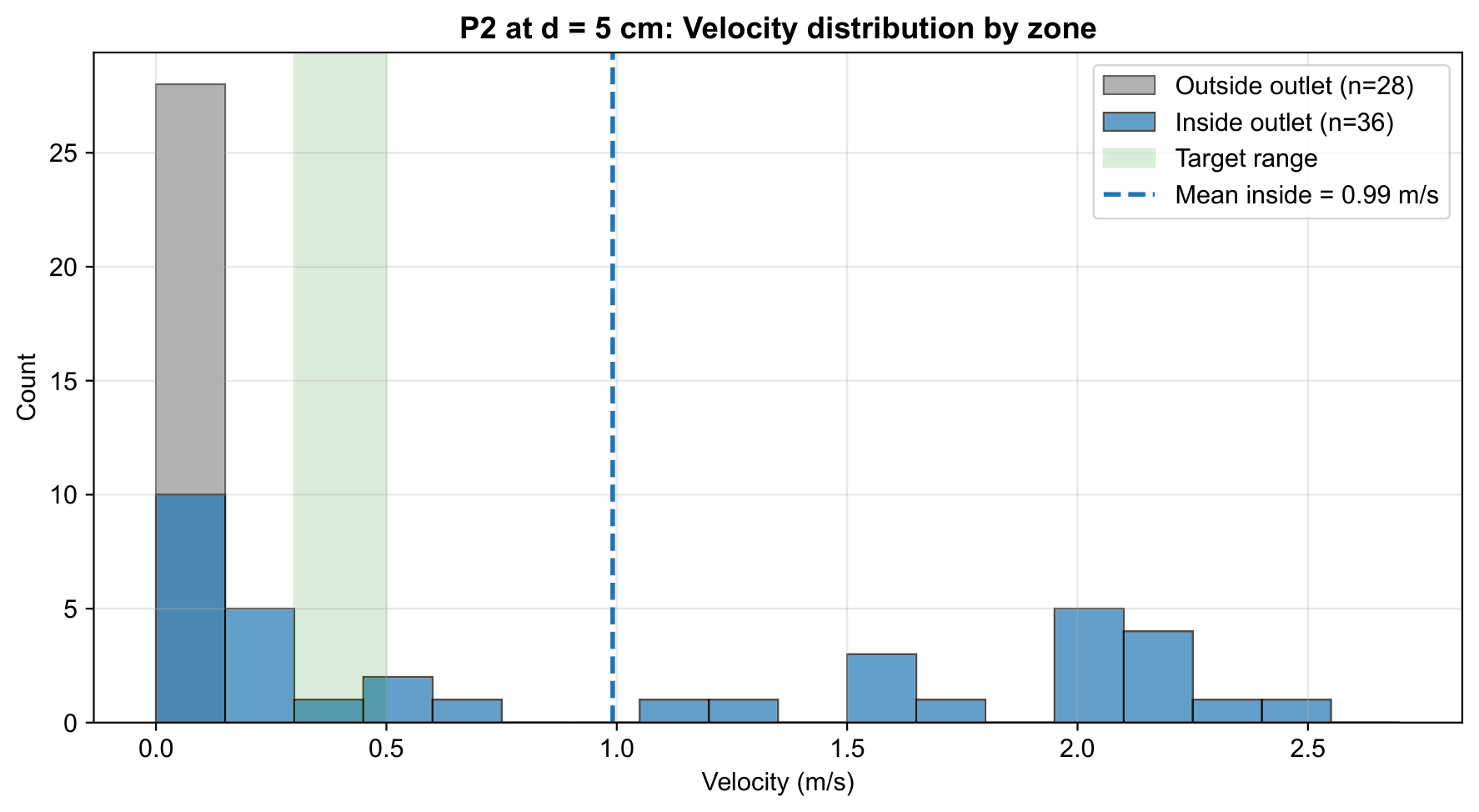
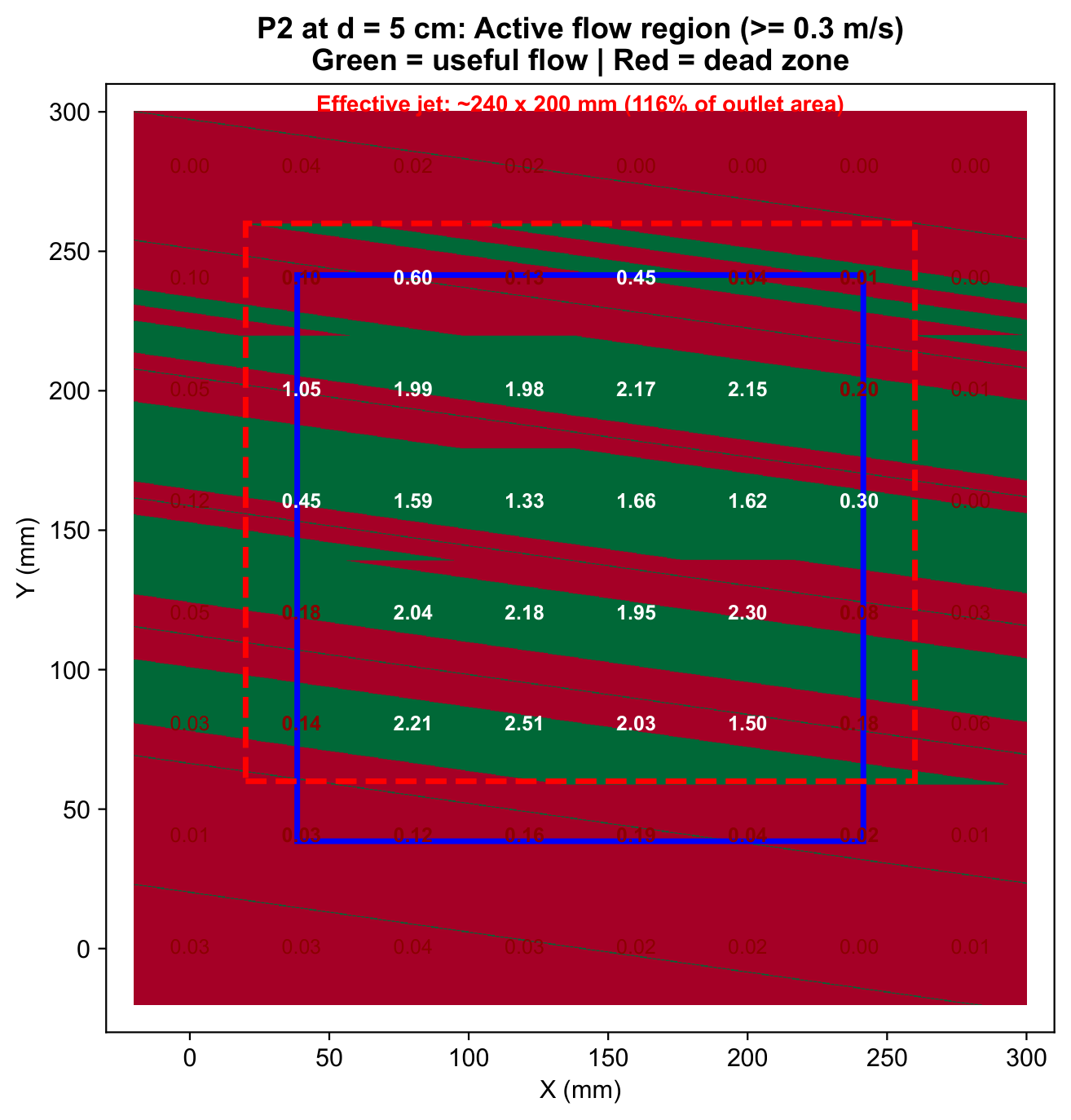
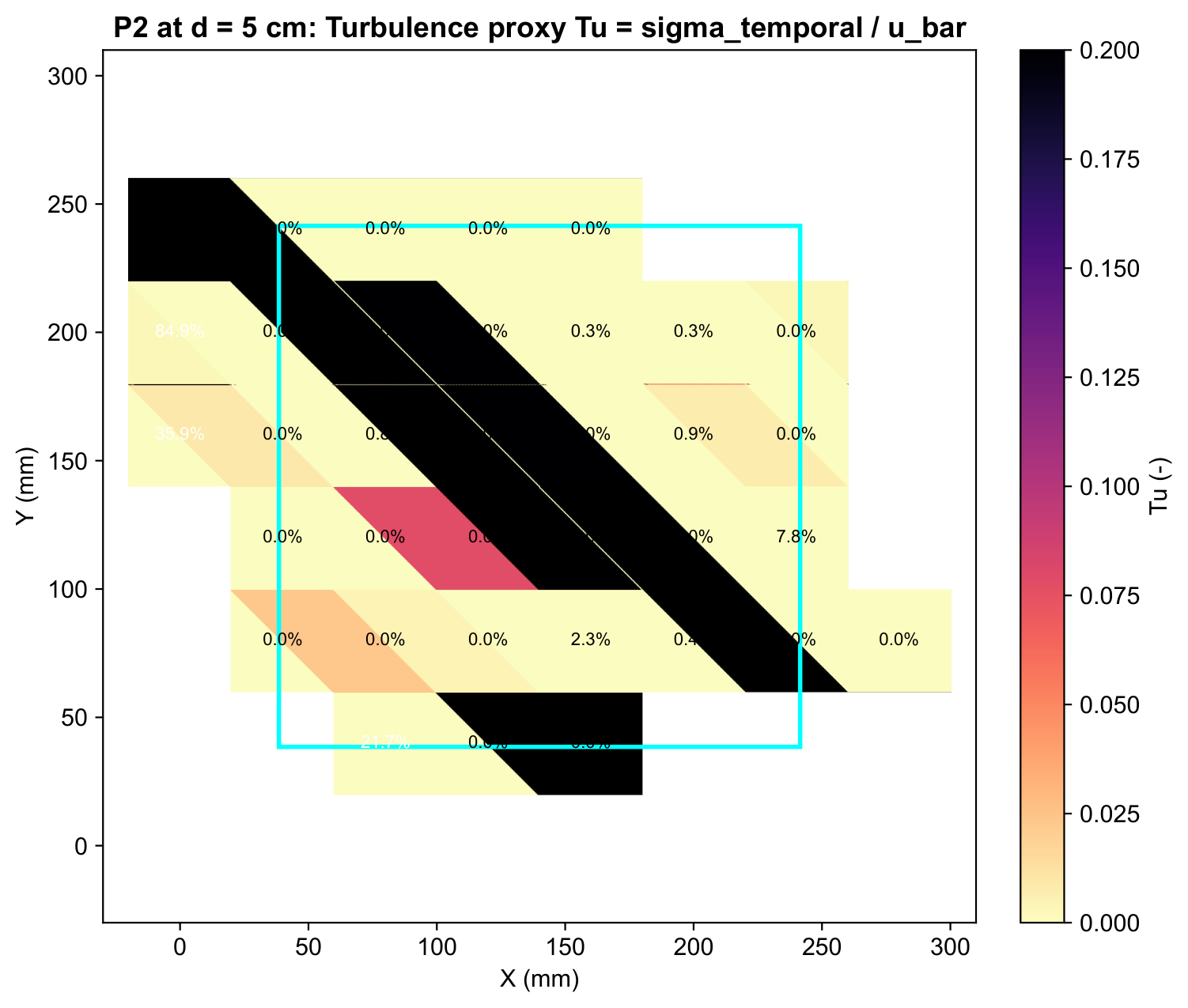
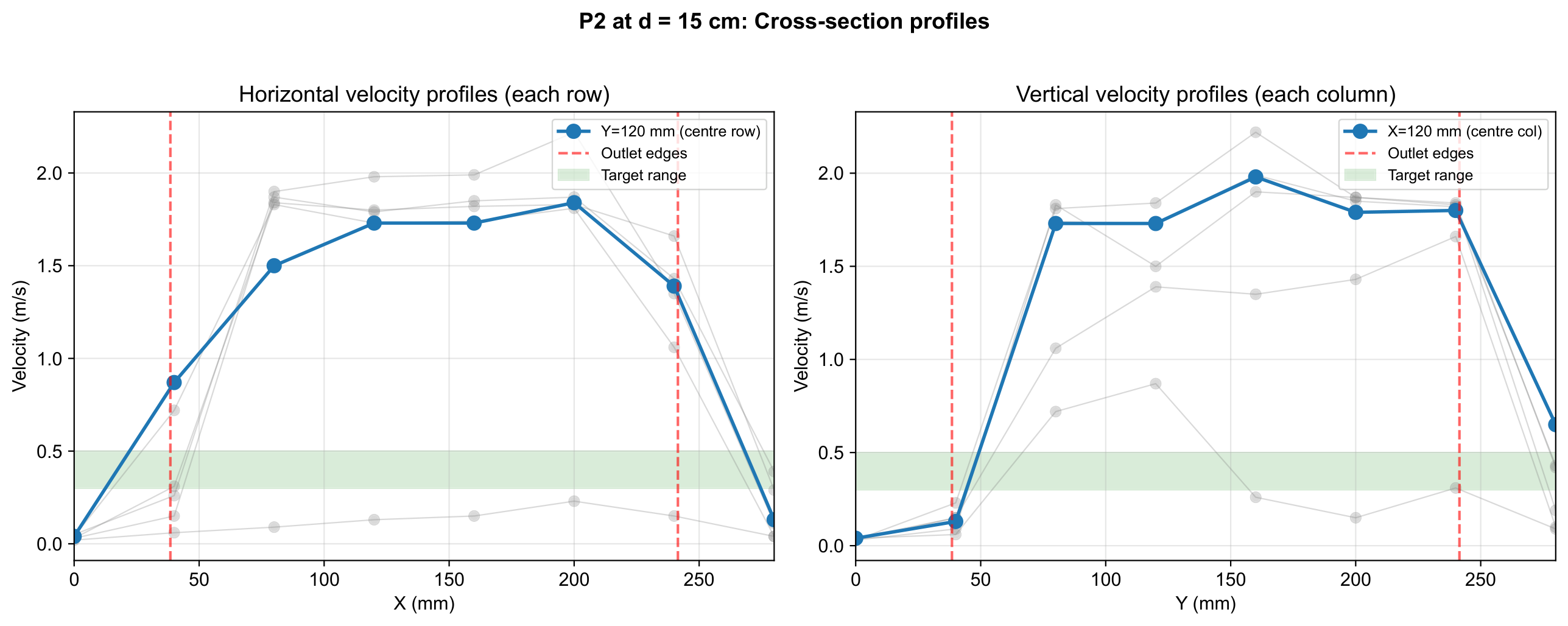
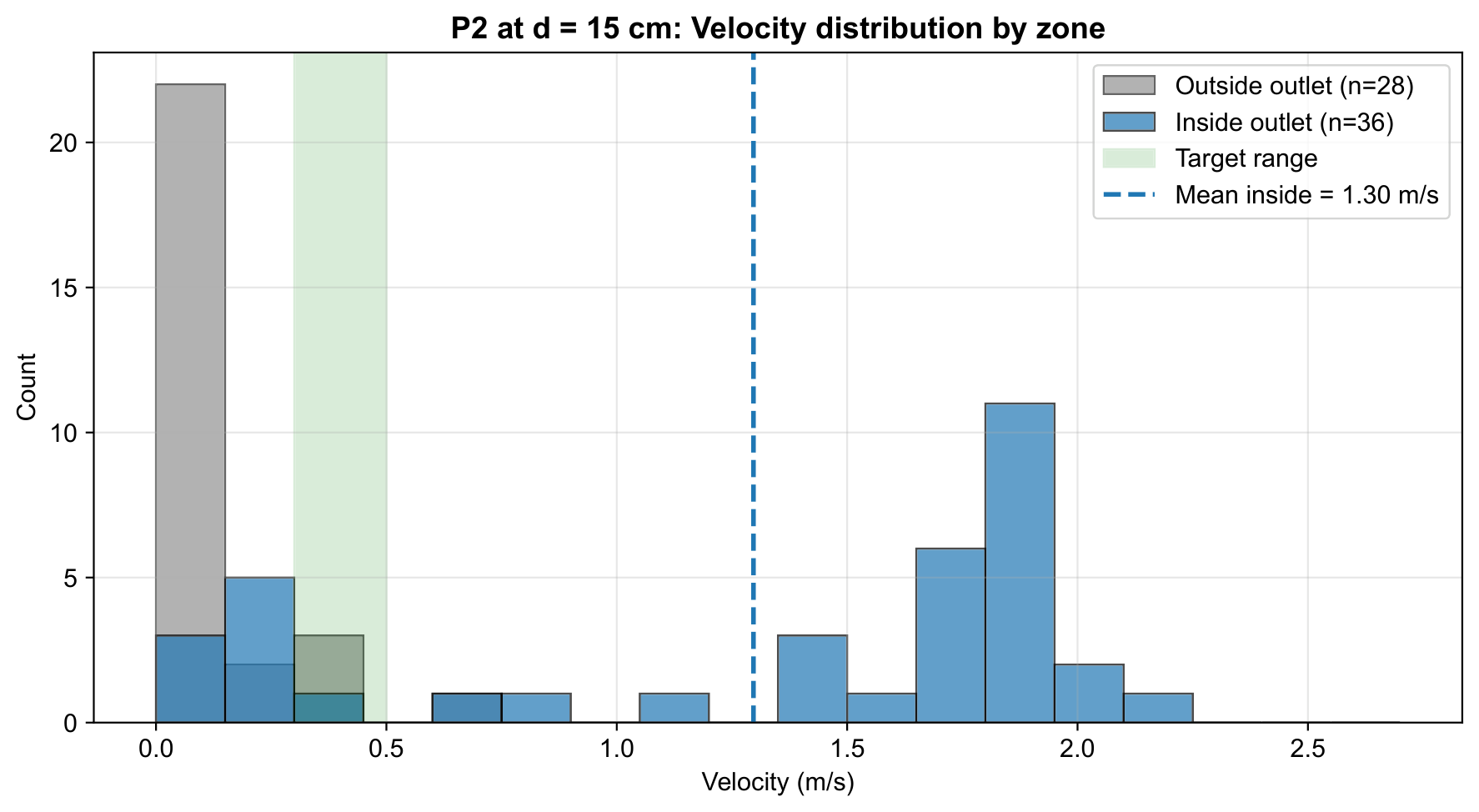
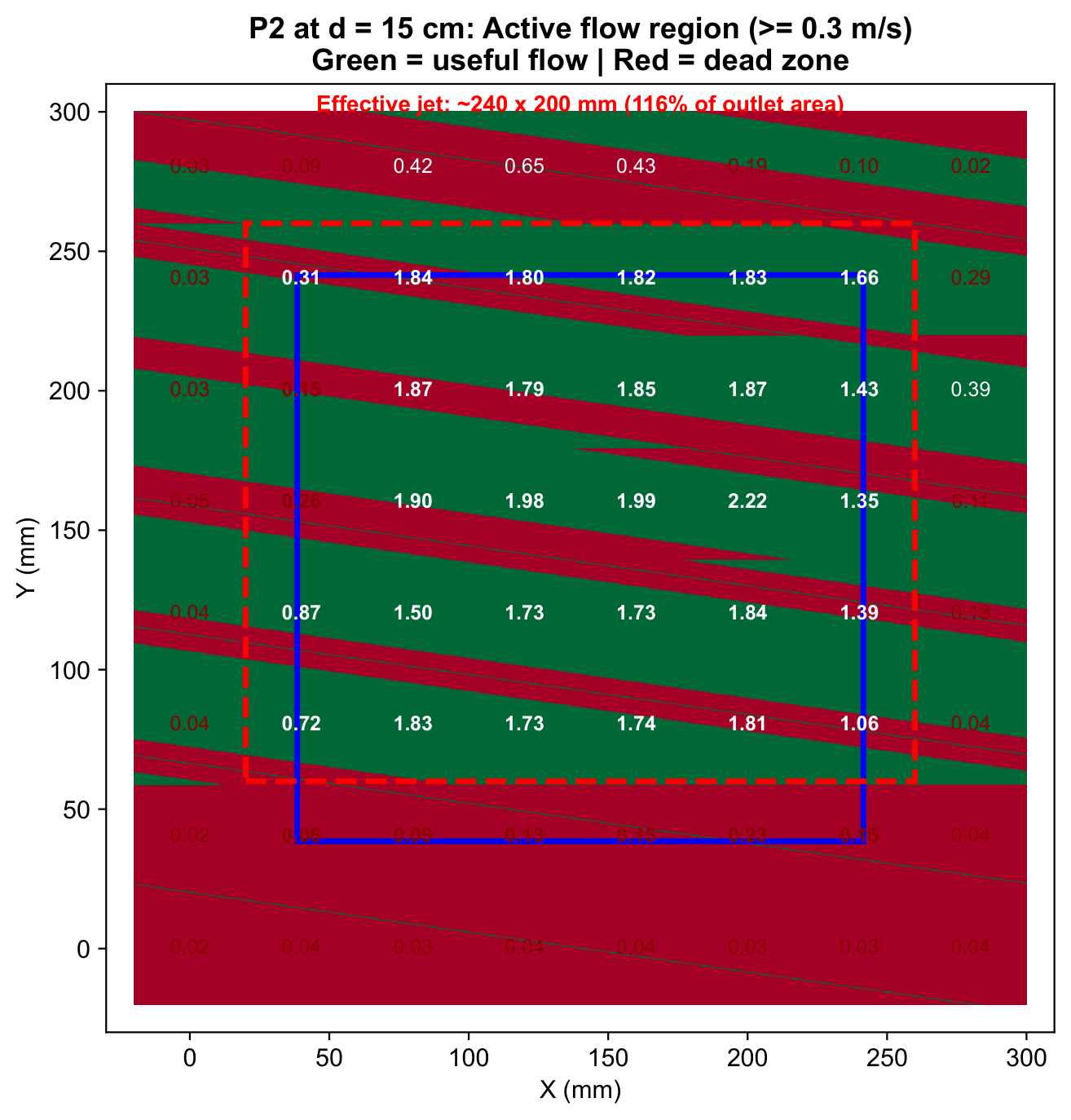
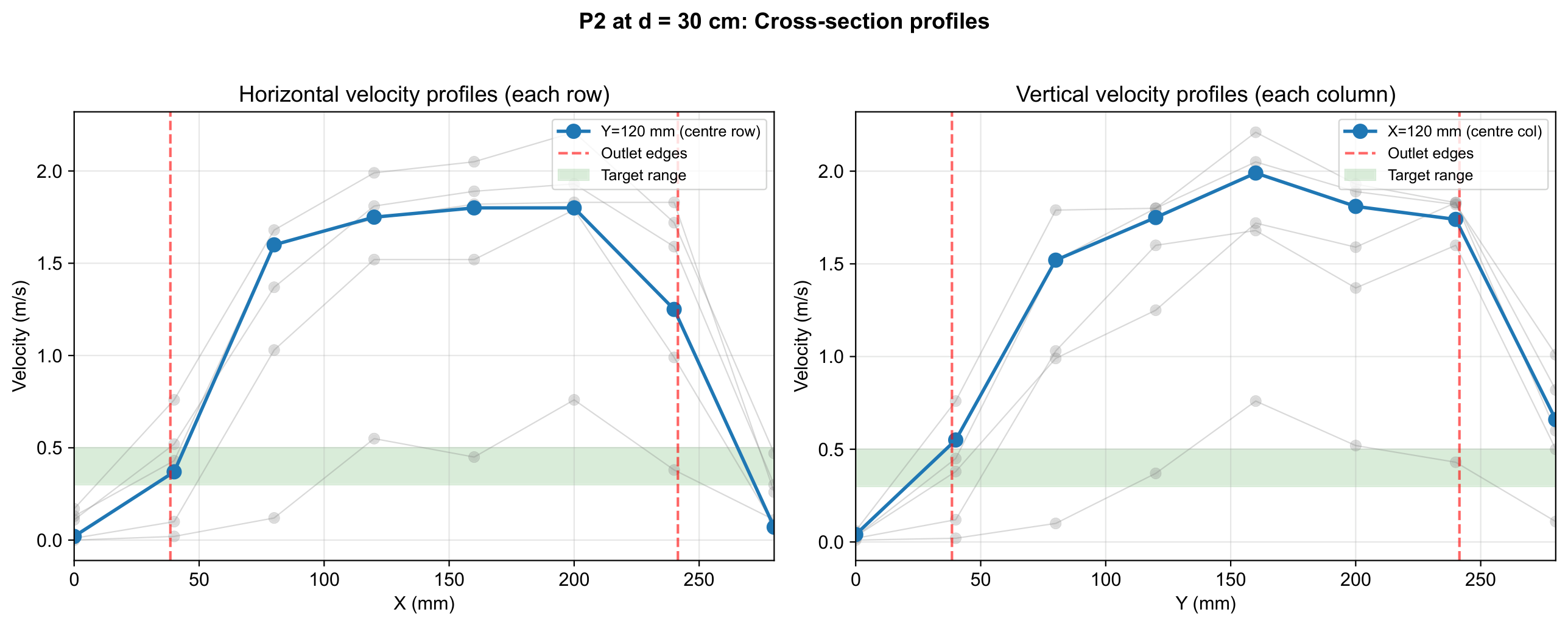
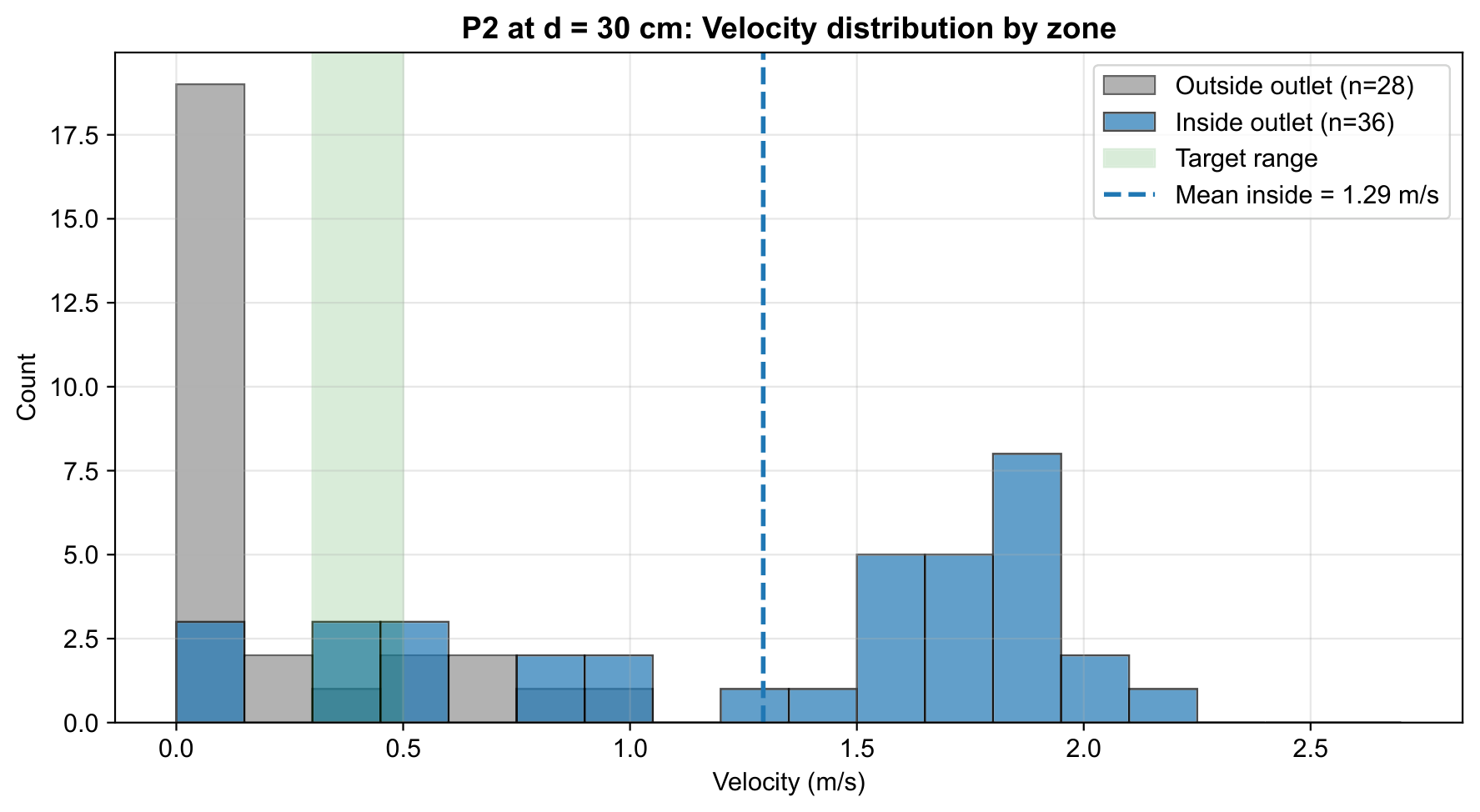
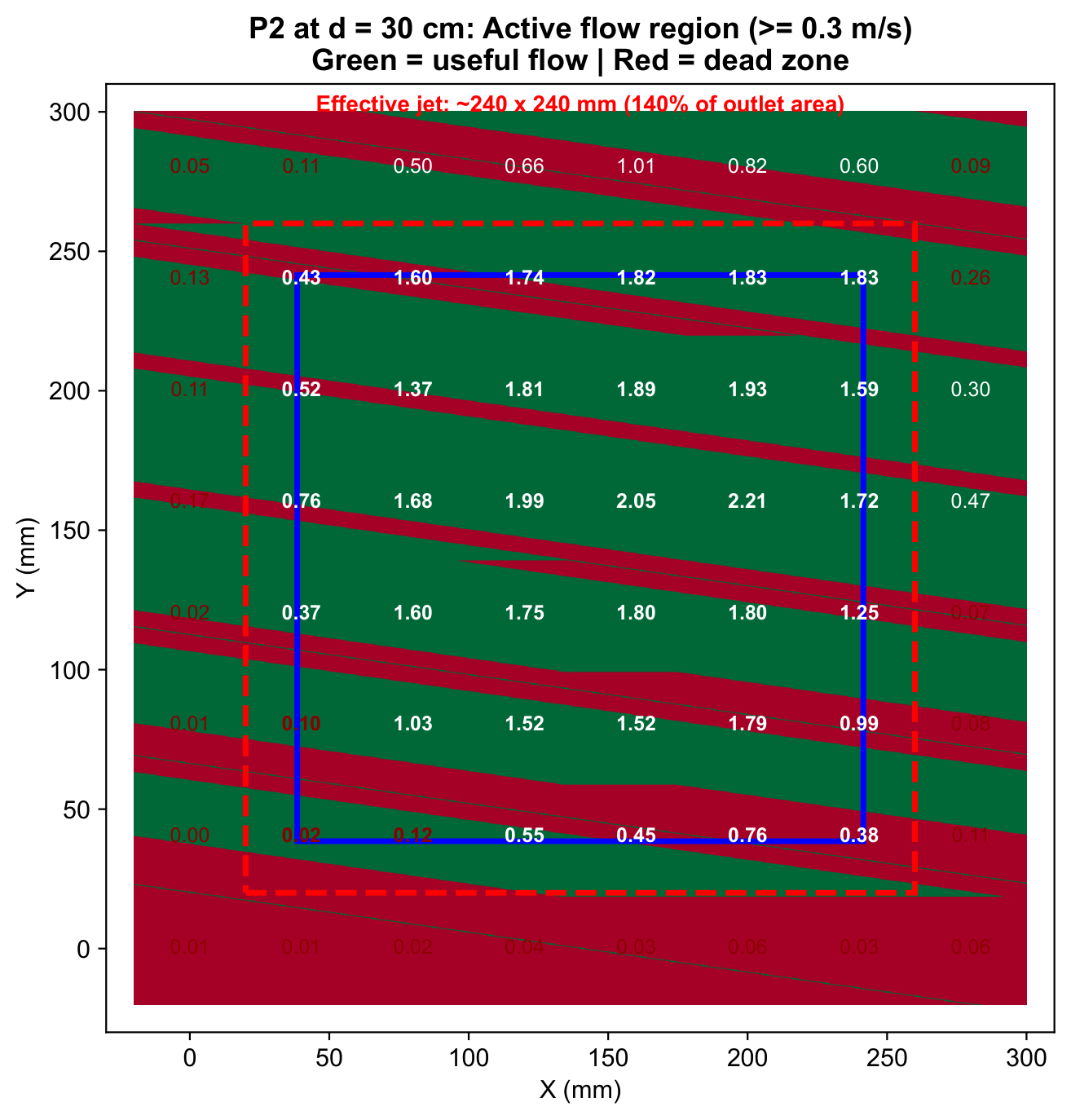
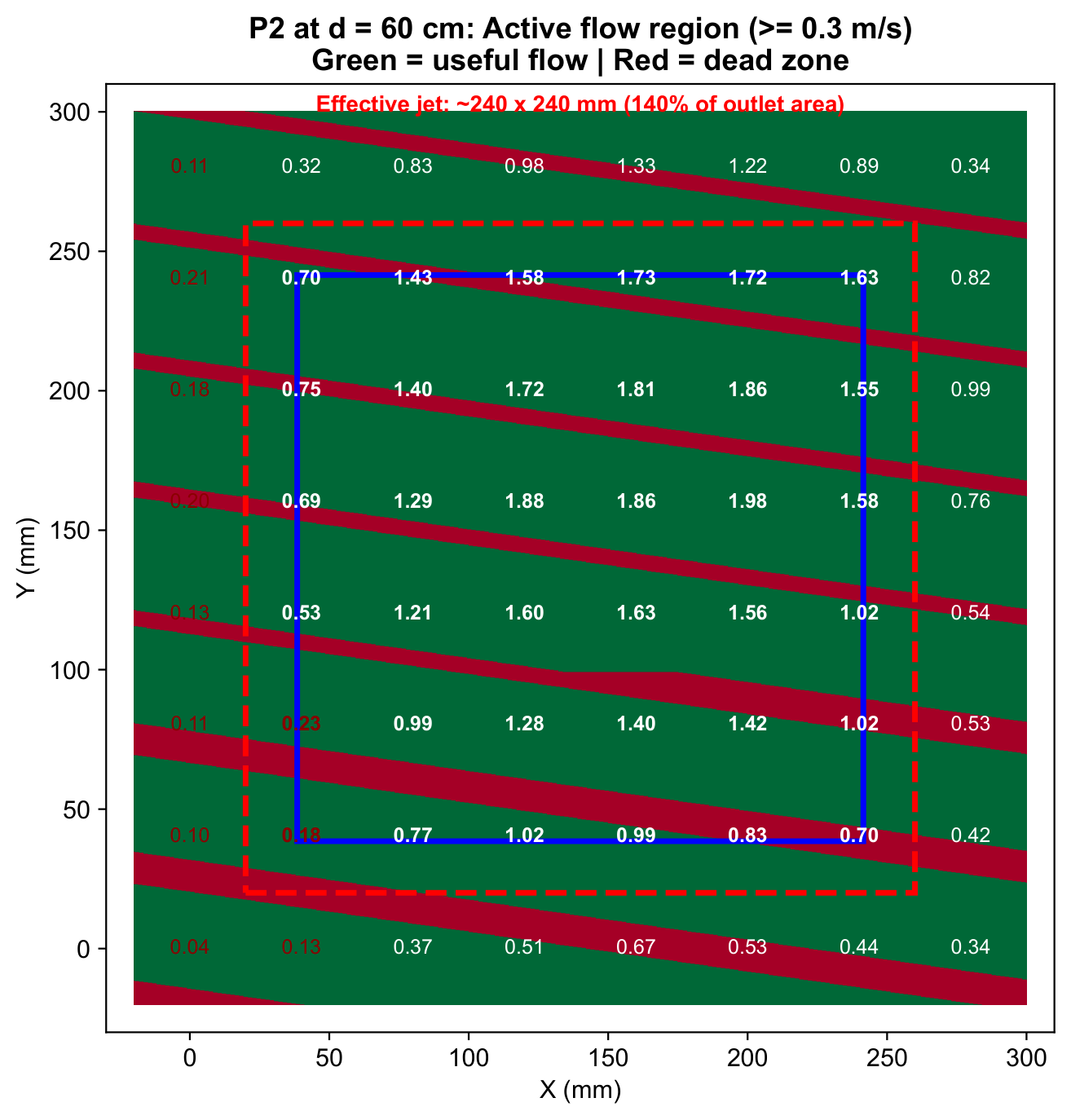
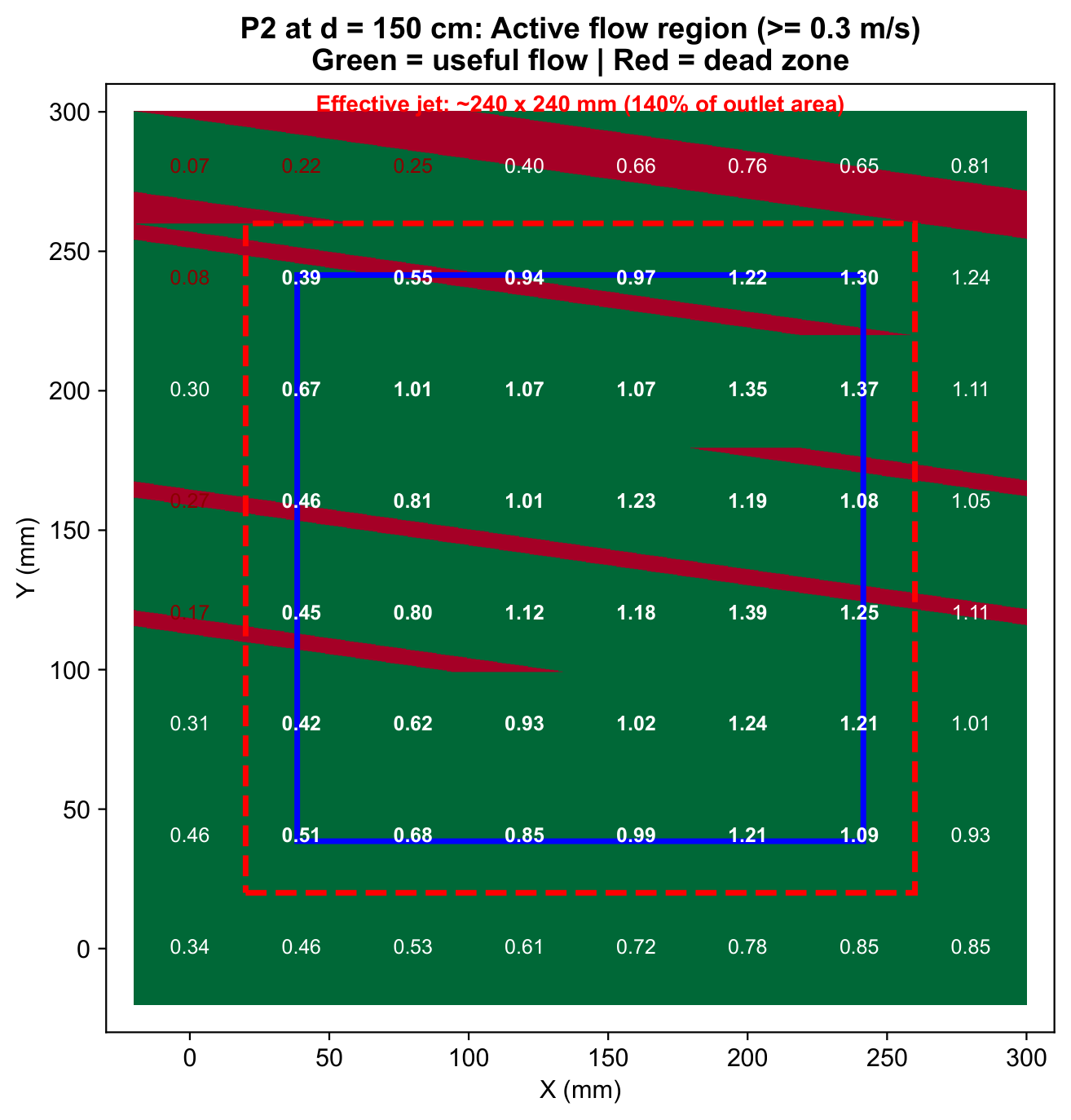
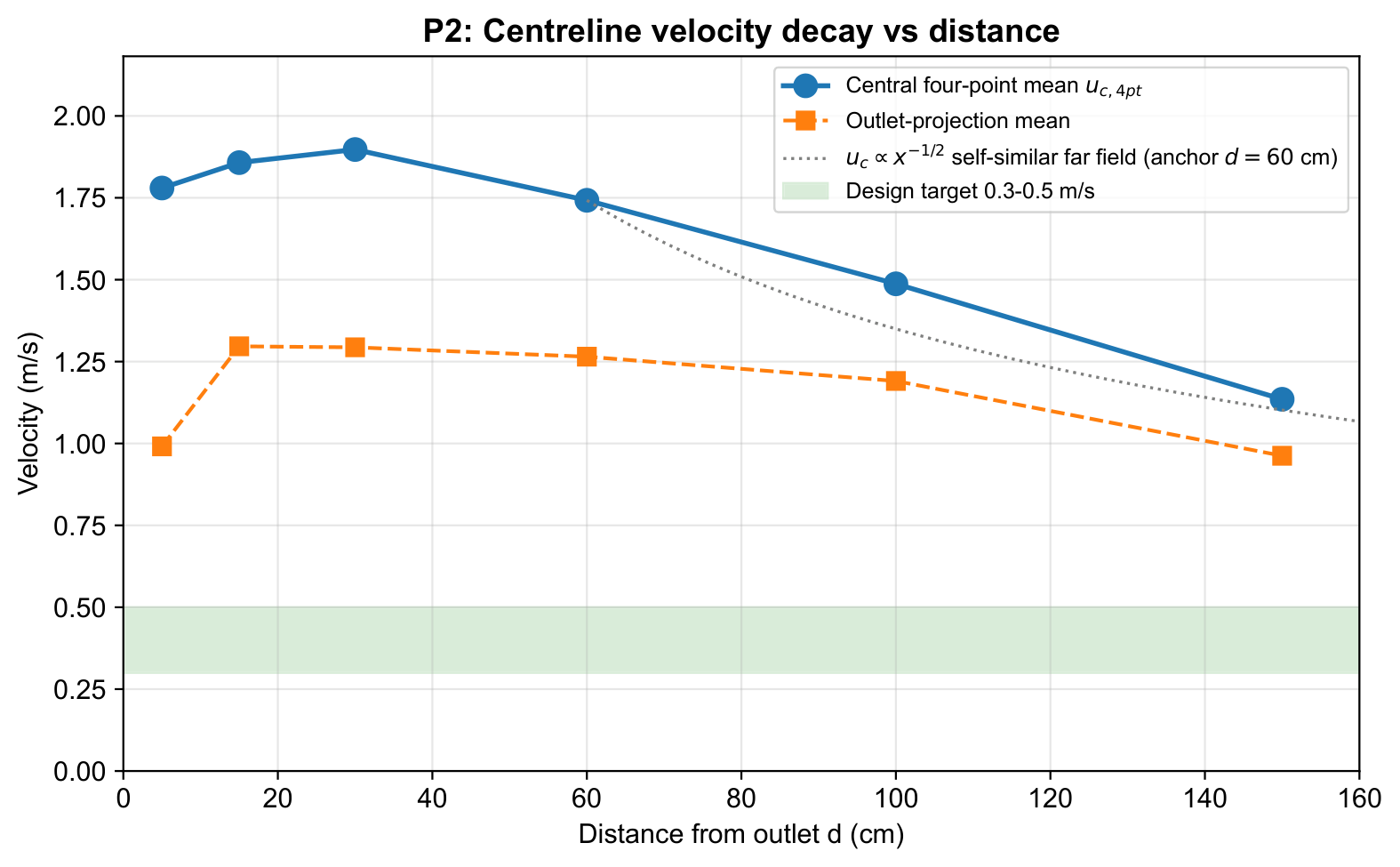
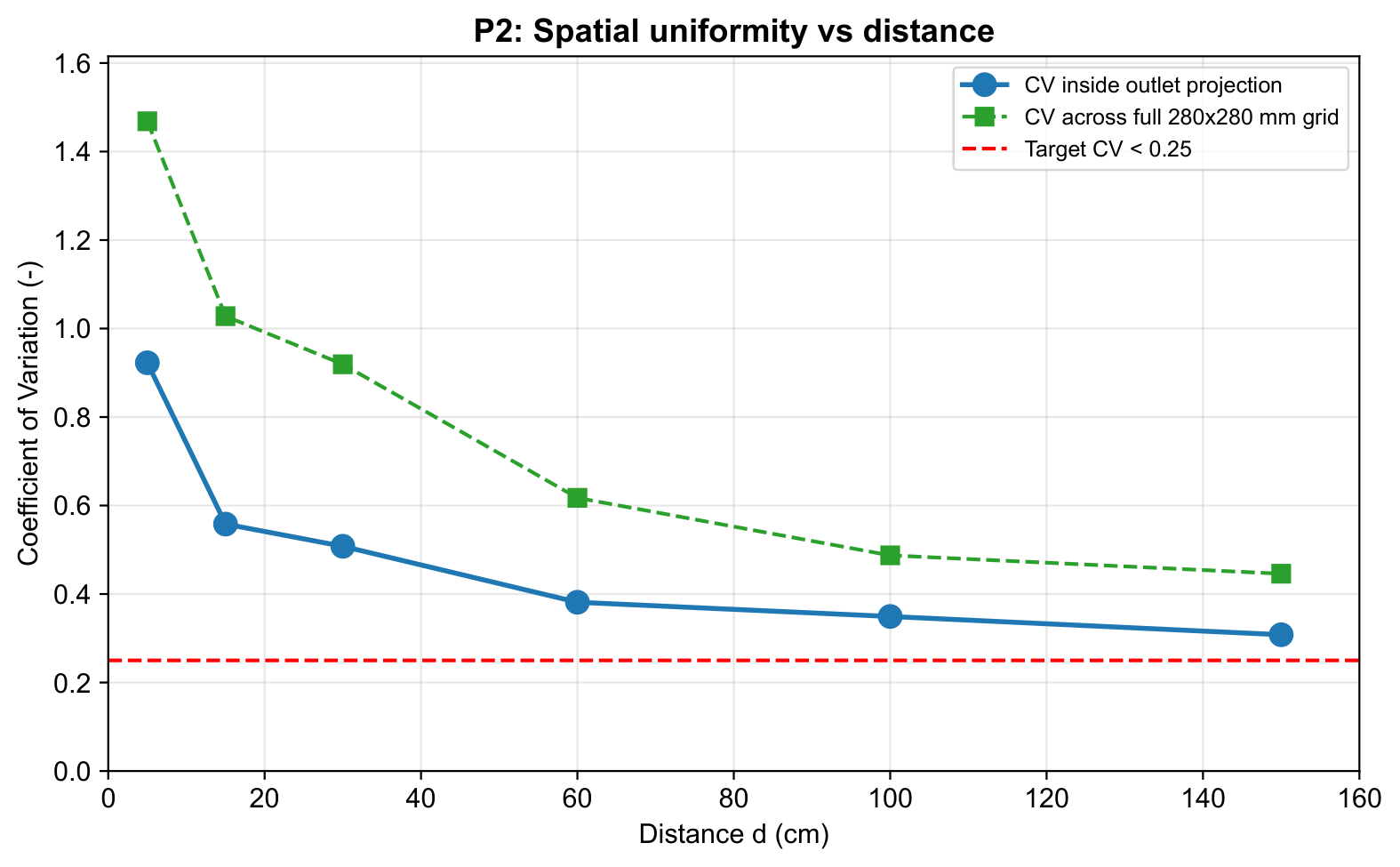
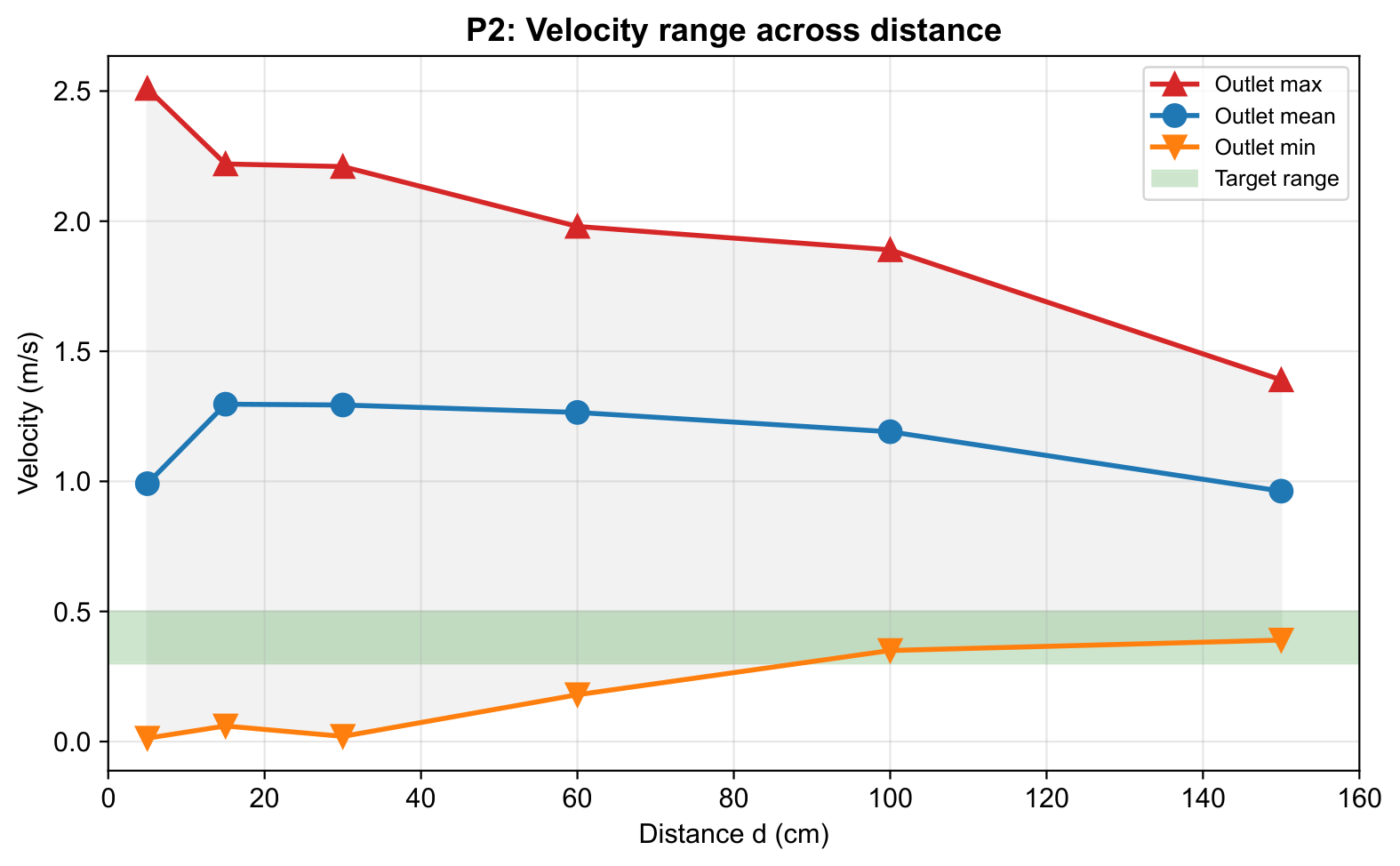
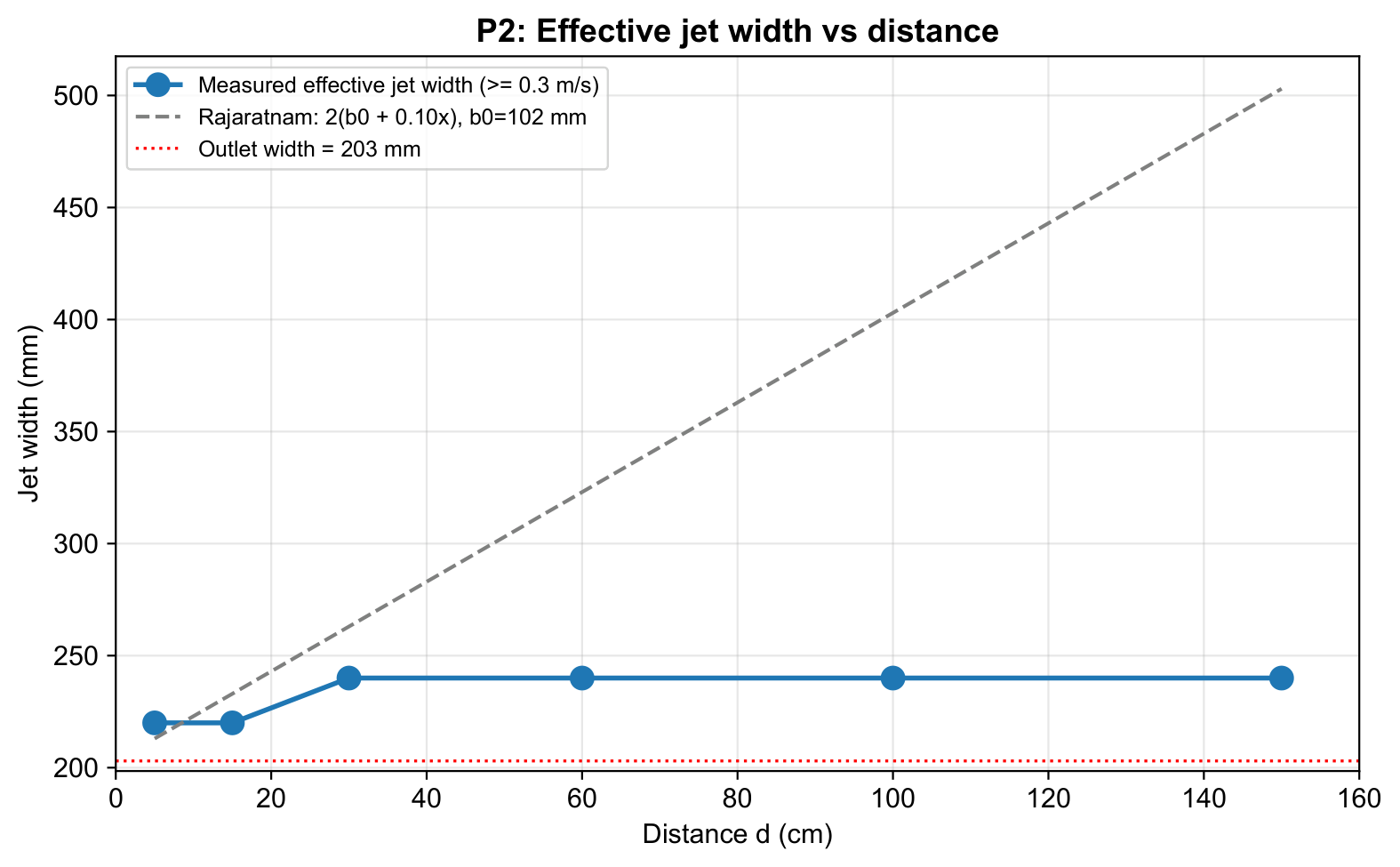
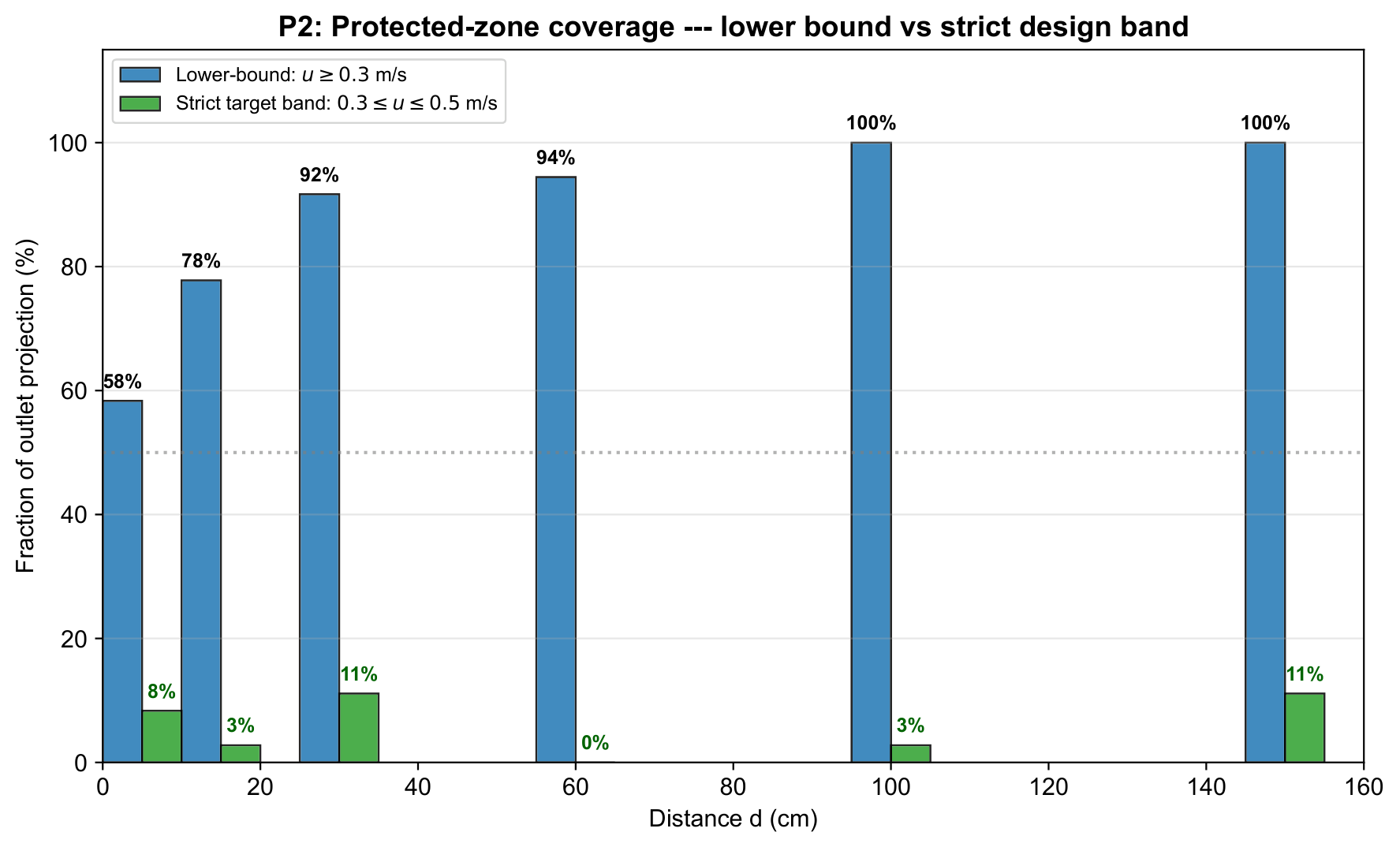
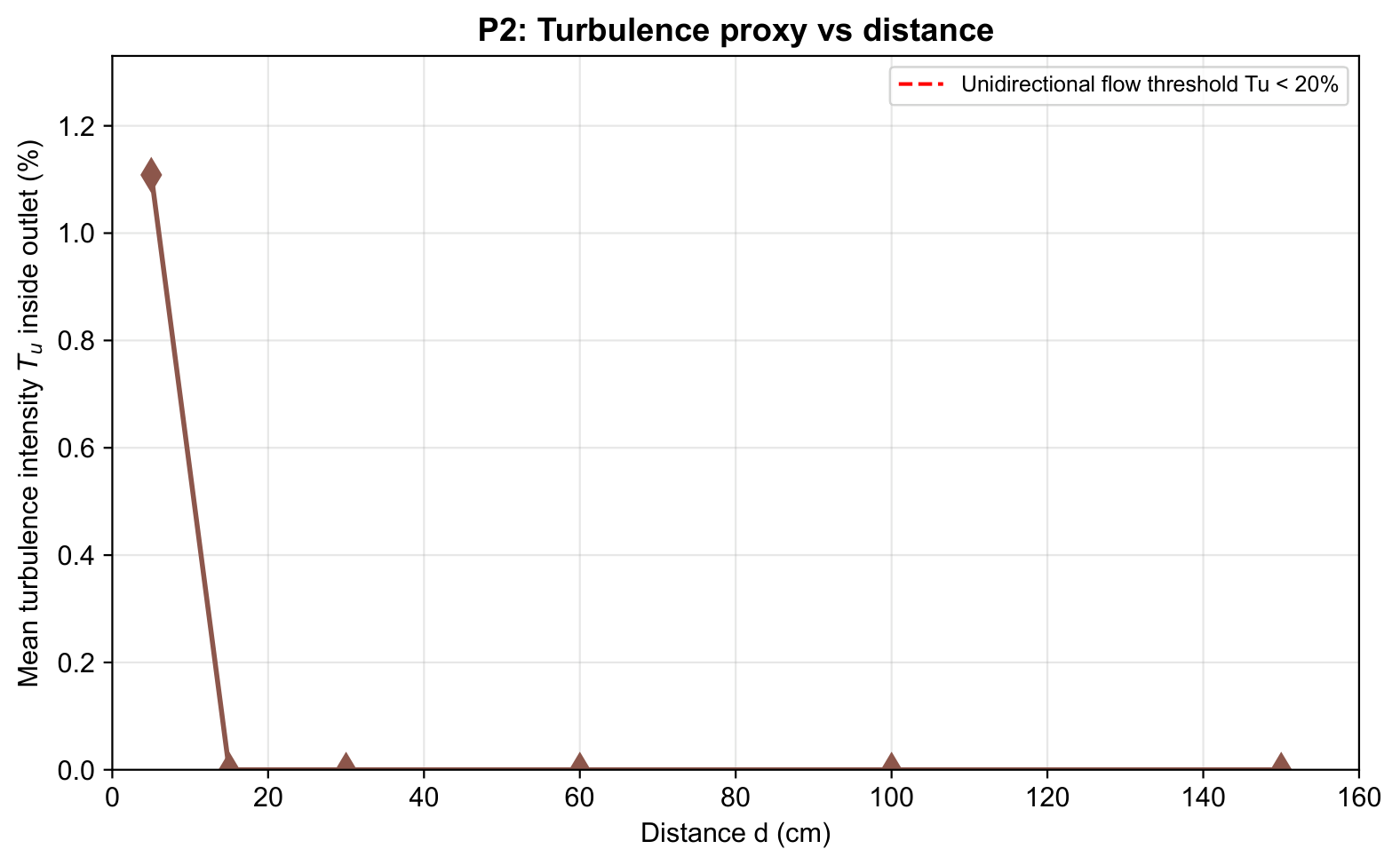
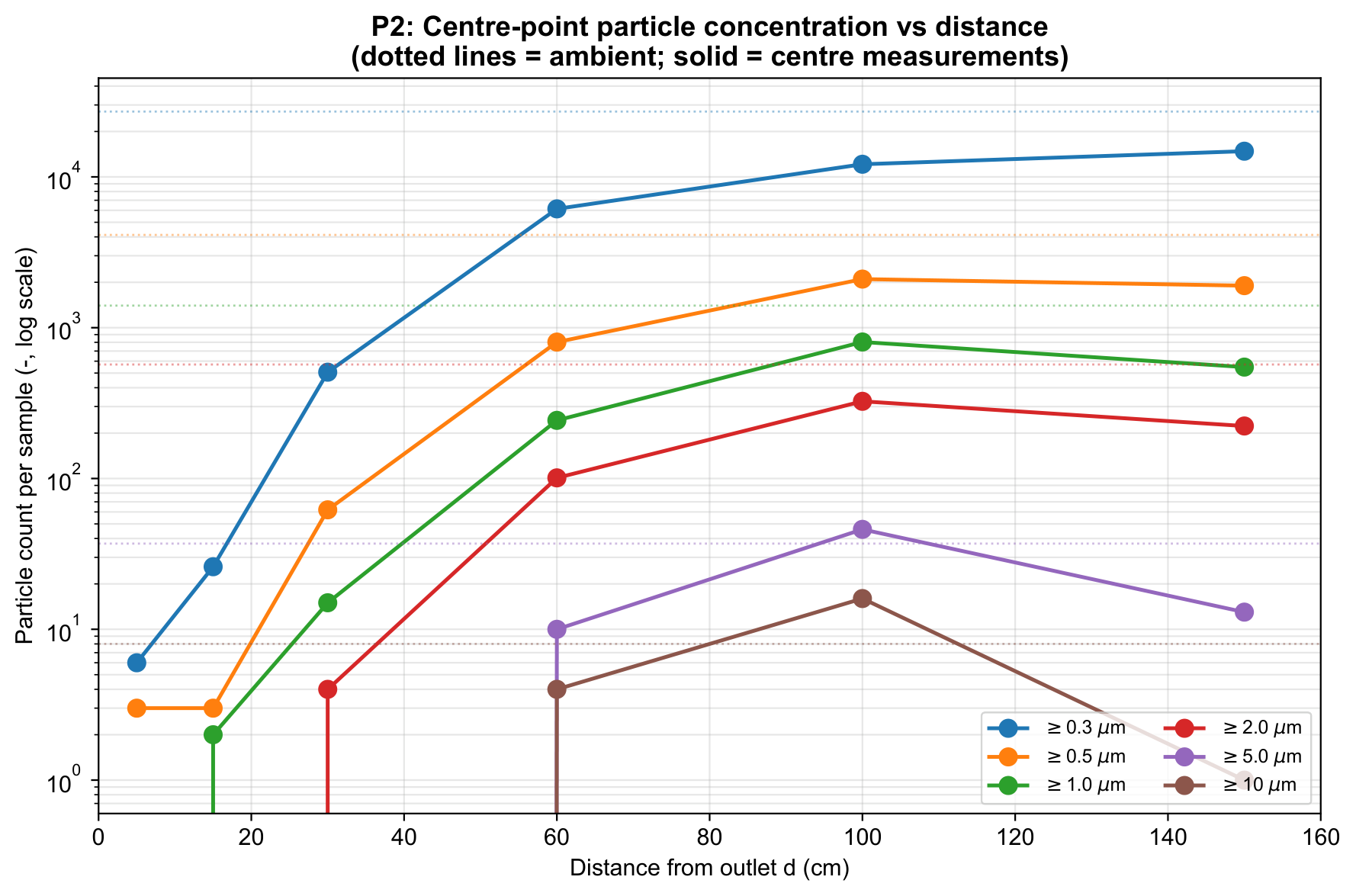
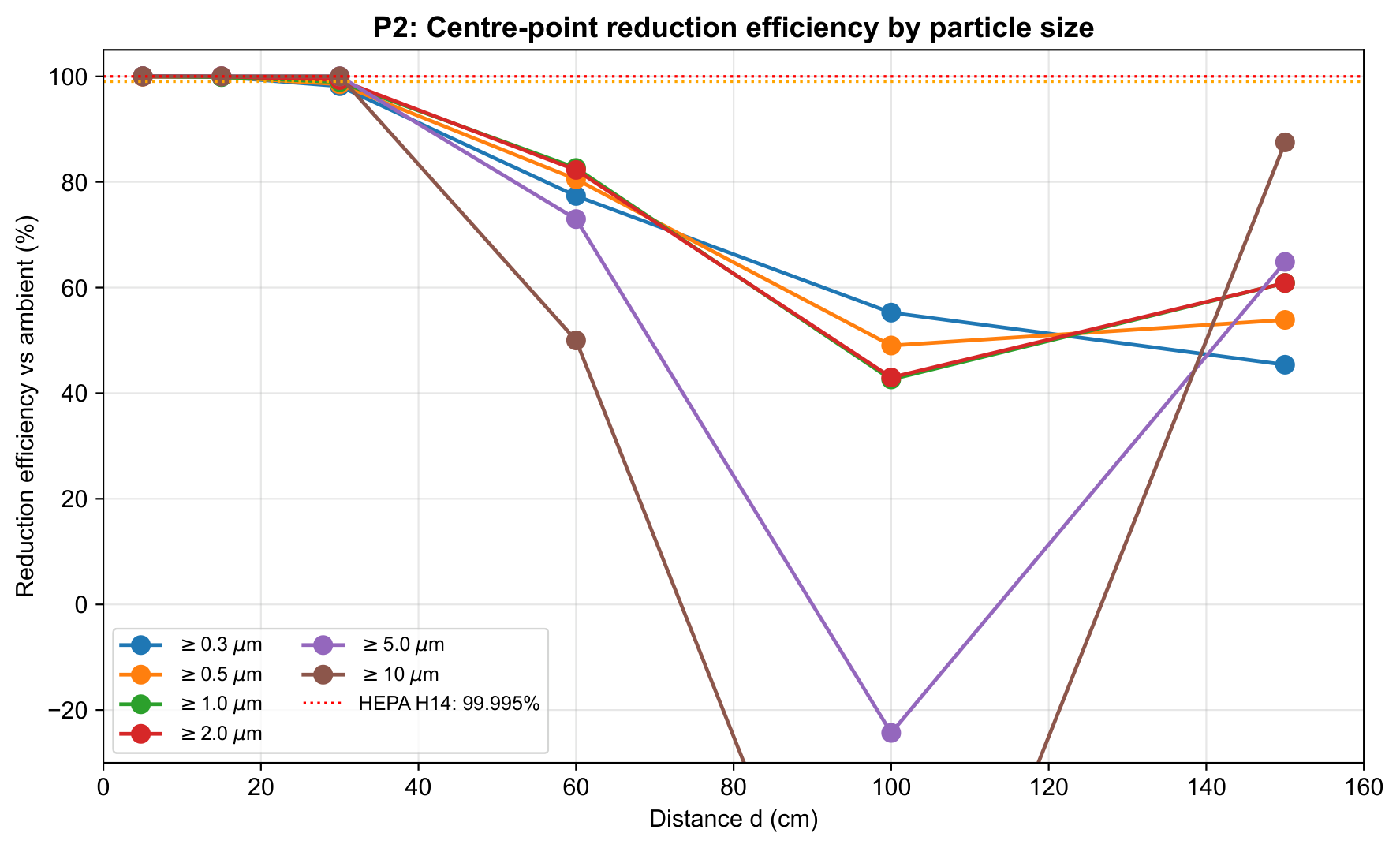
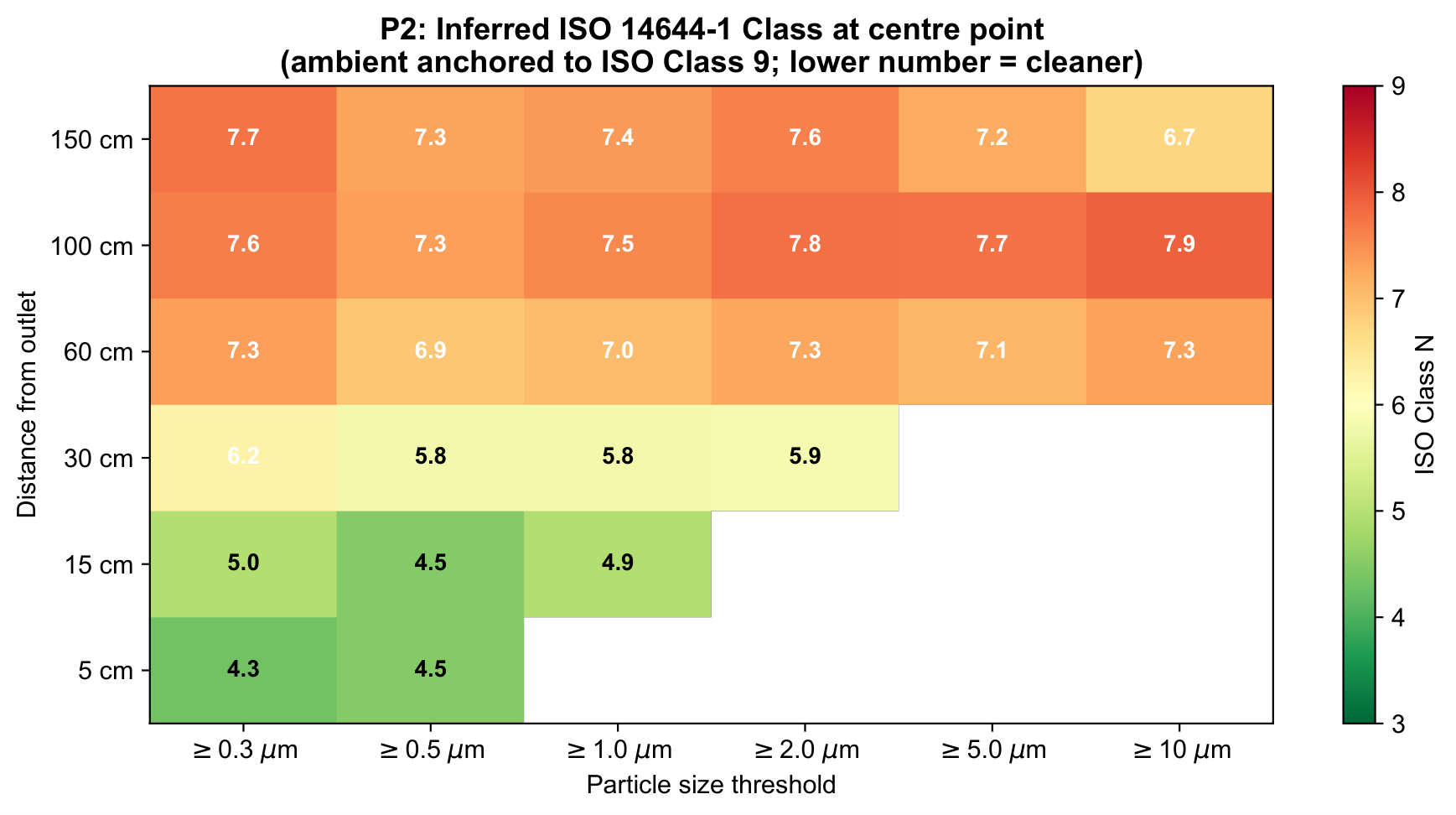
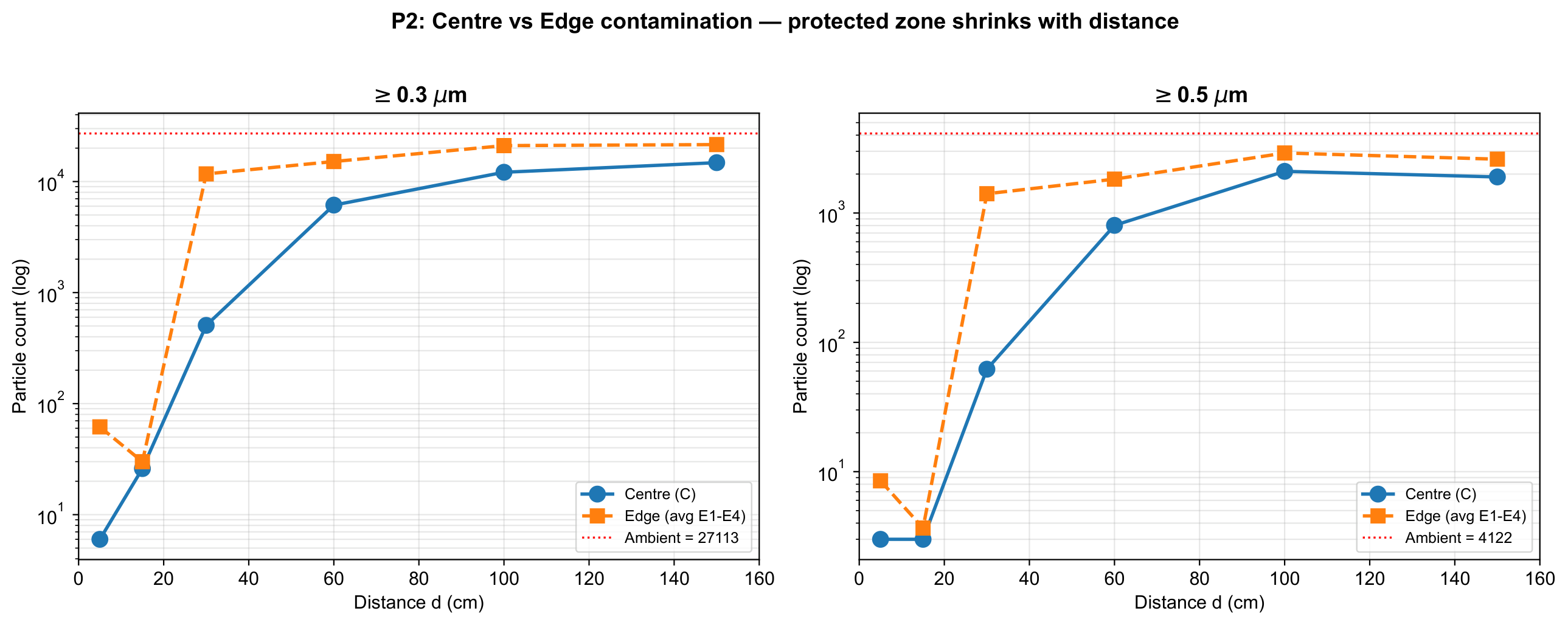
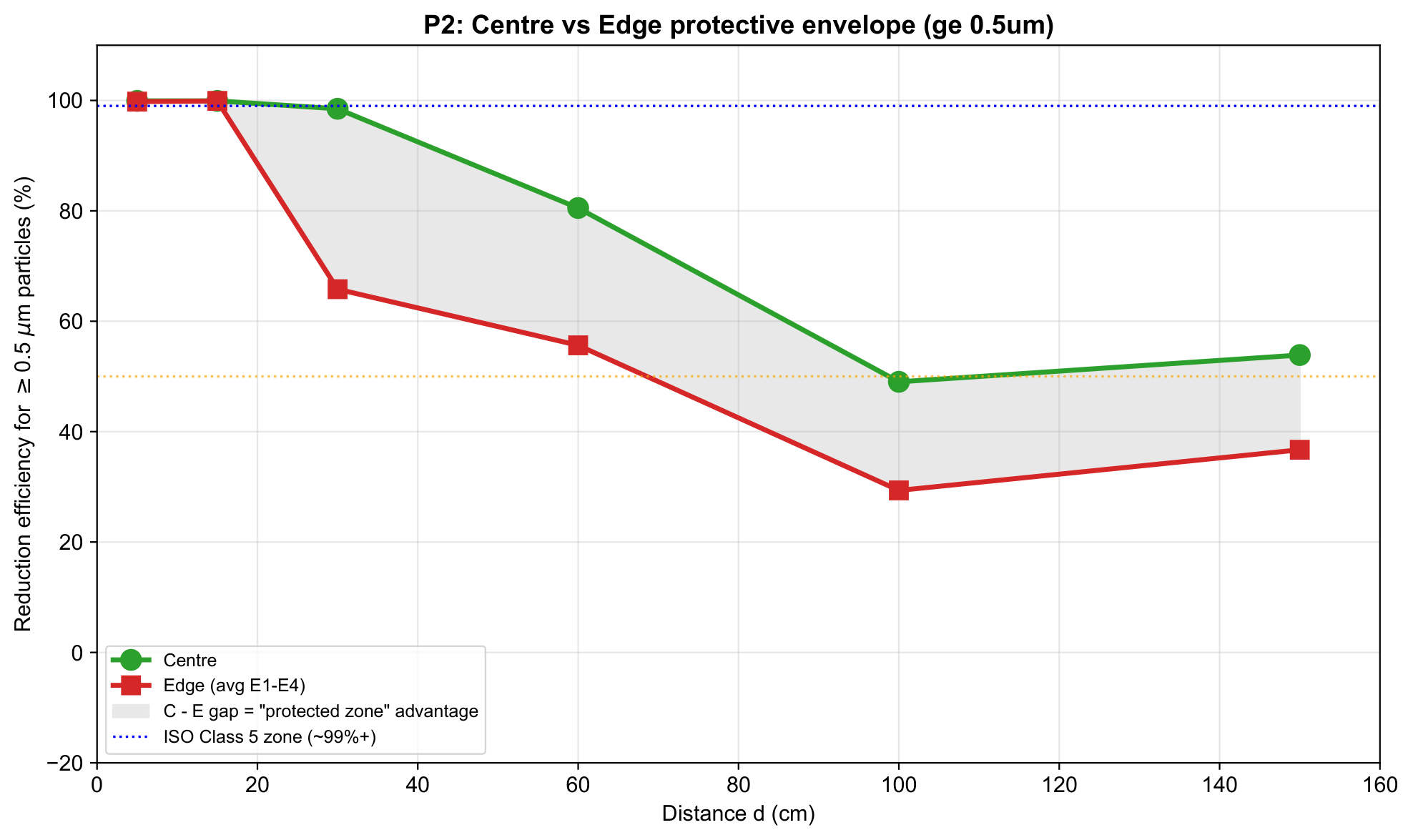
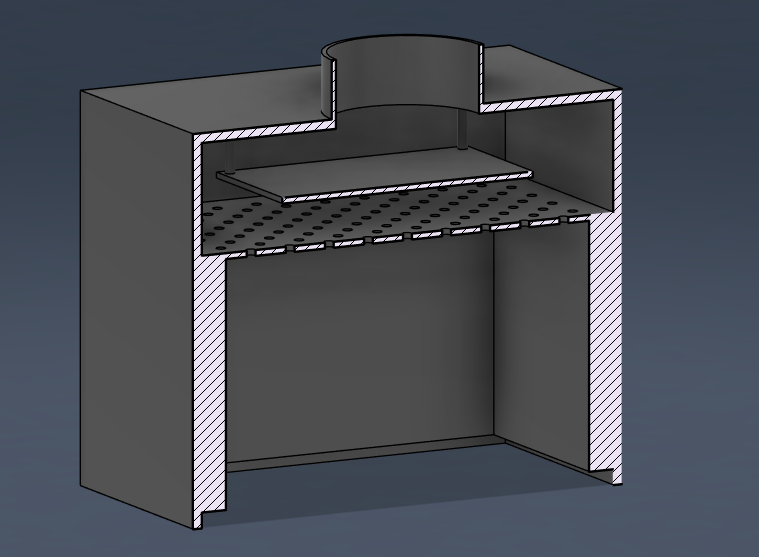
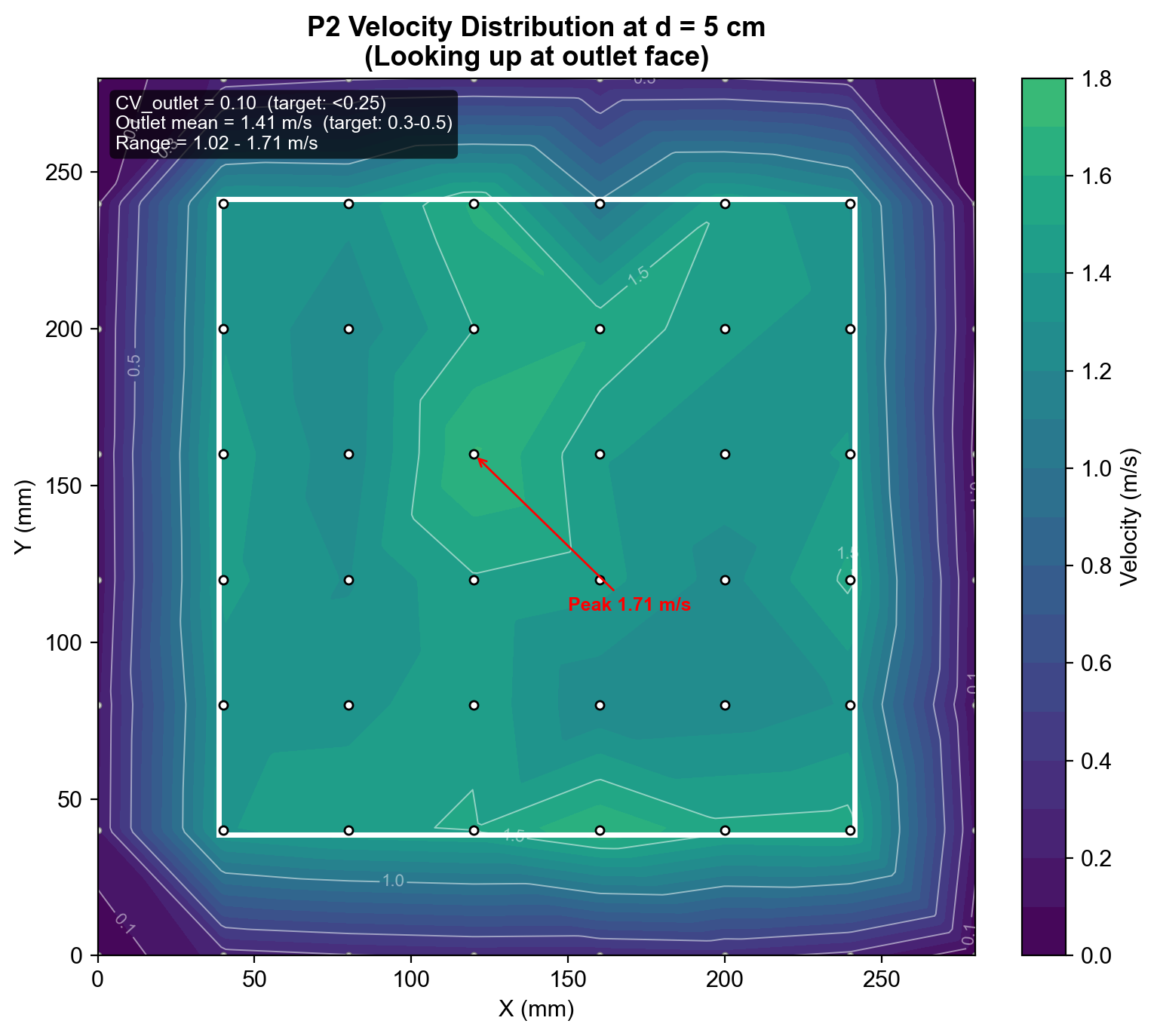
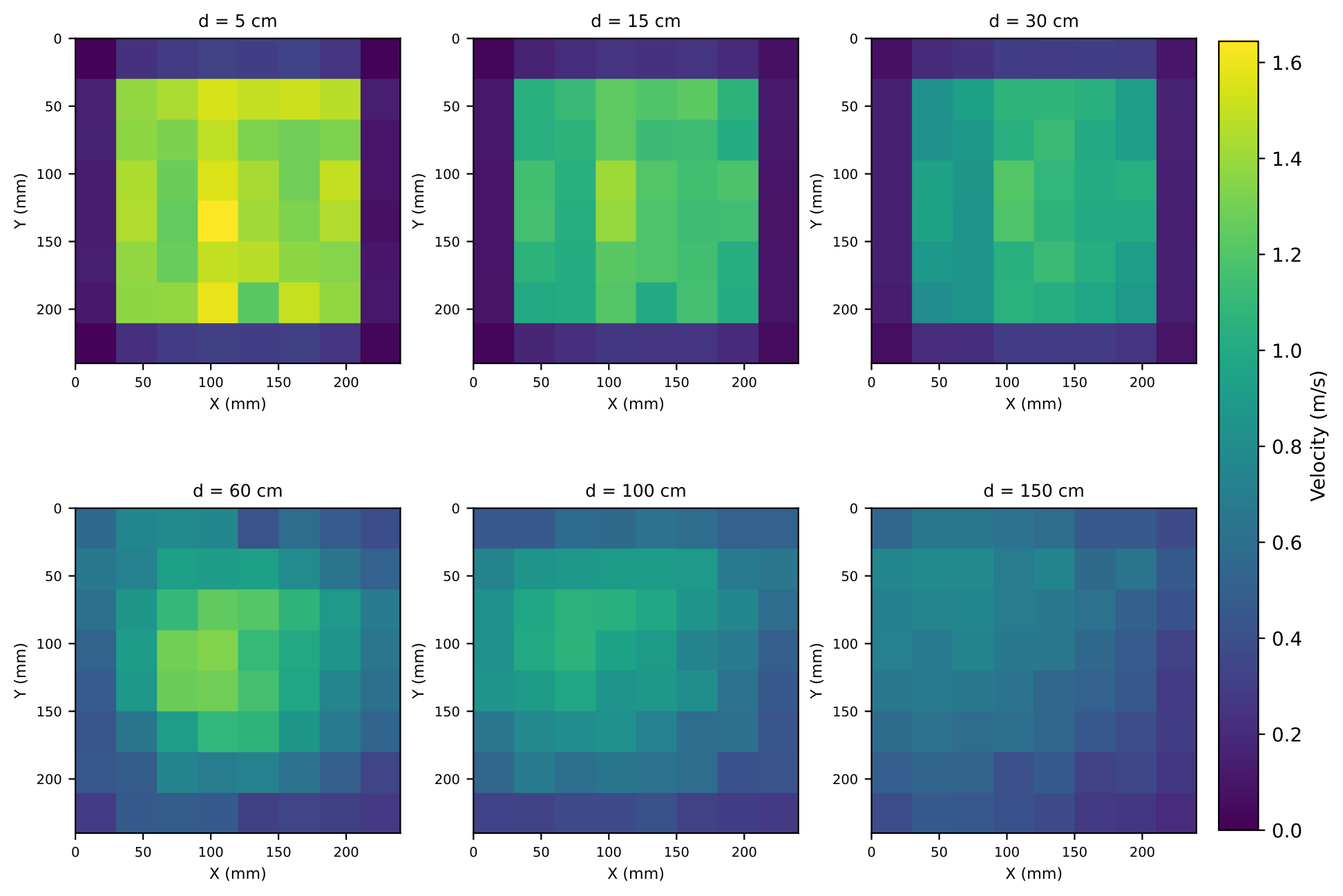
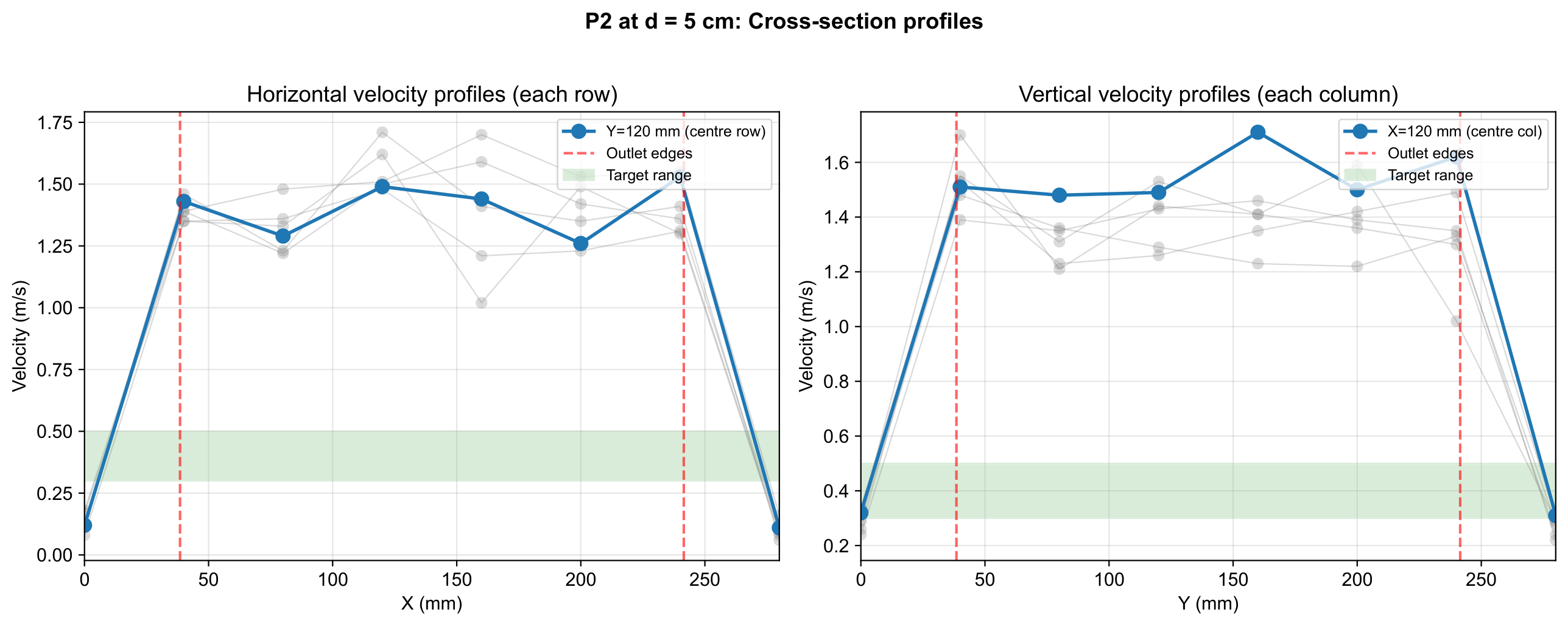
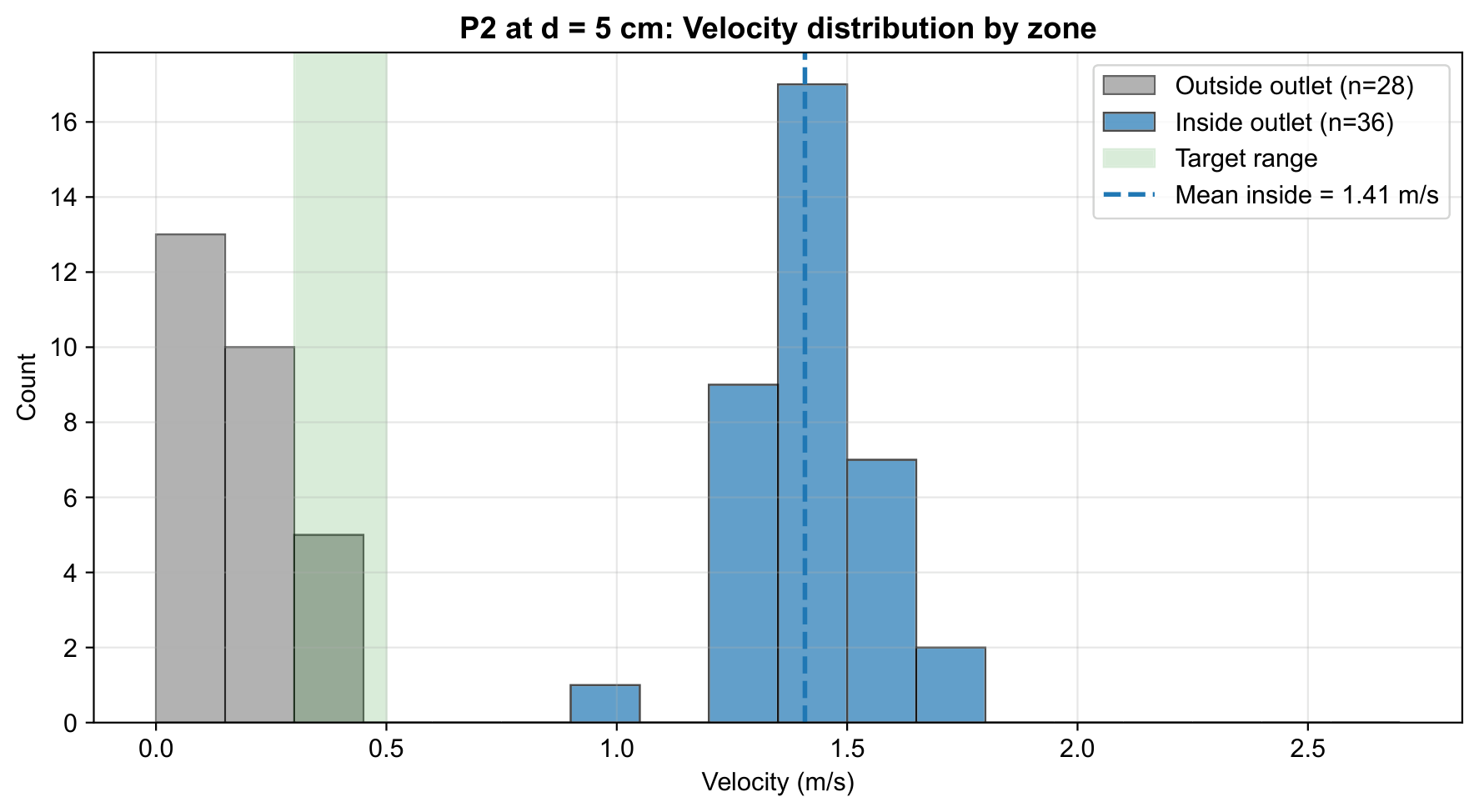
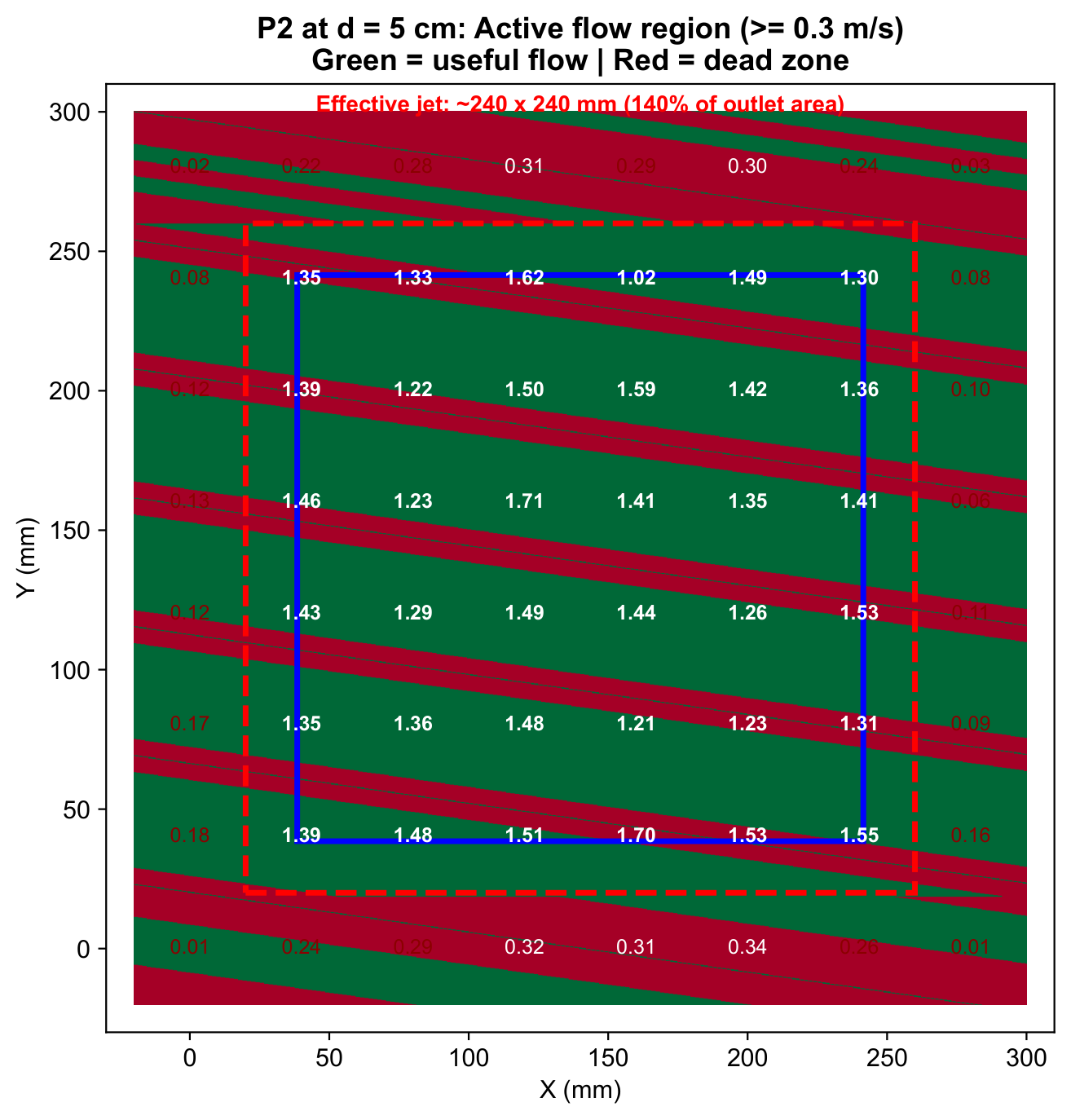
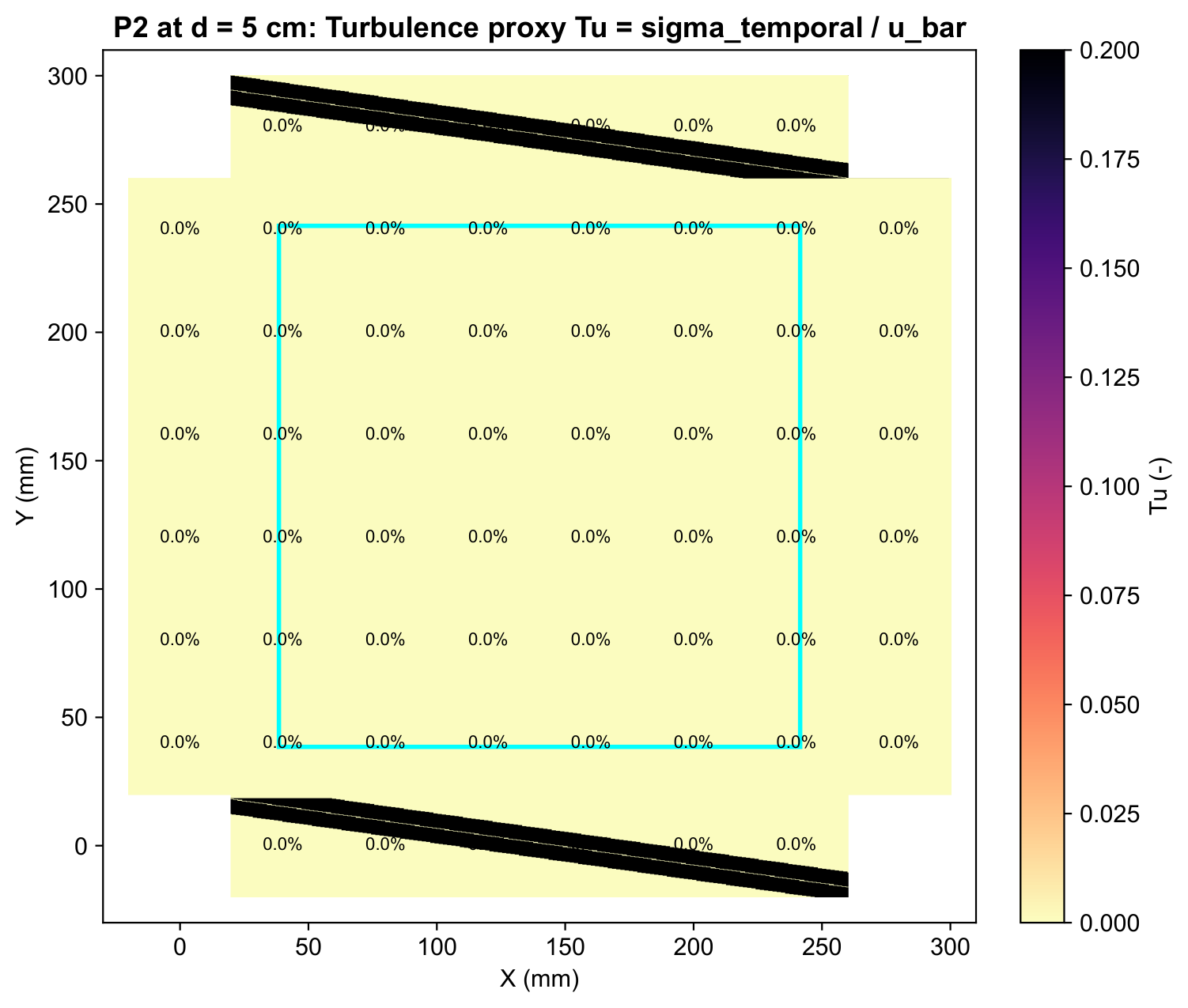
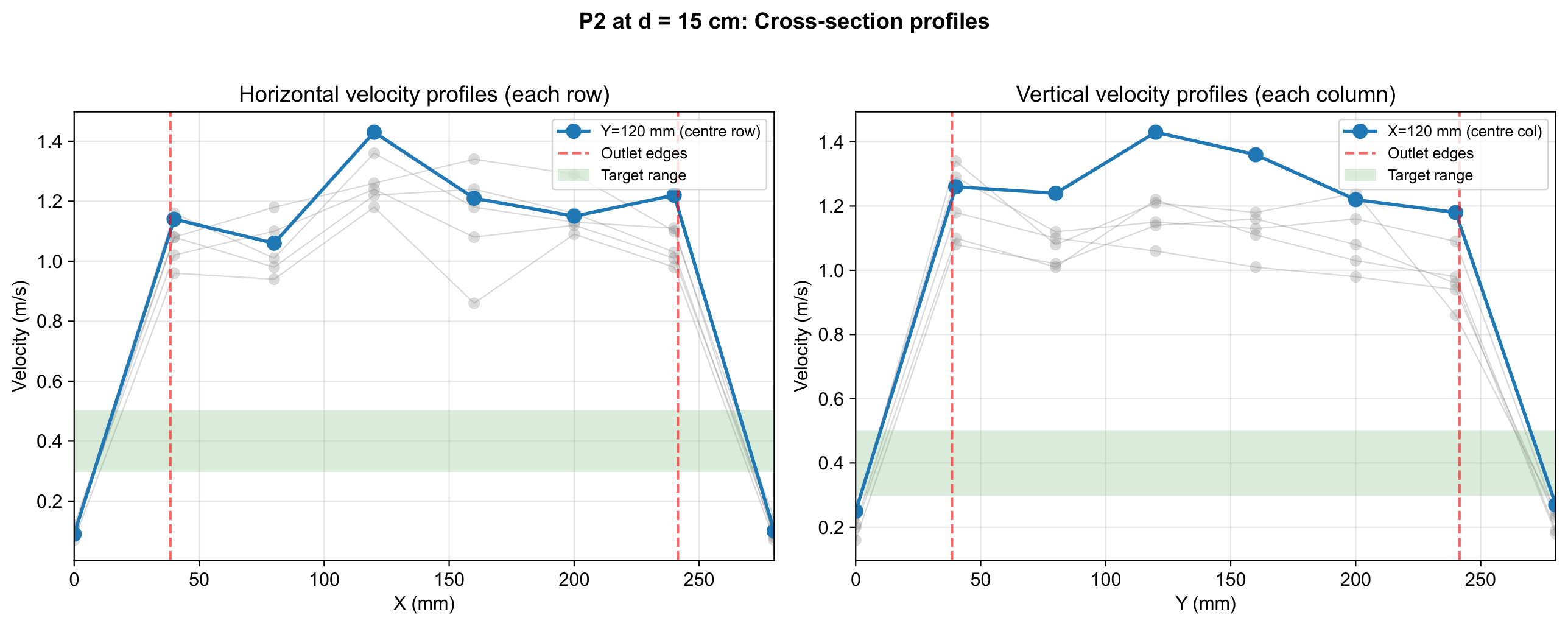
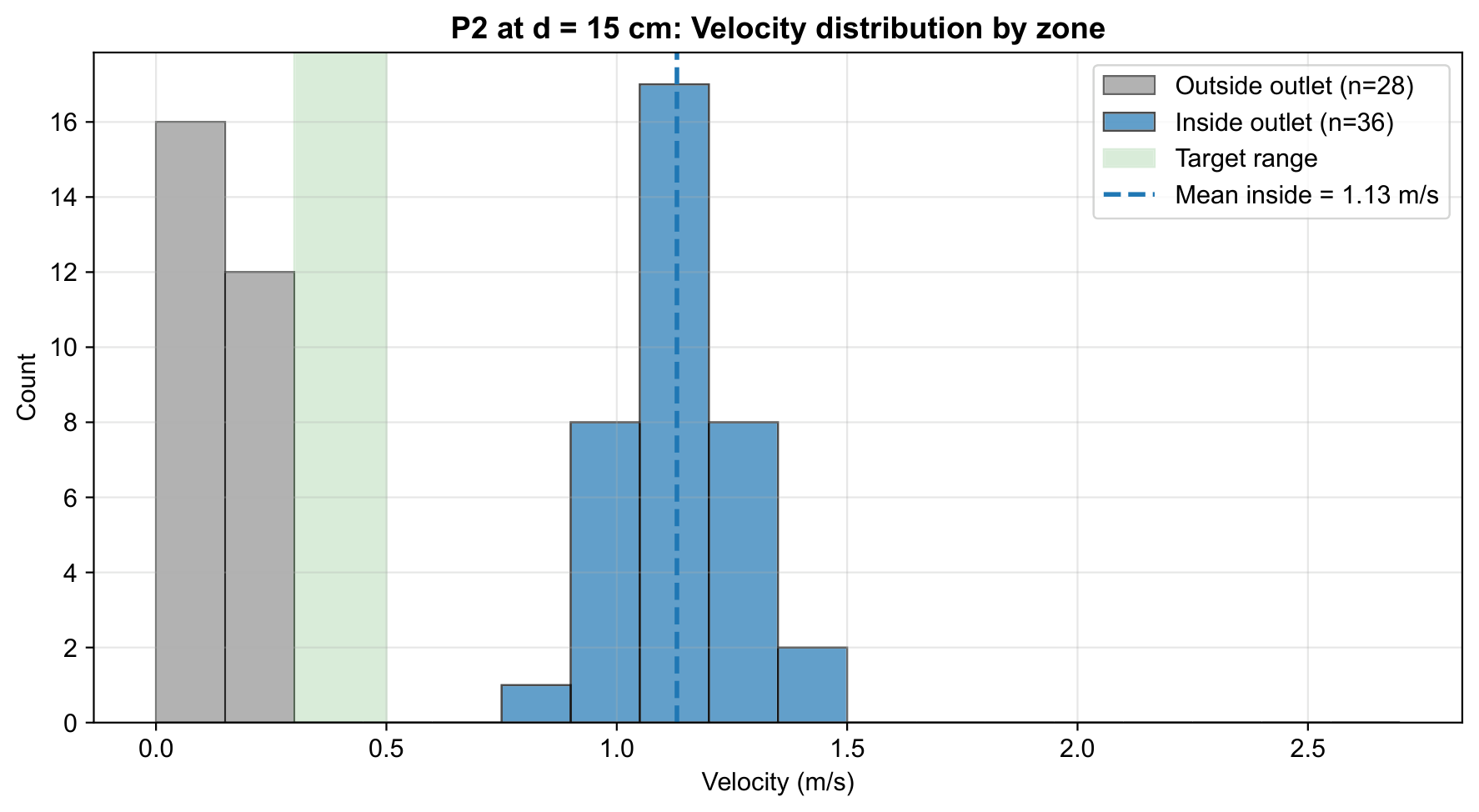
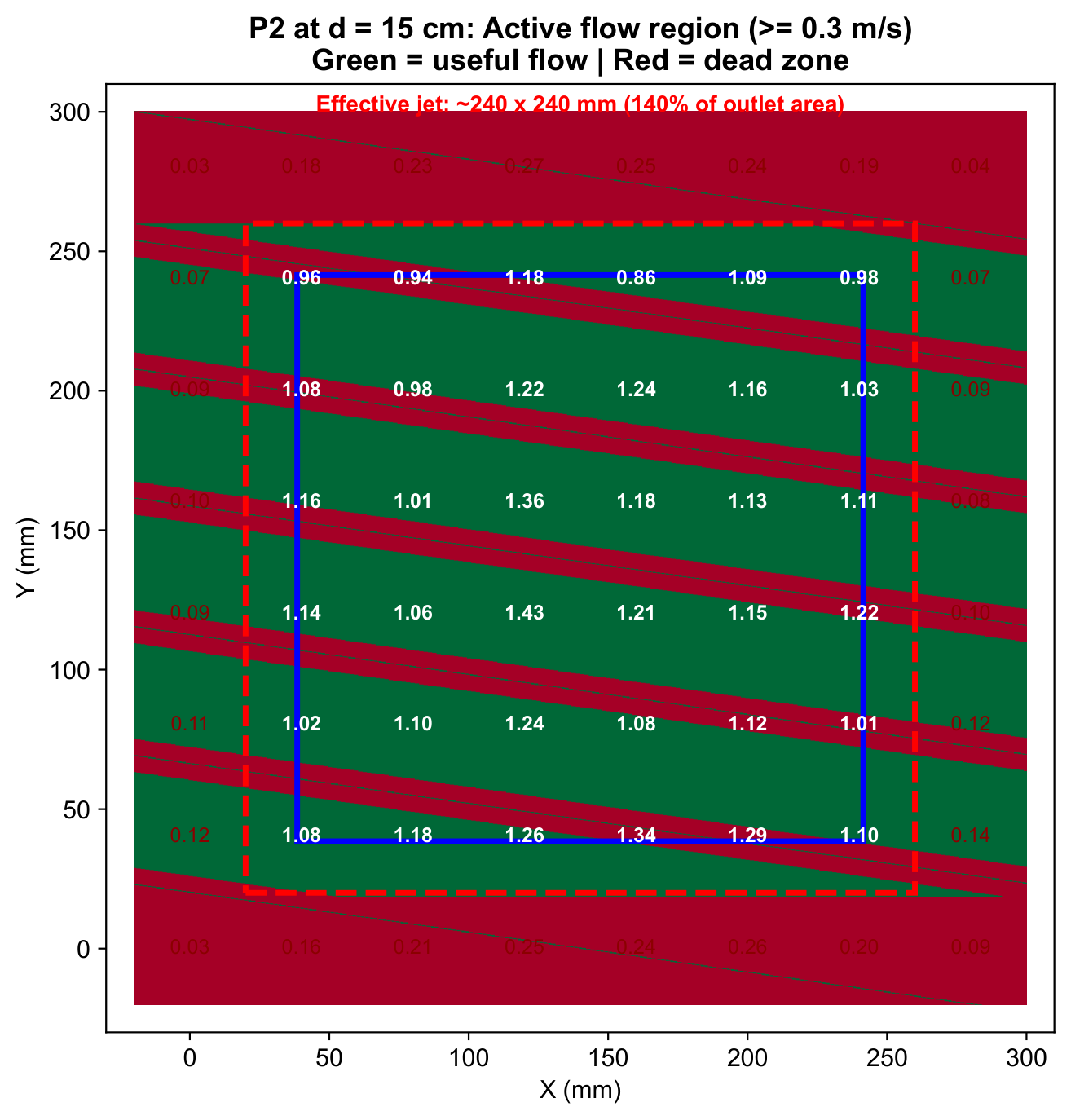
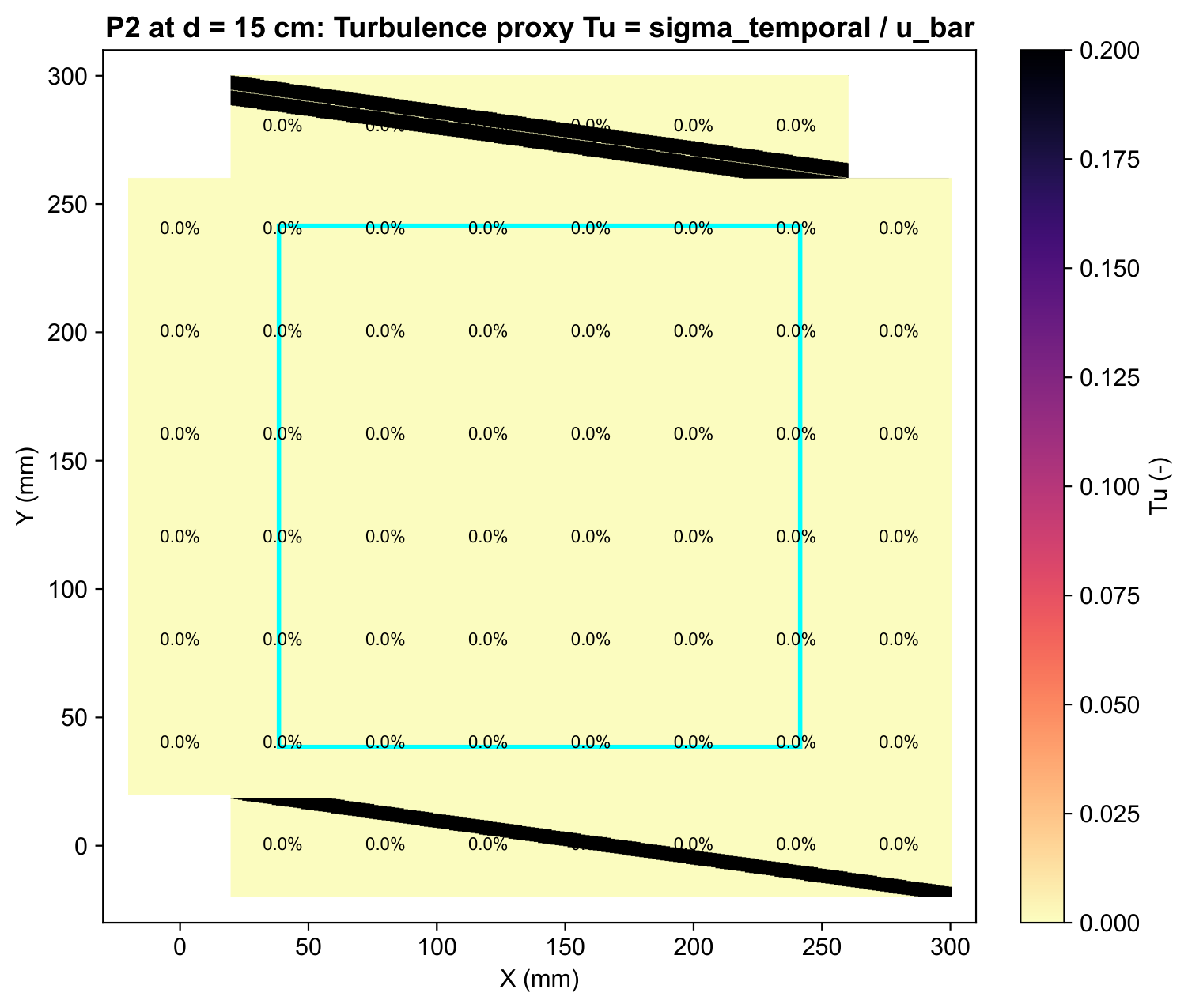
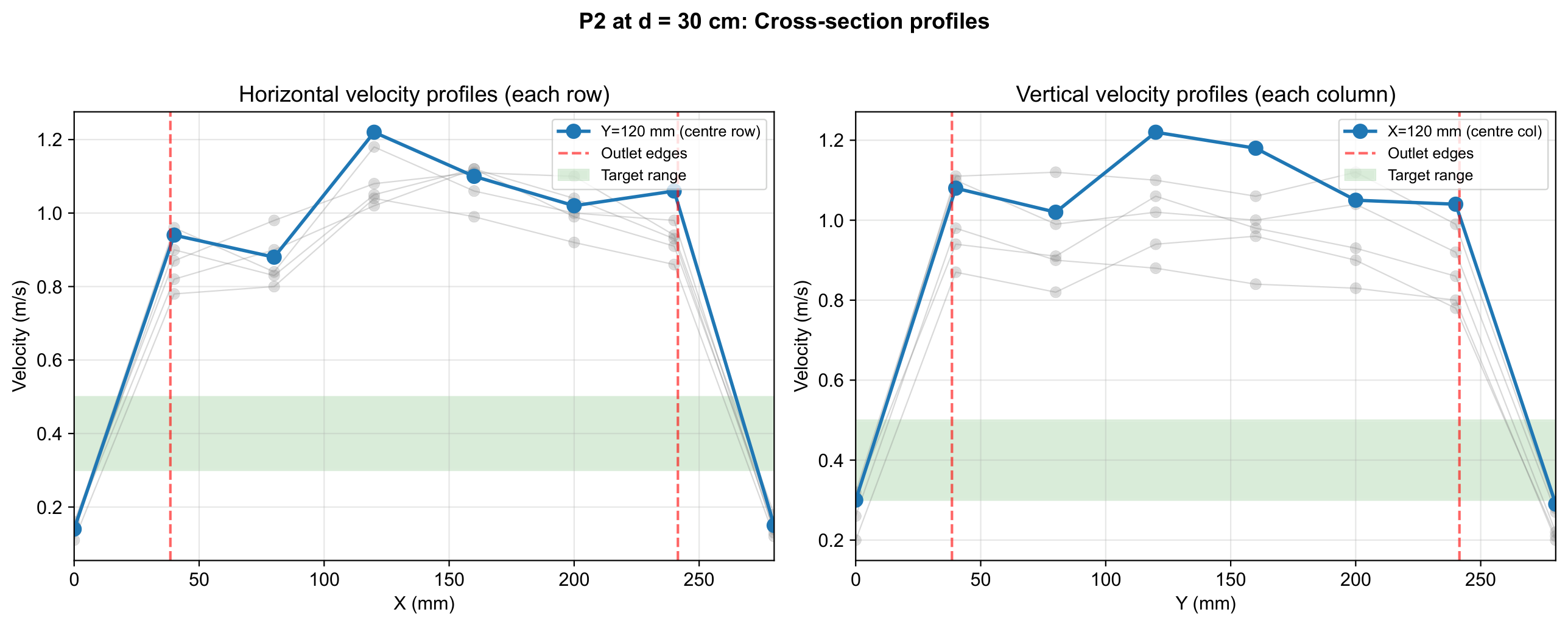
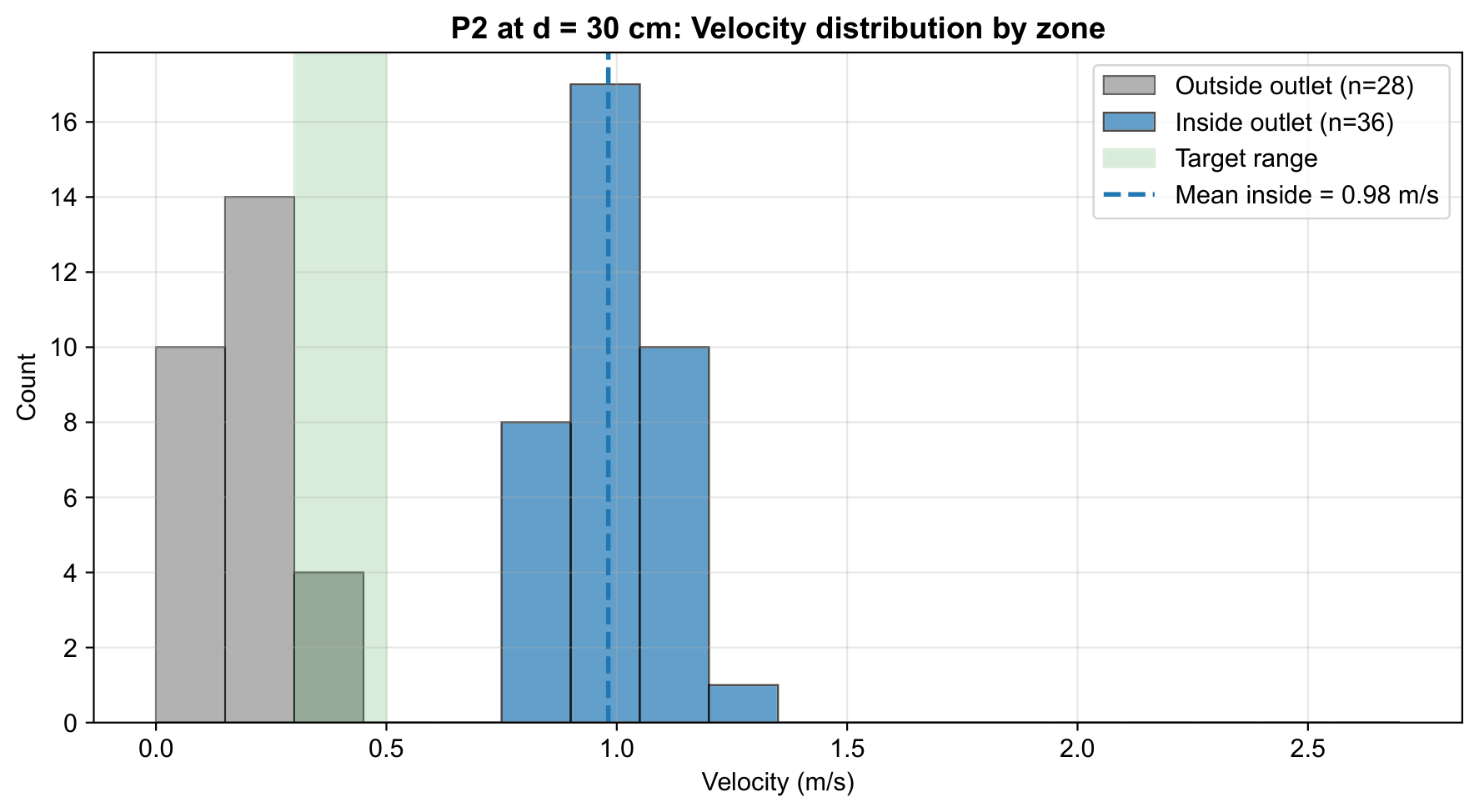
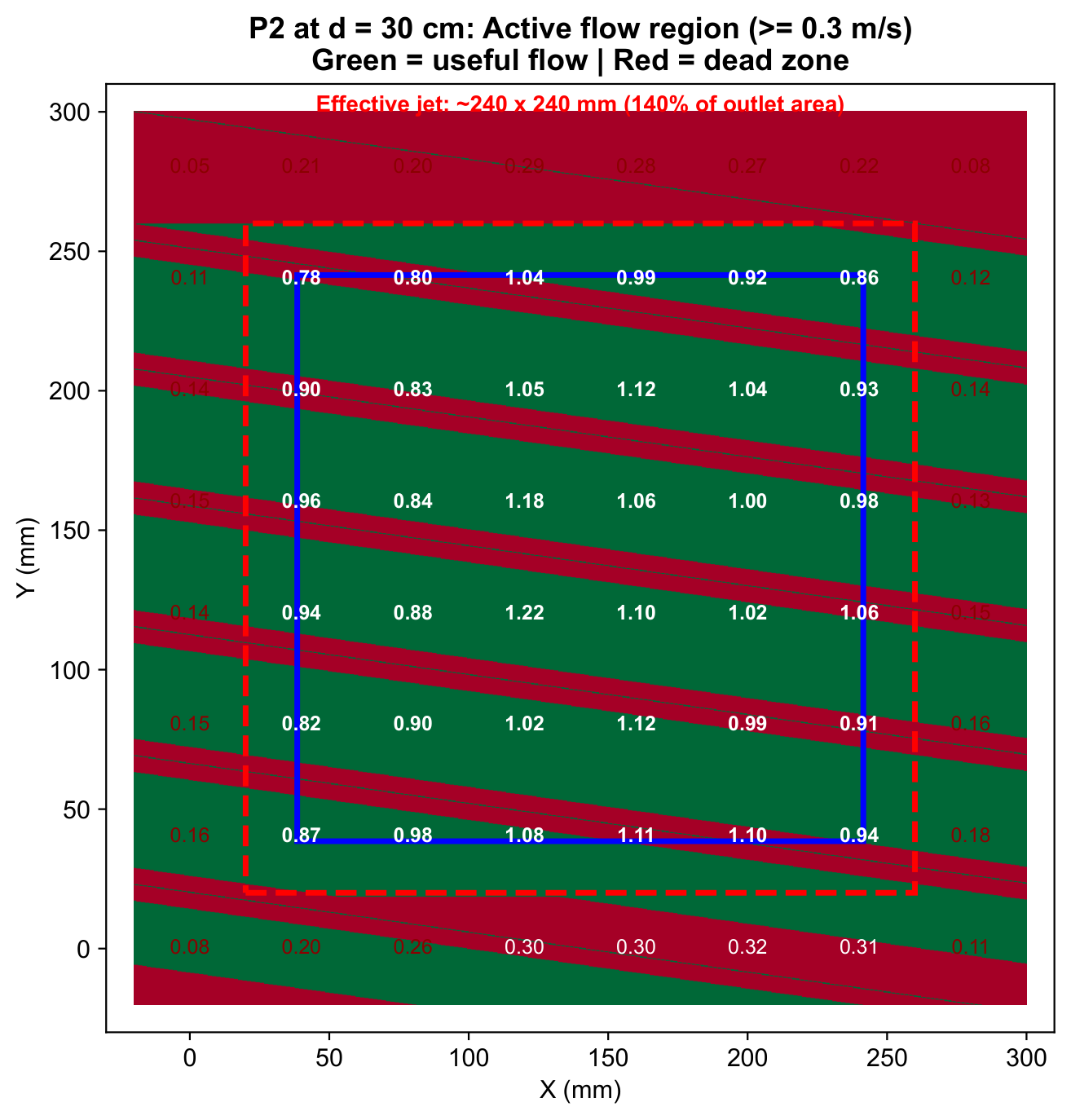
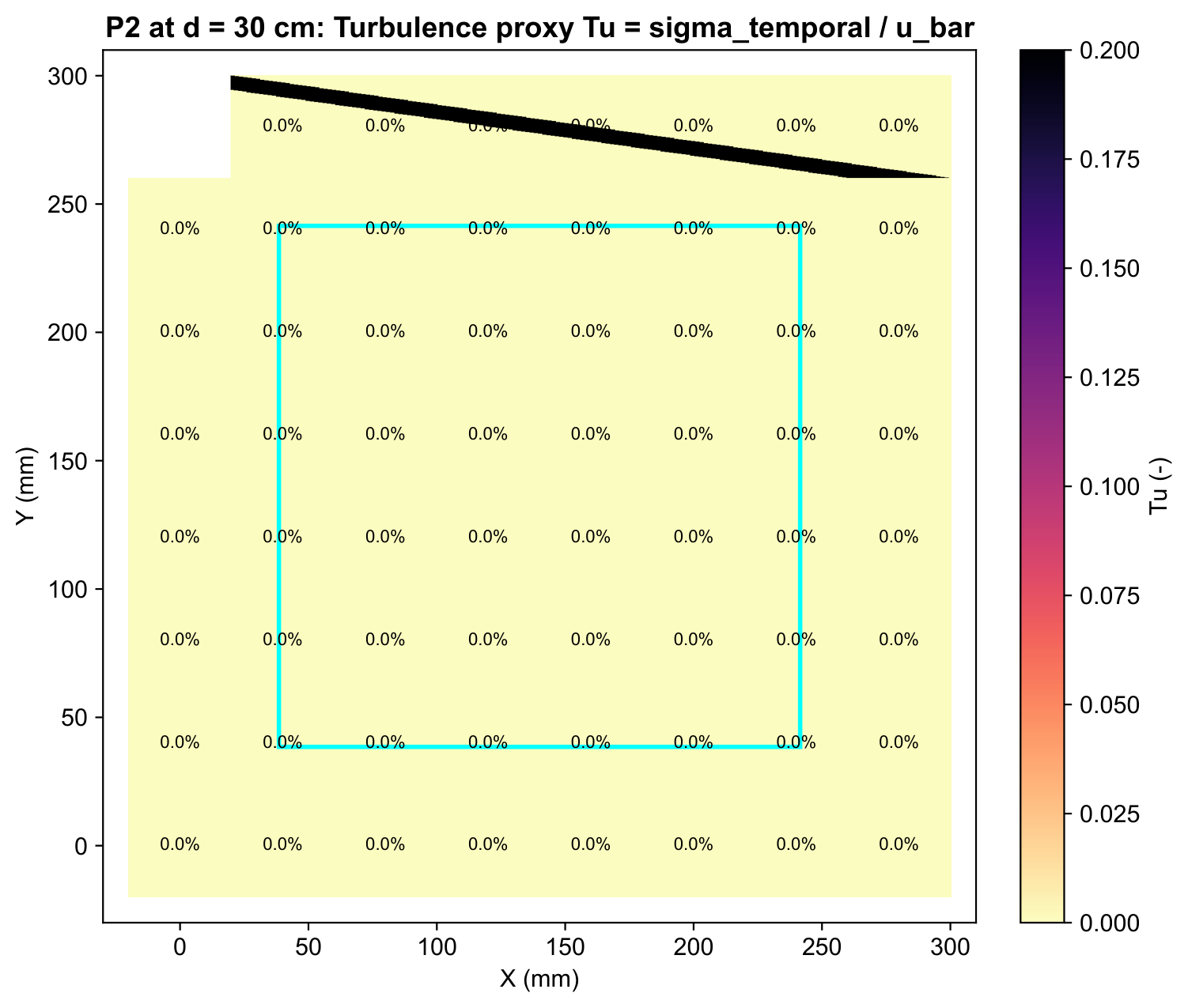
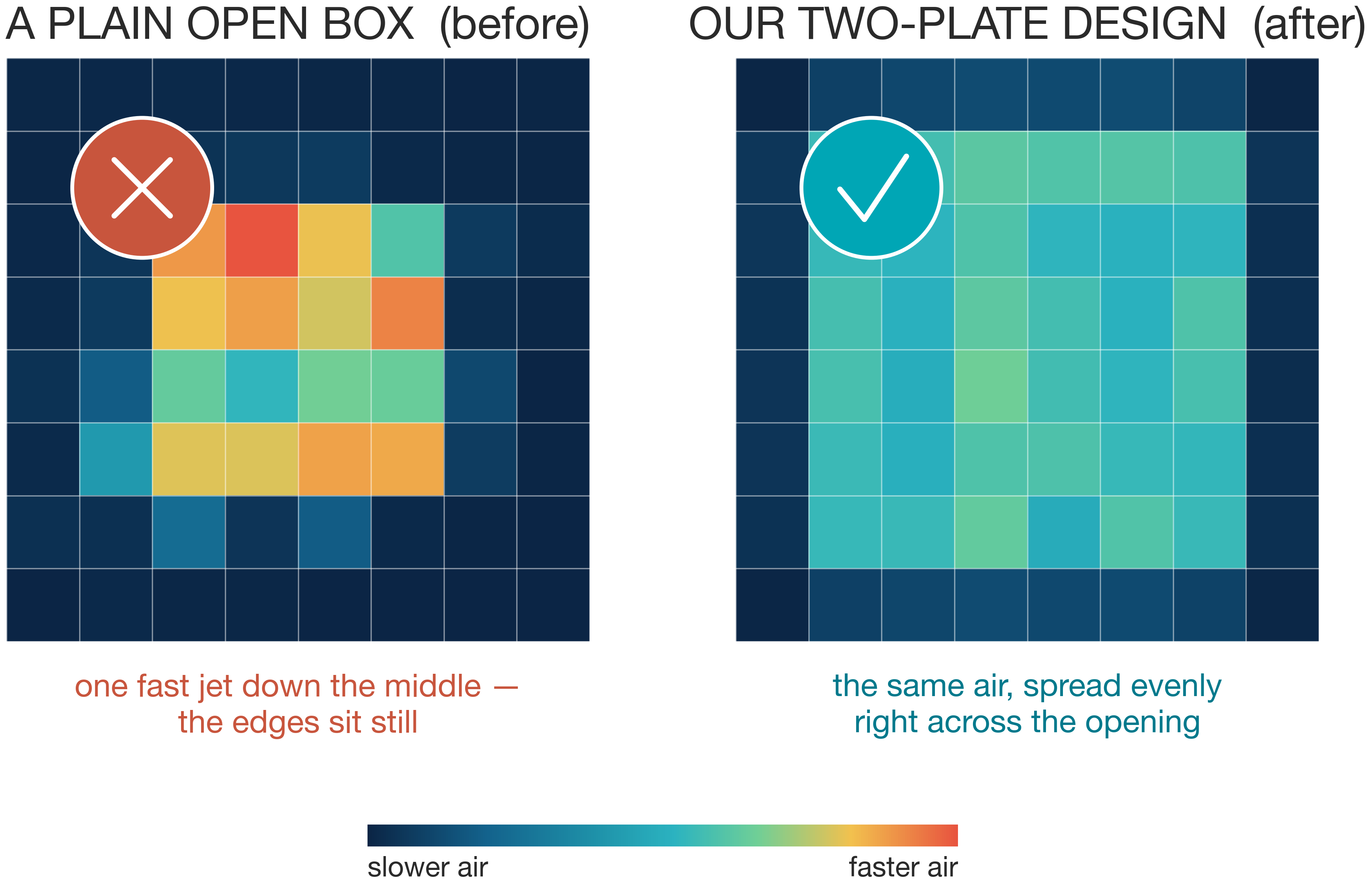
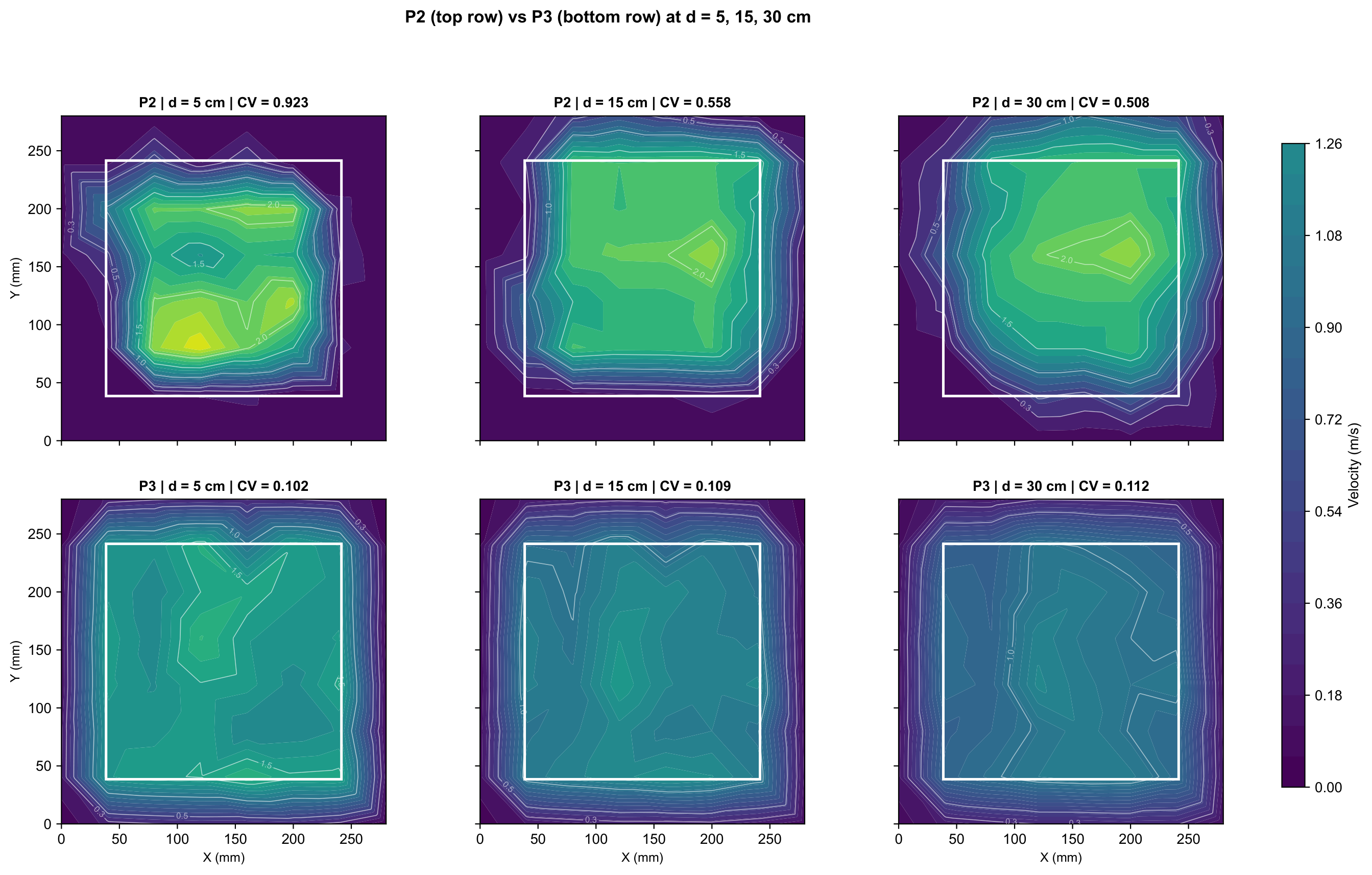
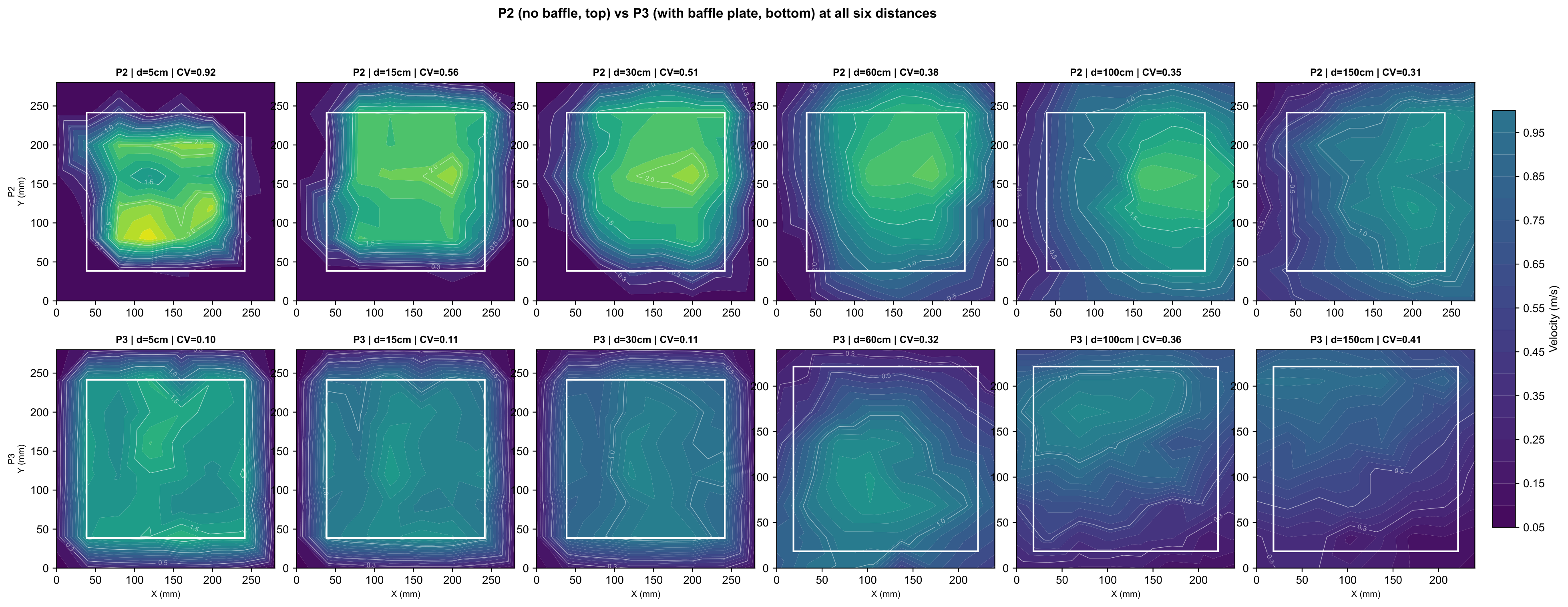
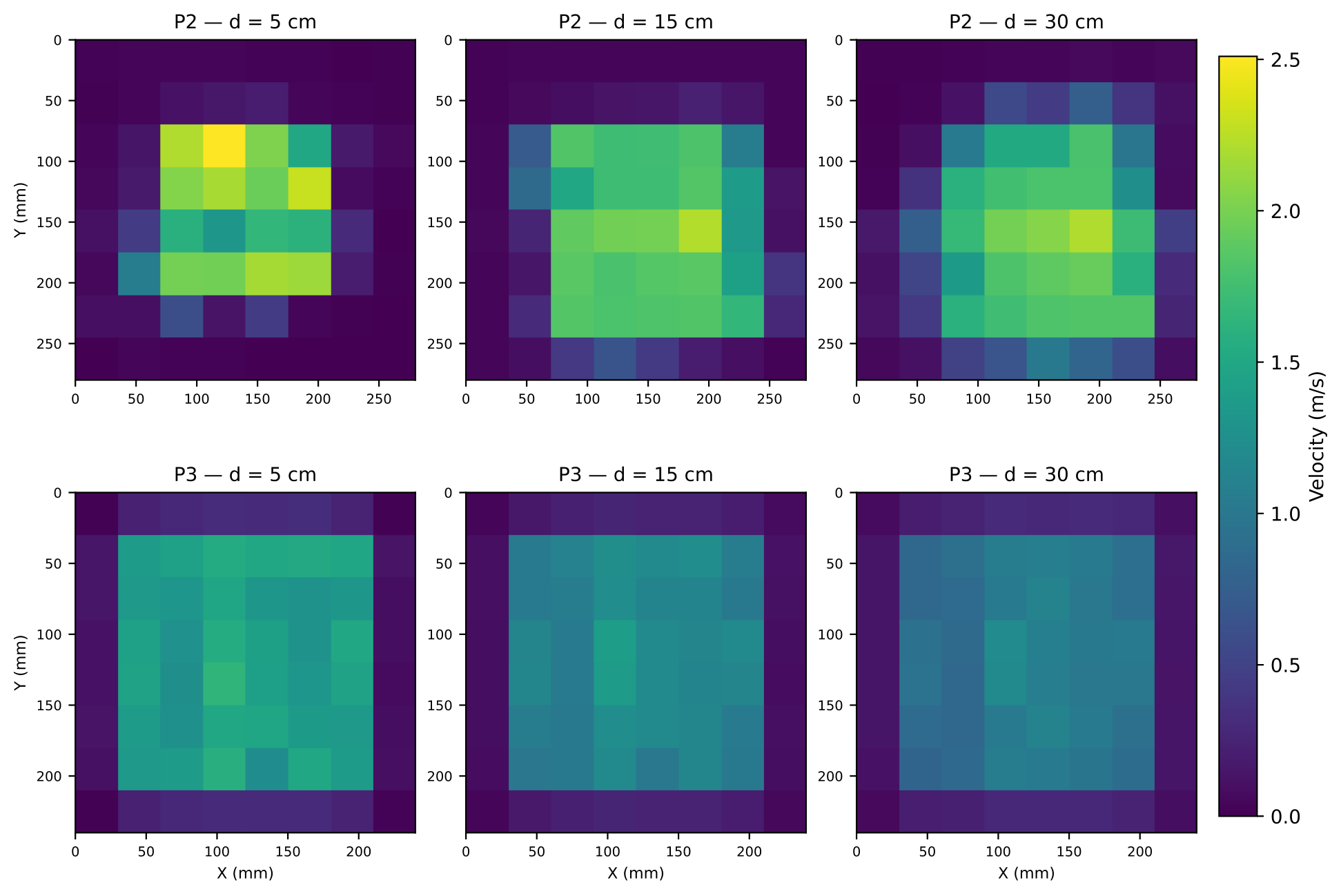
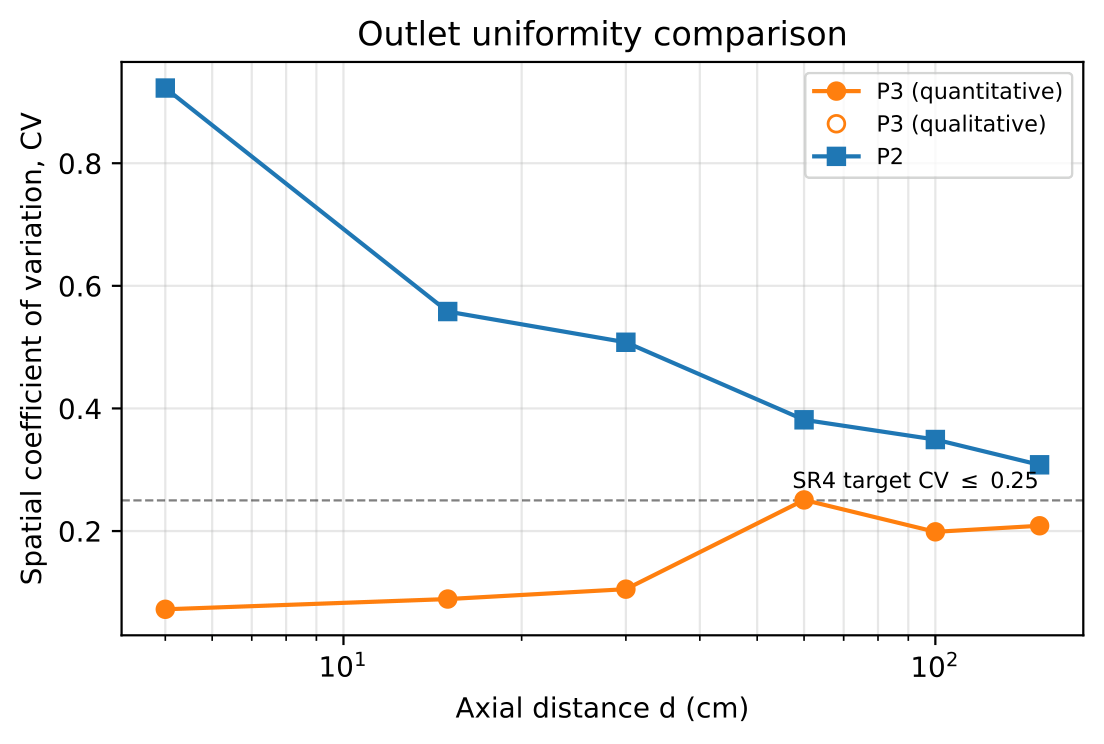
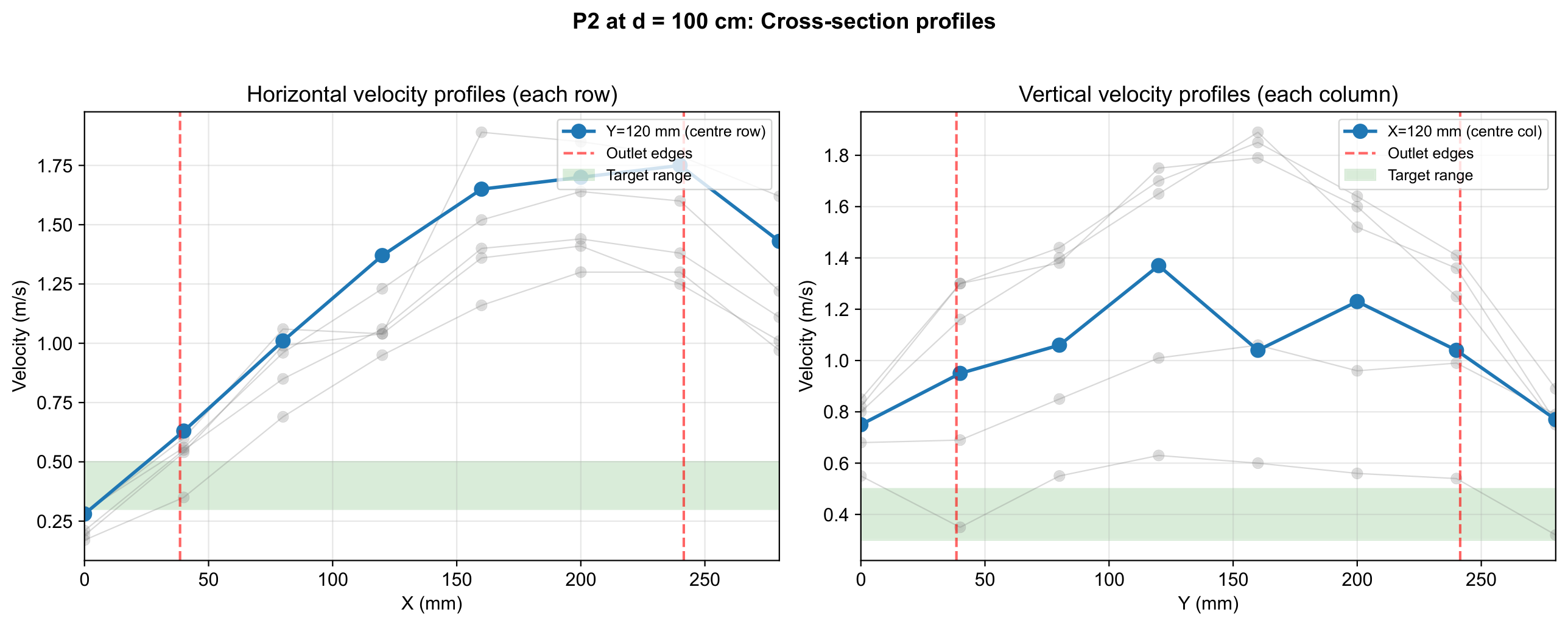
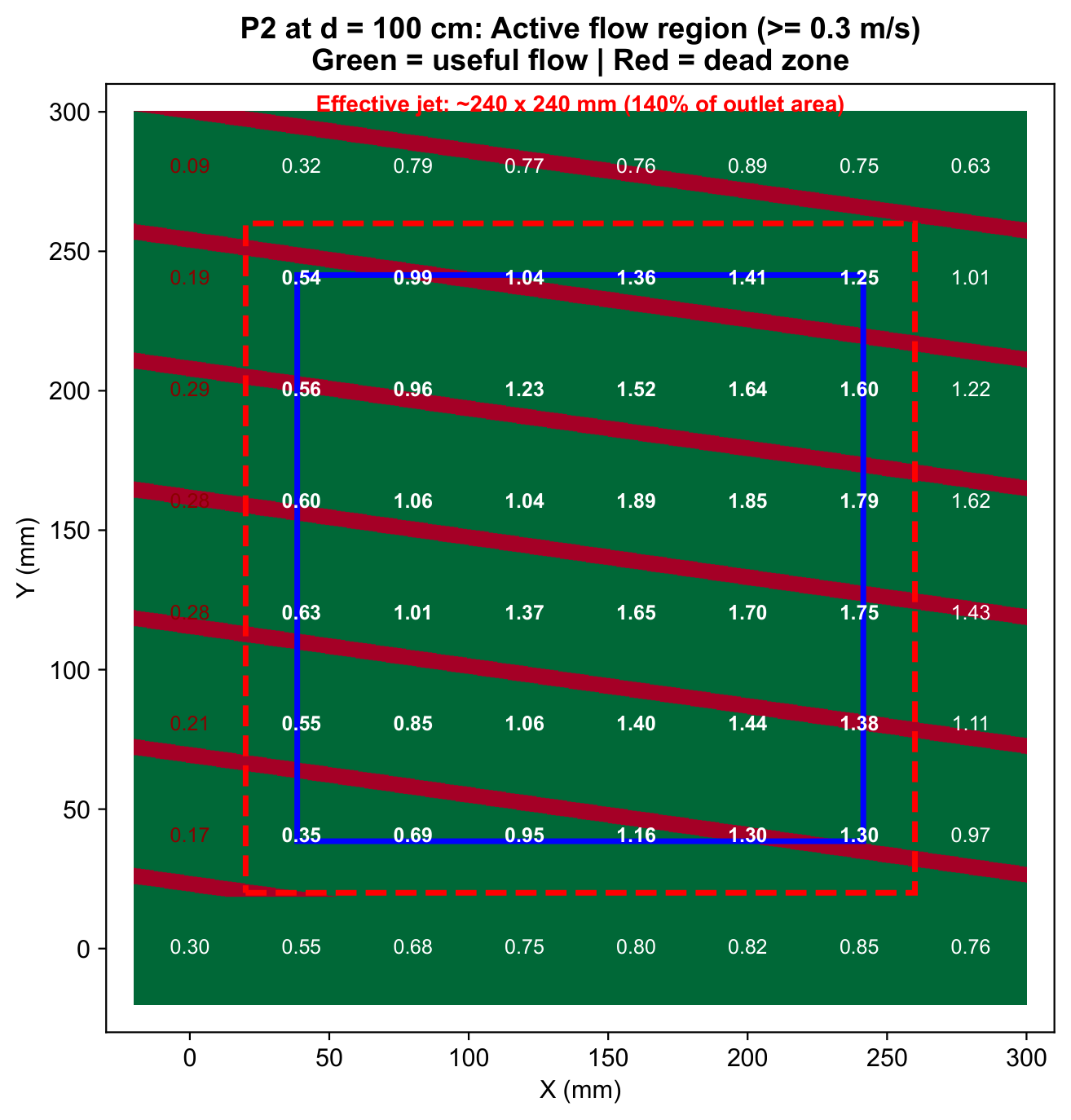
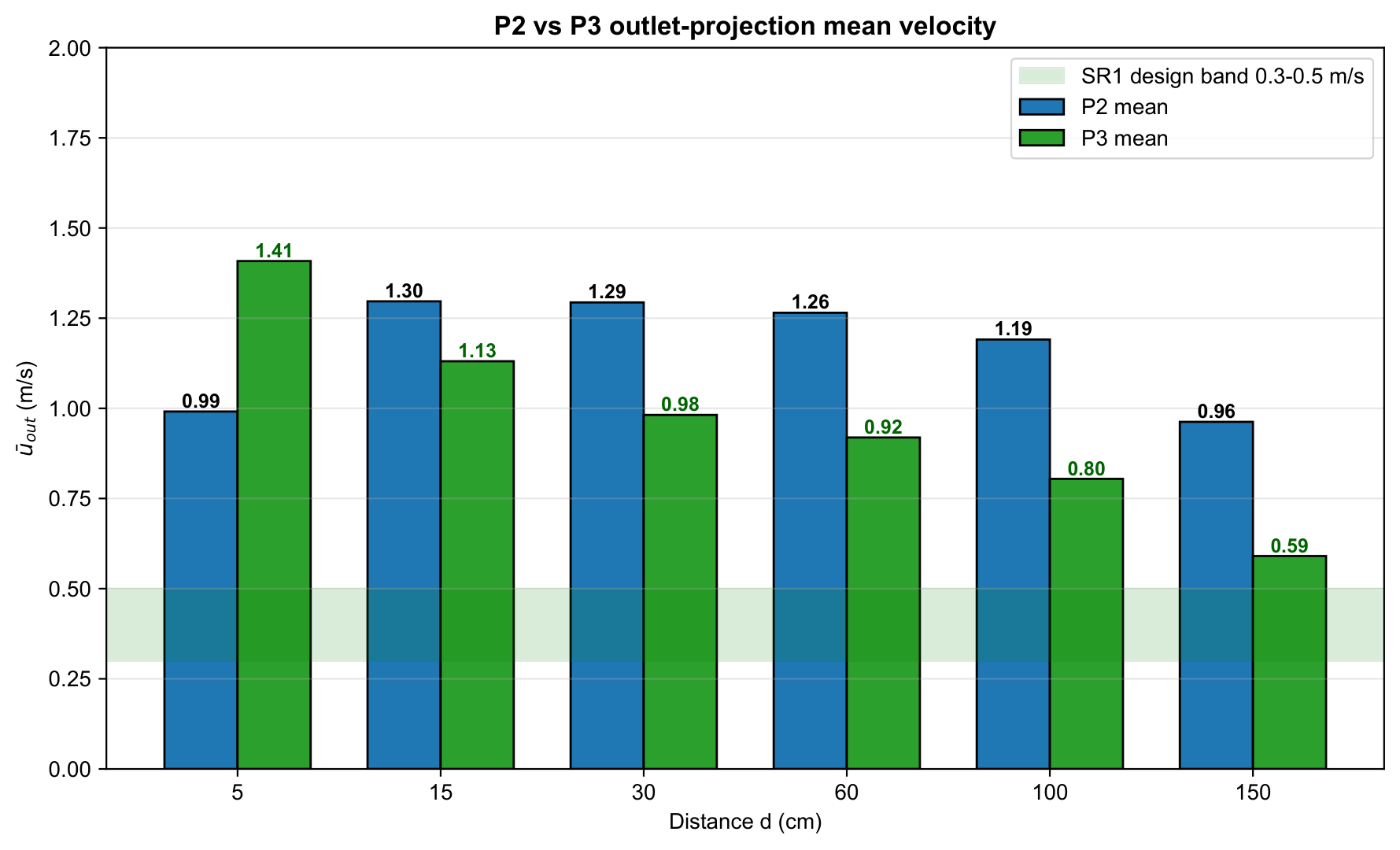
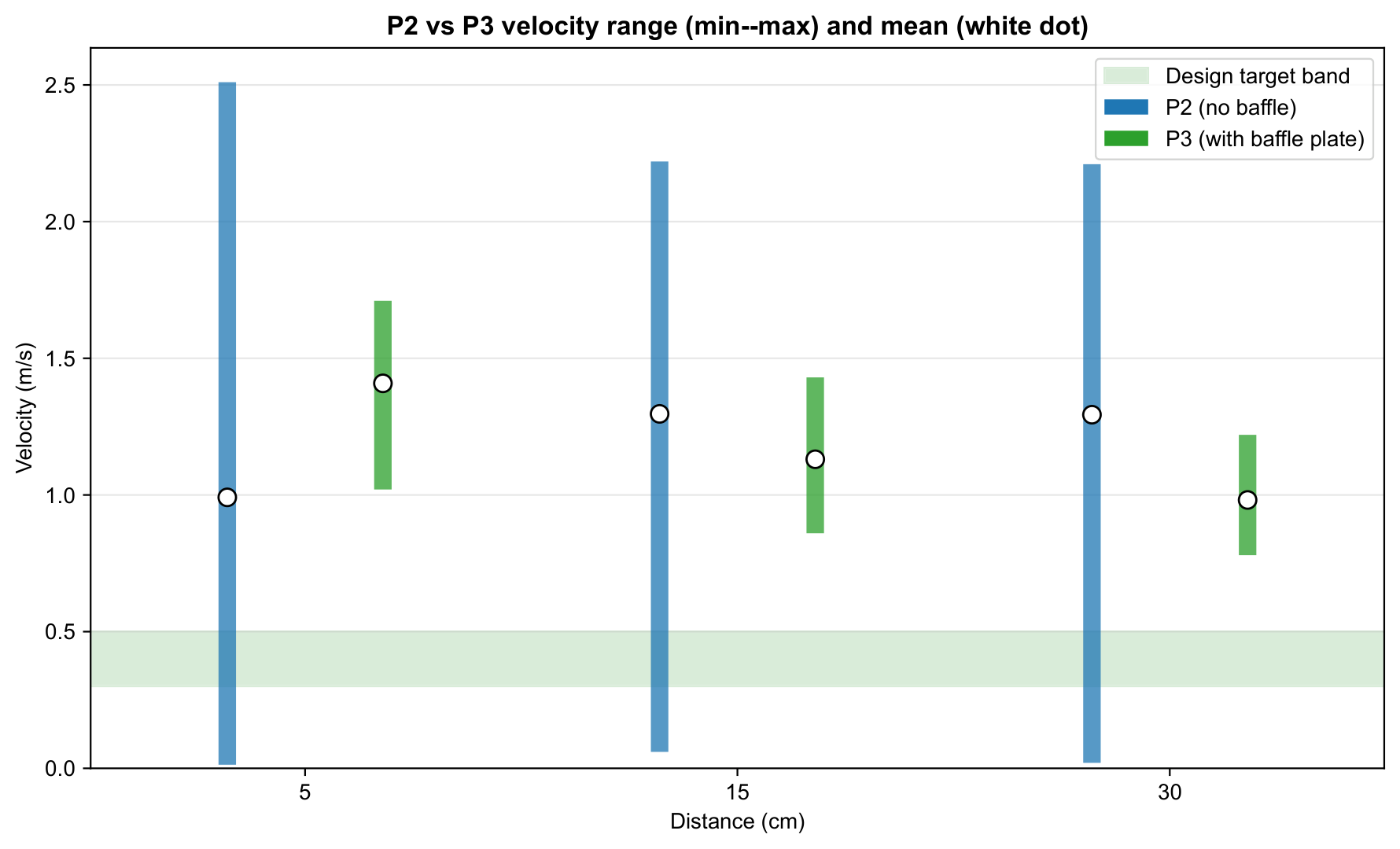
The open cavity produced a strong central jet with weak stagnant edges. At 5 cm below the outlet, spatial CV was 0.92 (highly non-uniform — fast in the middle, almost still at the edges). Edge particle counts at 30 cm reached 11,500 — nearly the same as untreated room air.
This central-plume failure directly motivated the P3 conditioned cavity.


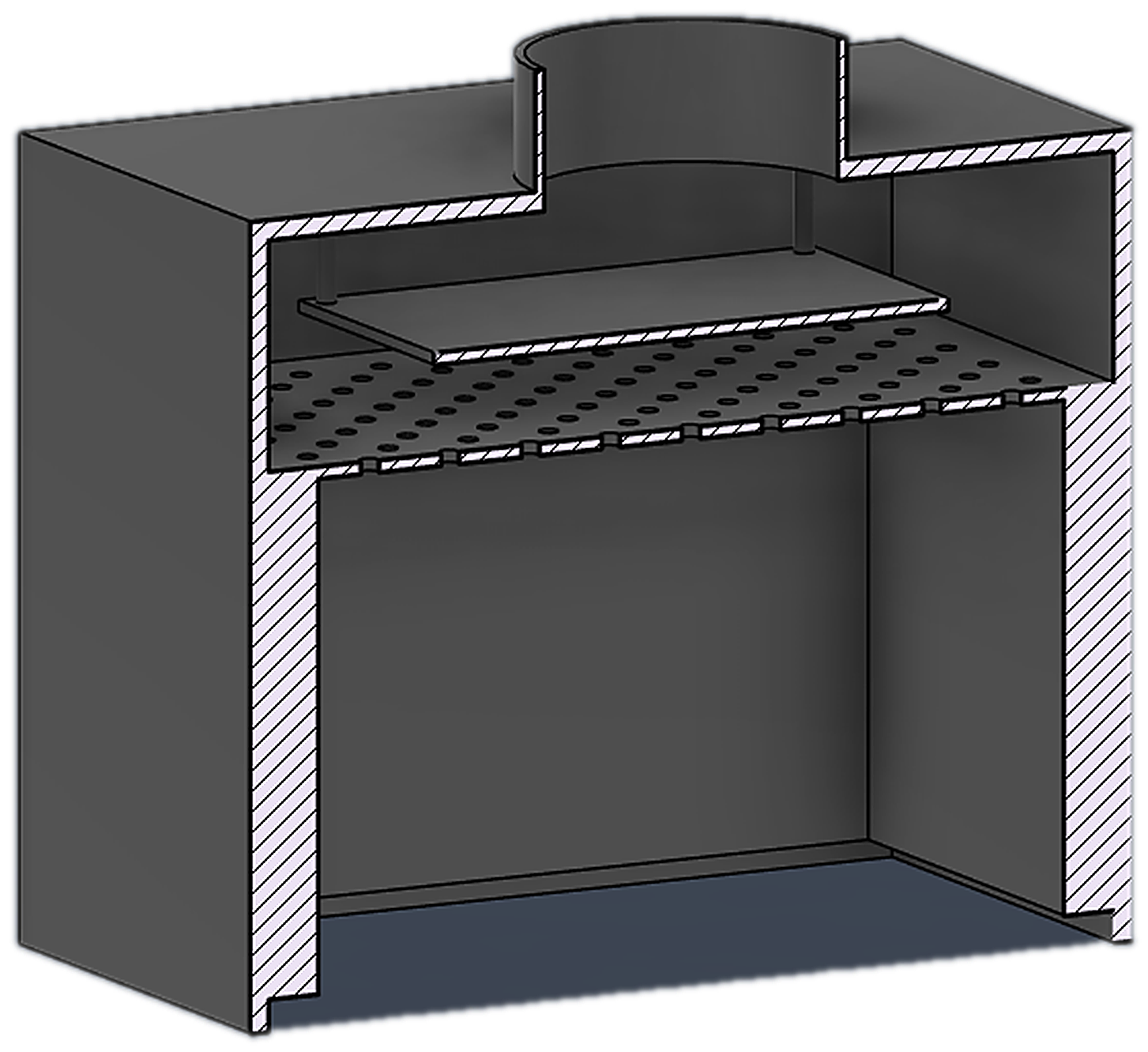
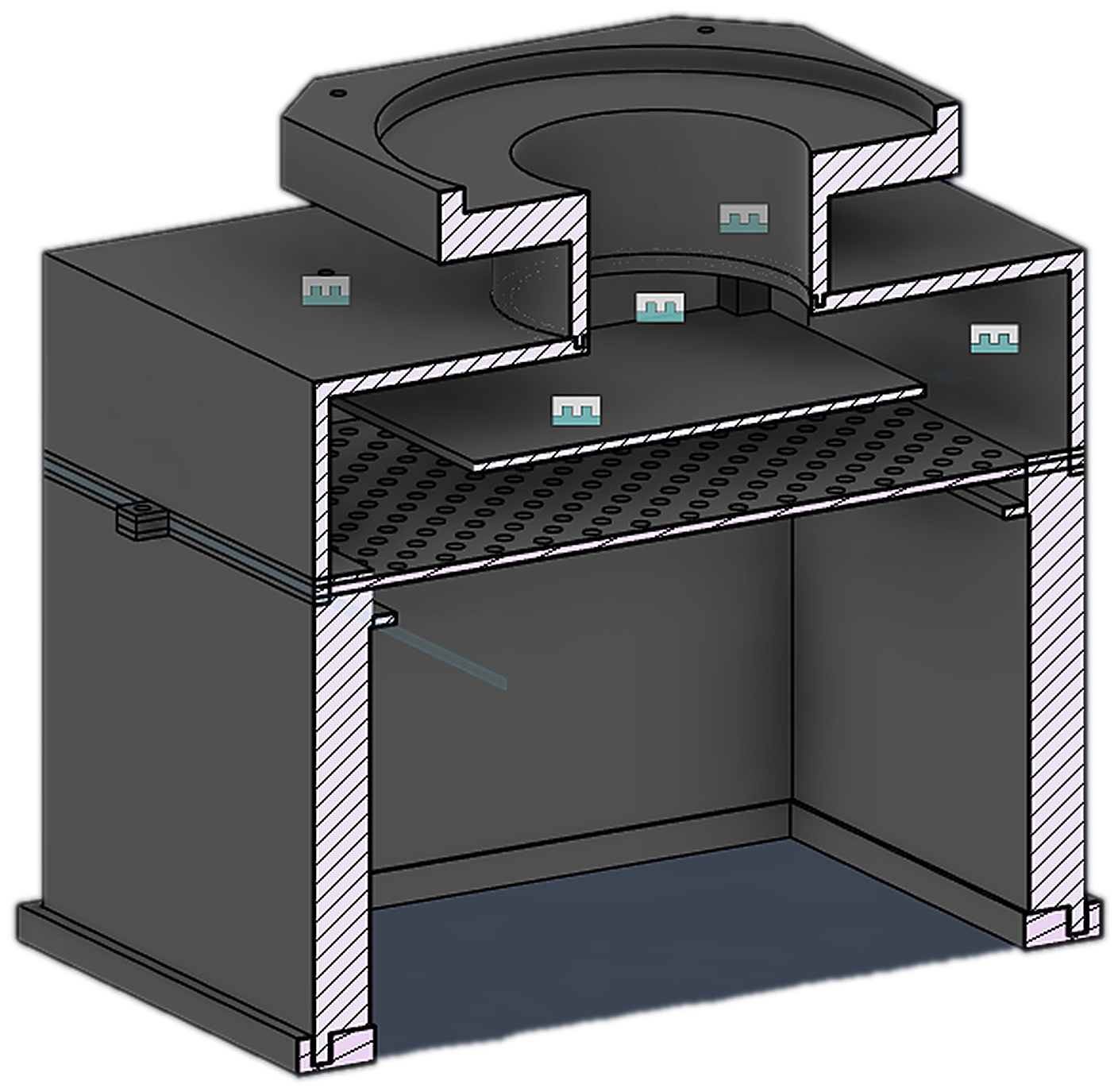
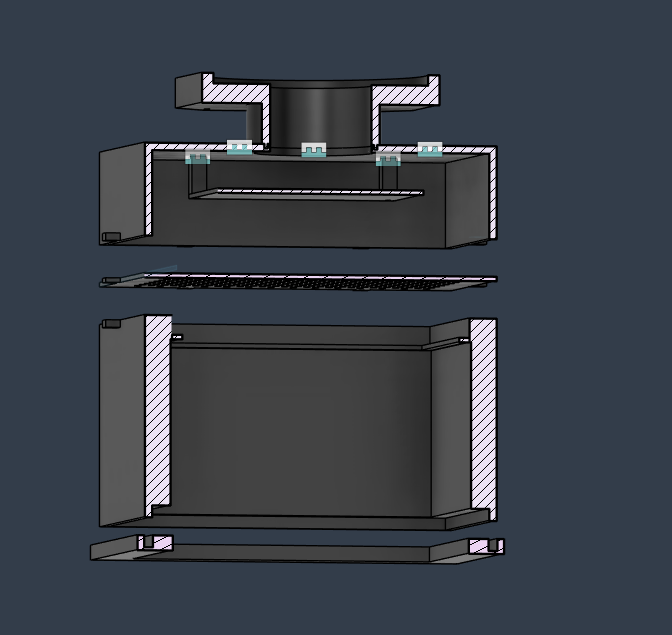
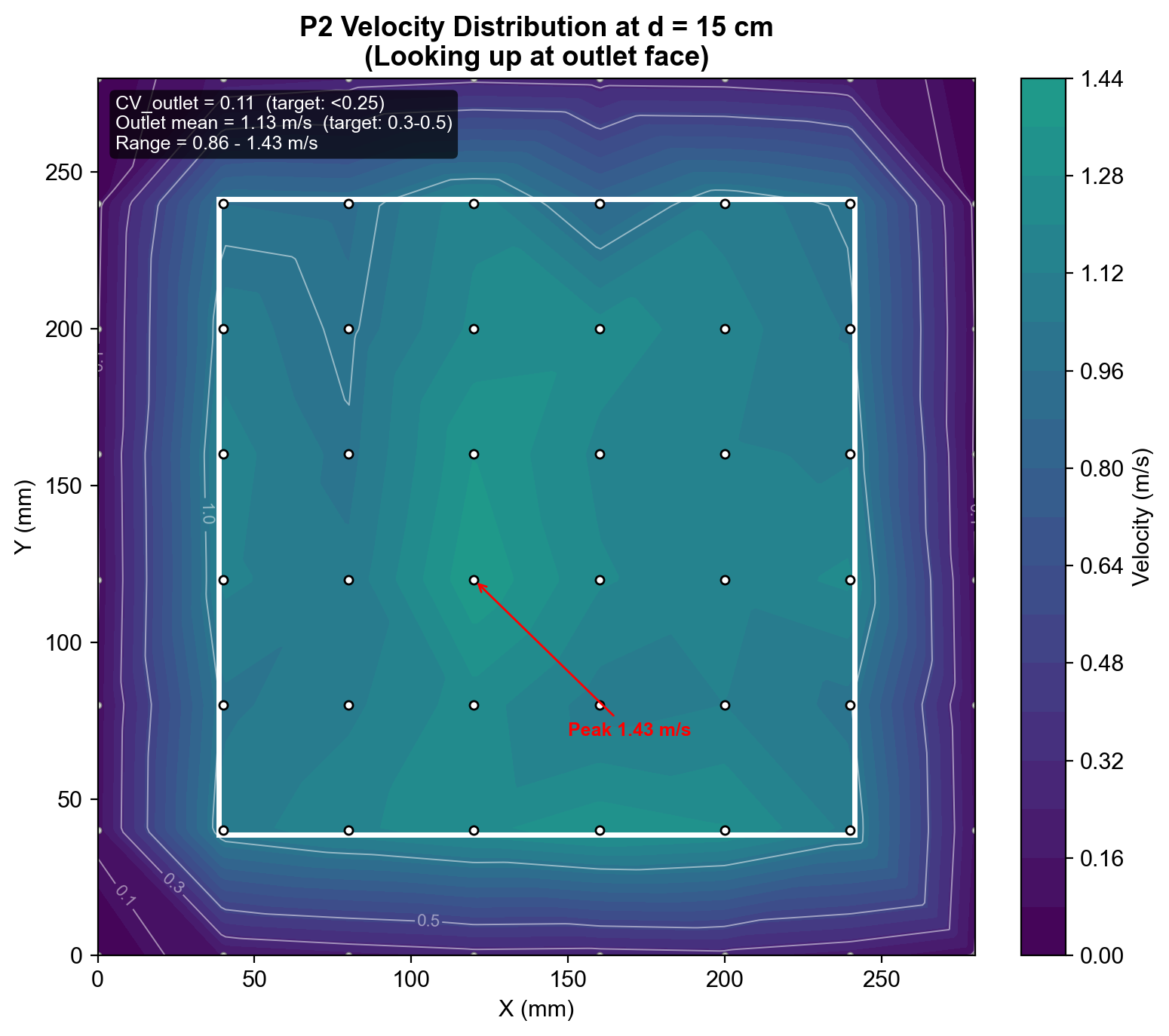
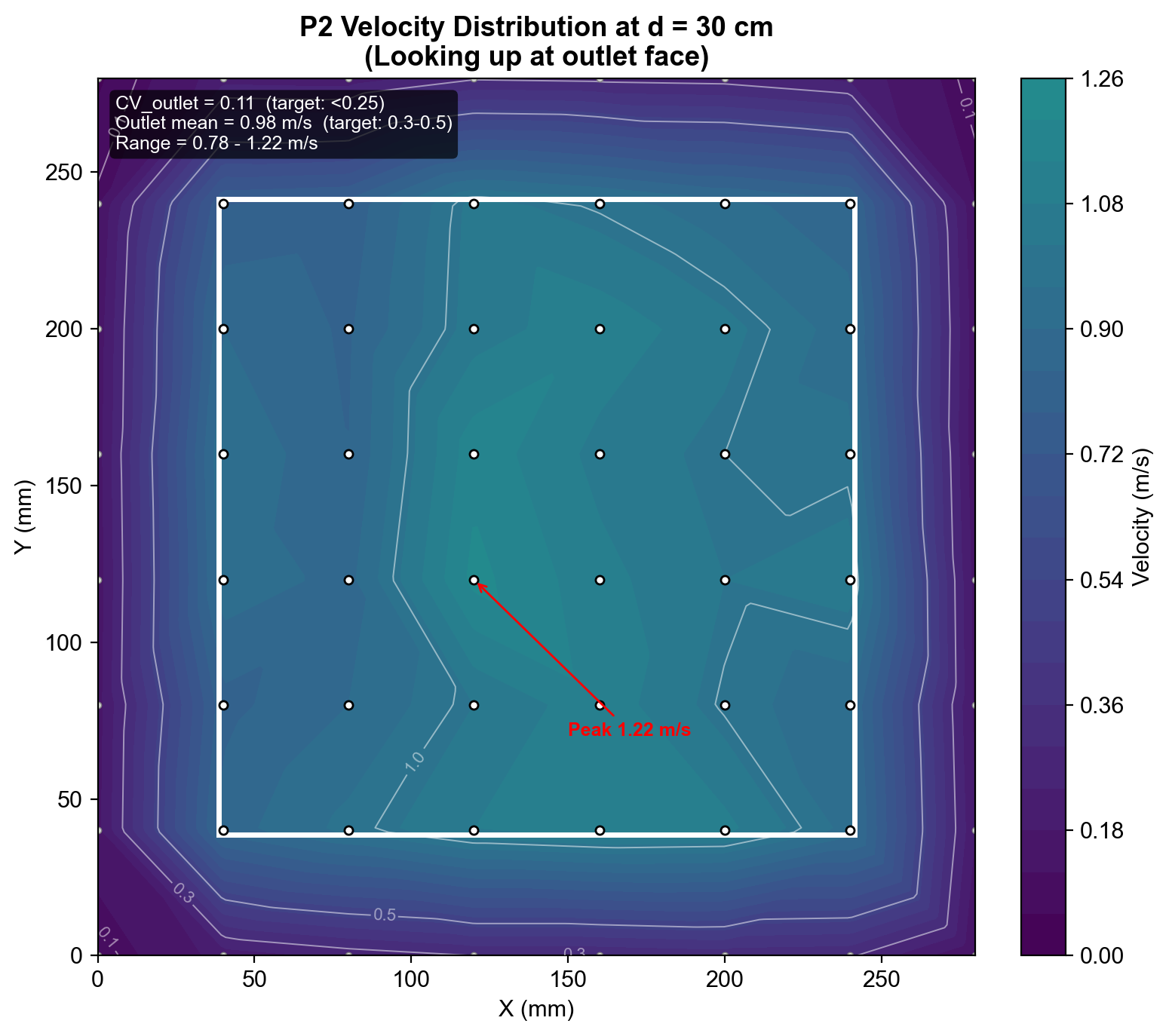
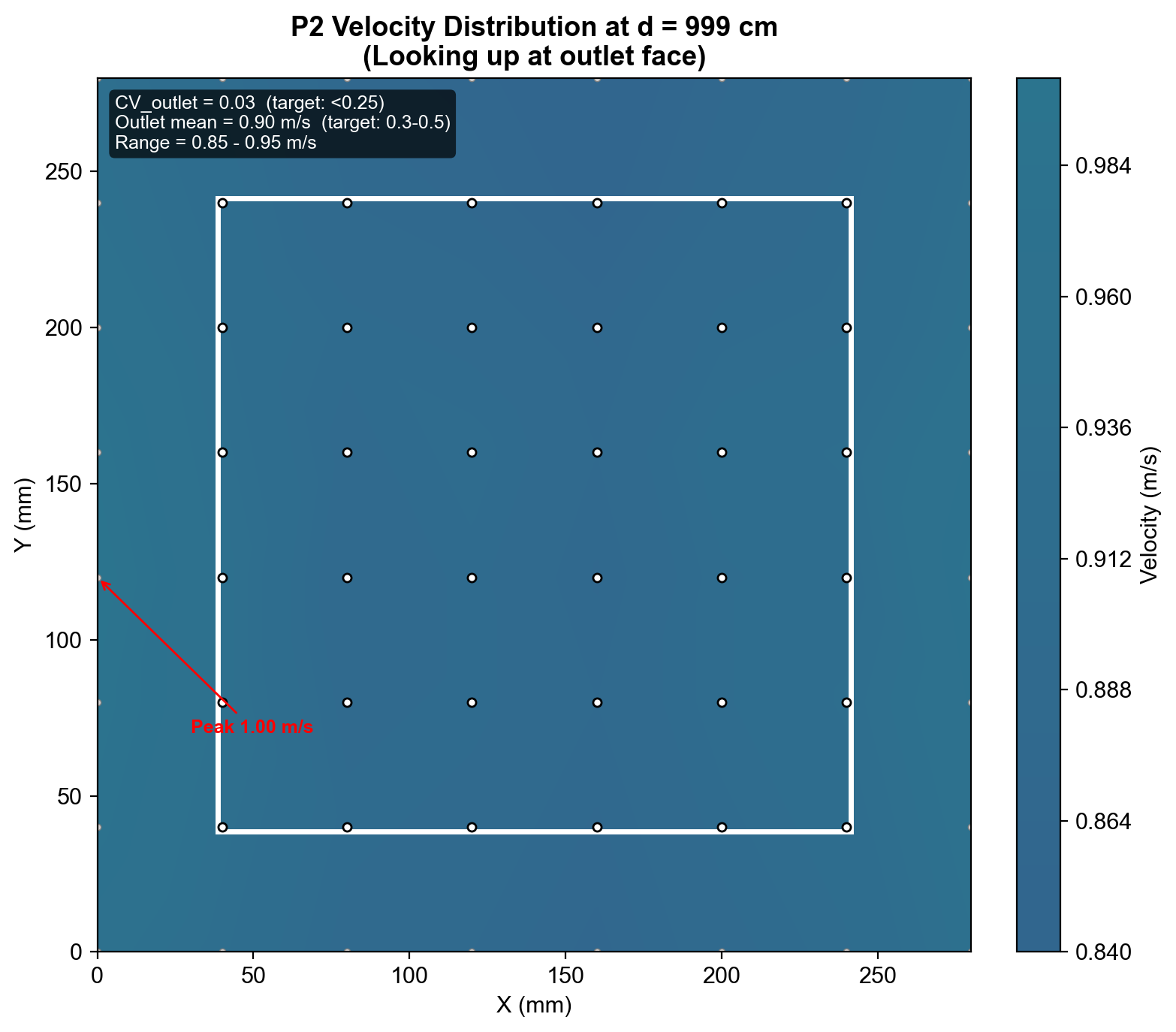
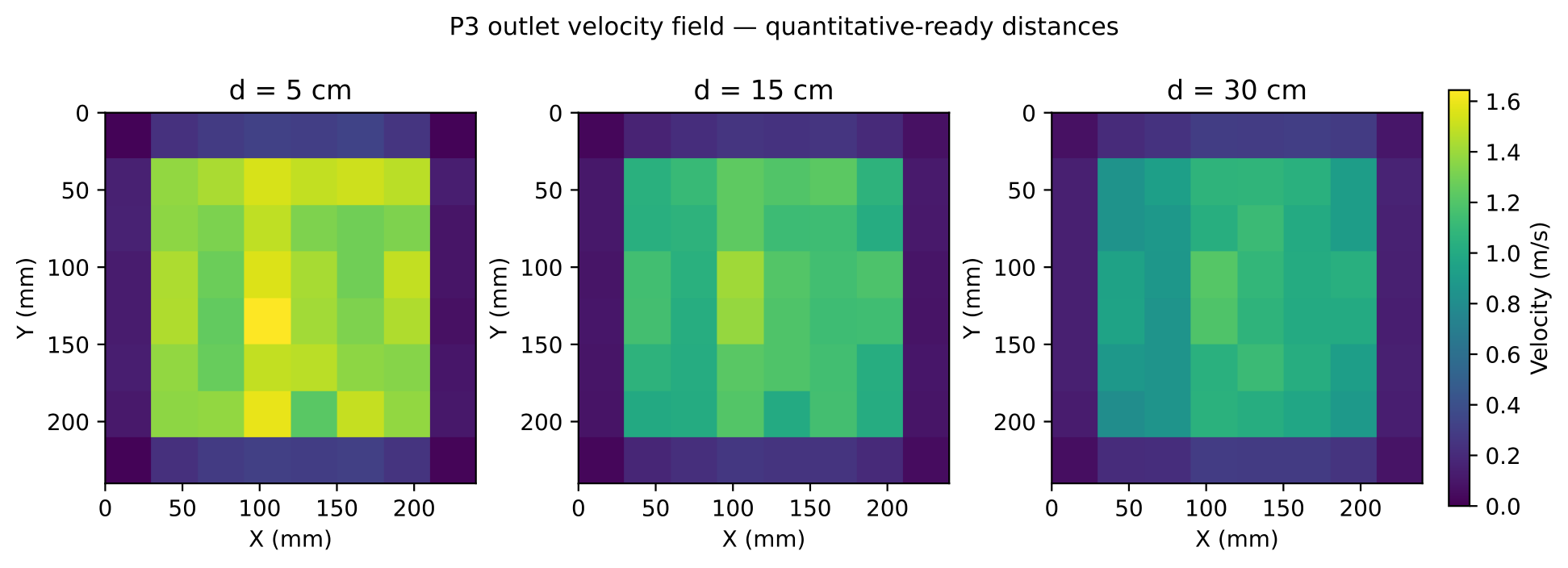
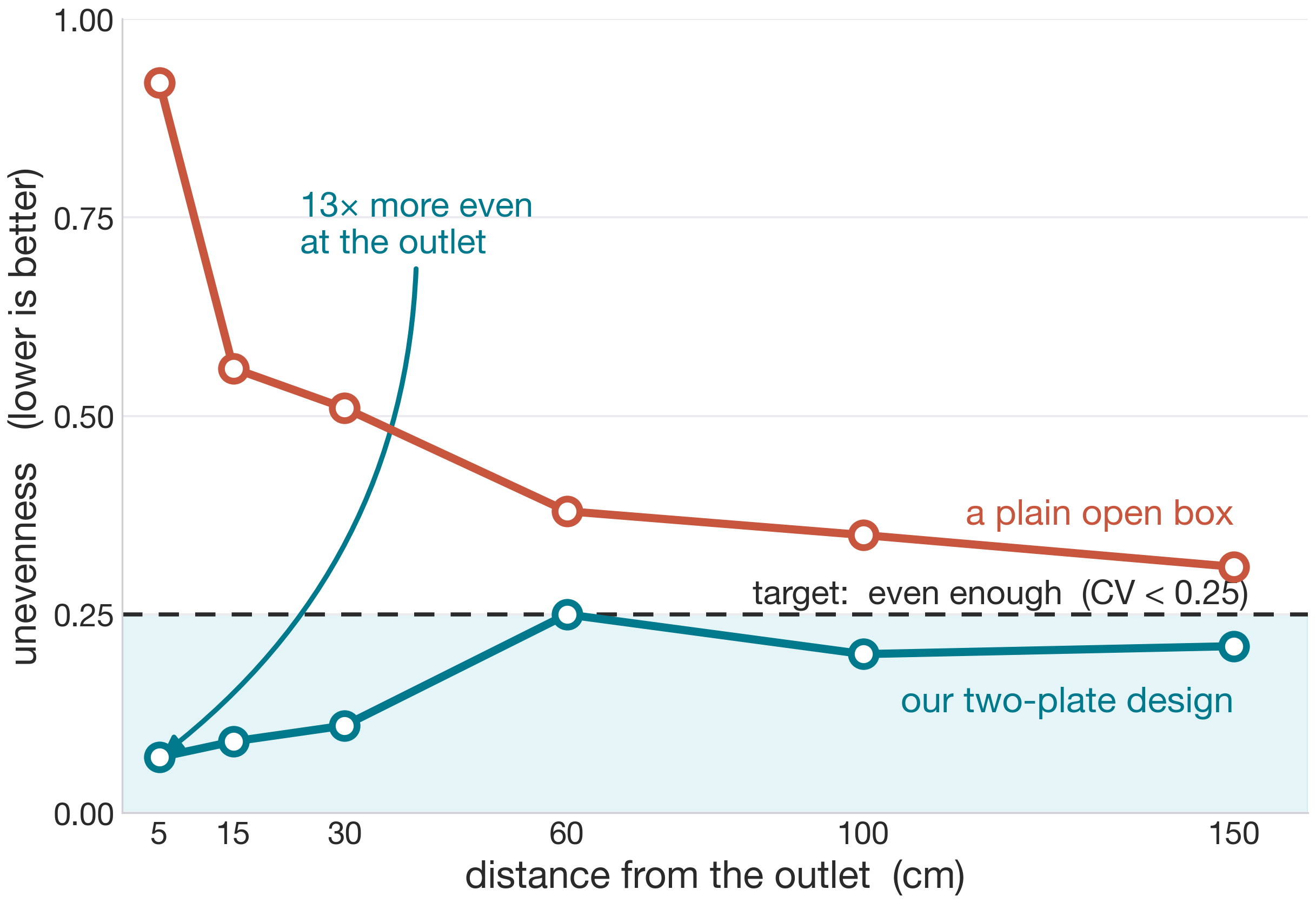
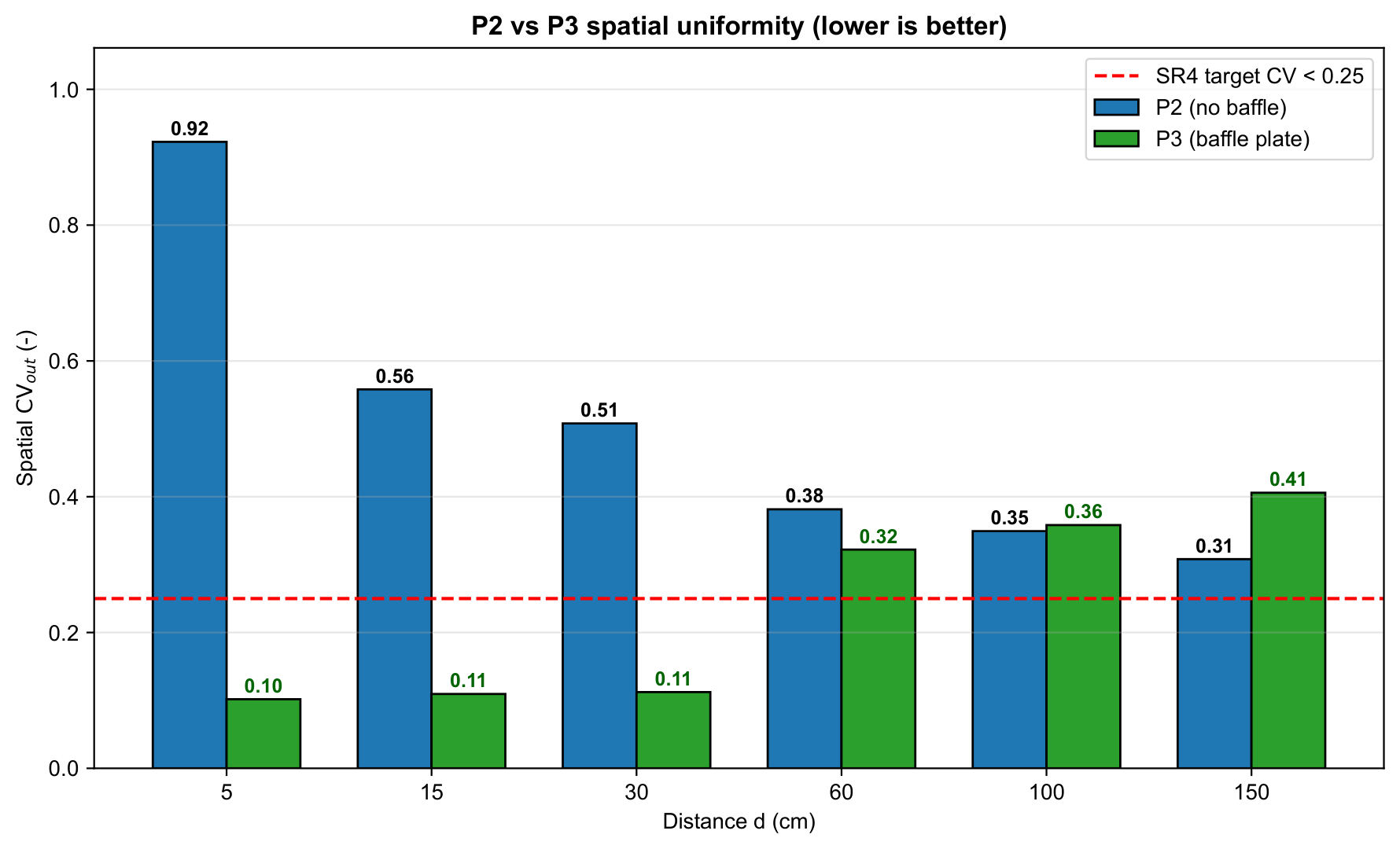
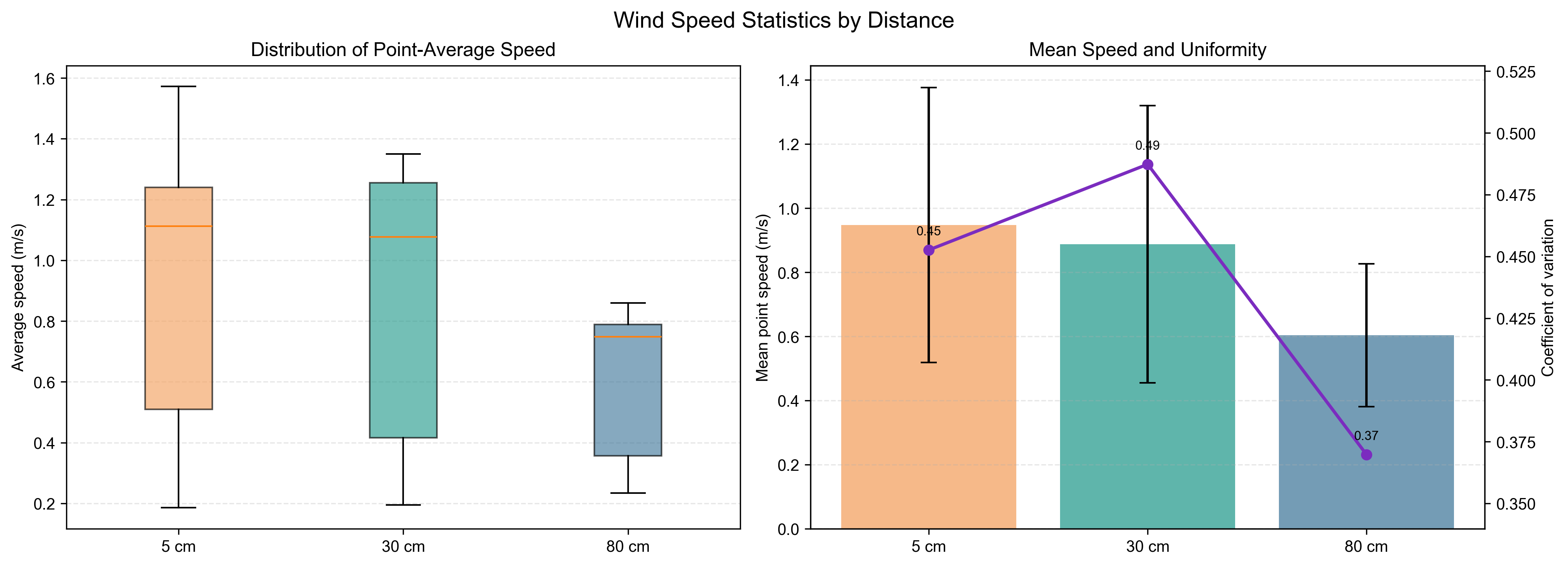
Same fan, same H14 filter, same outlet. The only change: a two-stage flow conditioner inside the cavity. Spatial CV dropped from 0.92 to 0.07 — a 13× improvement.
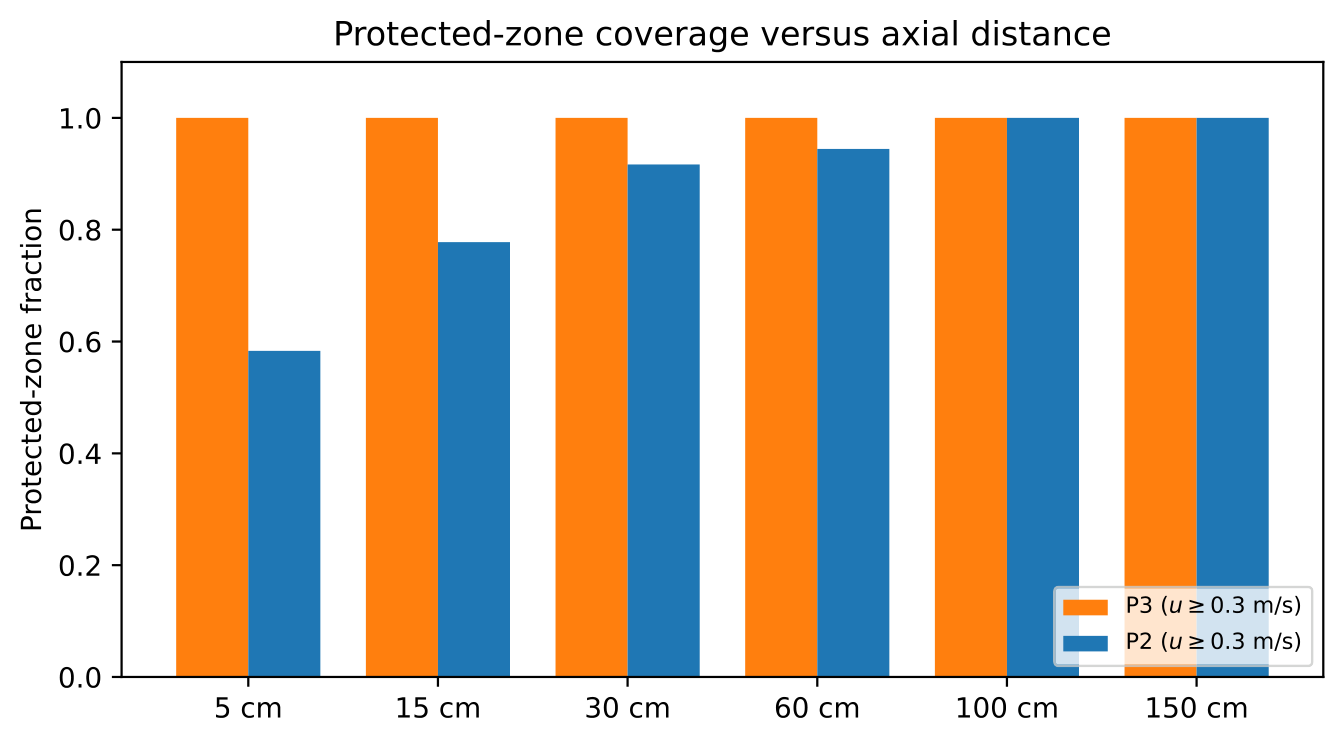
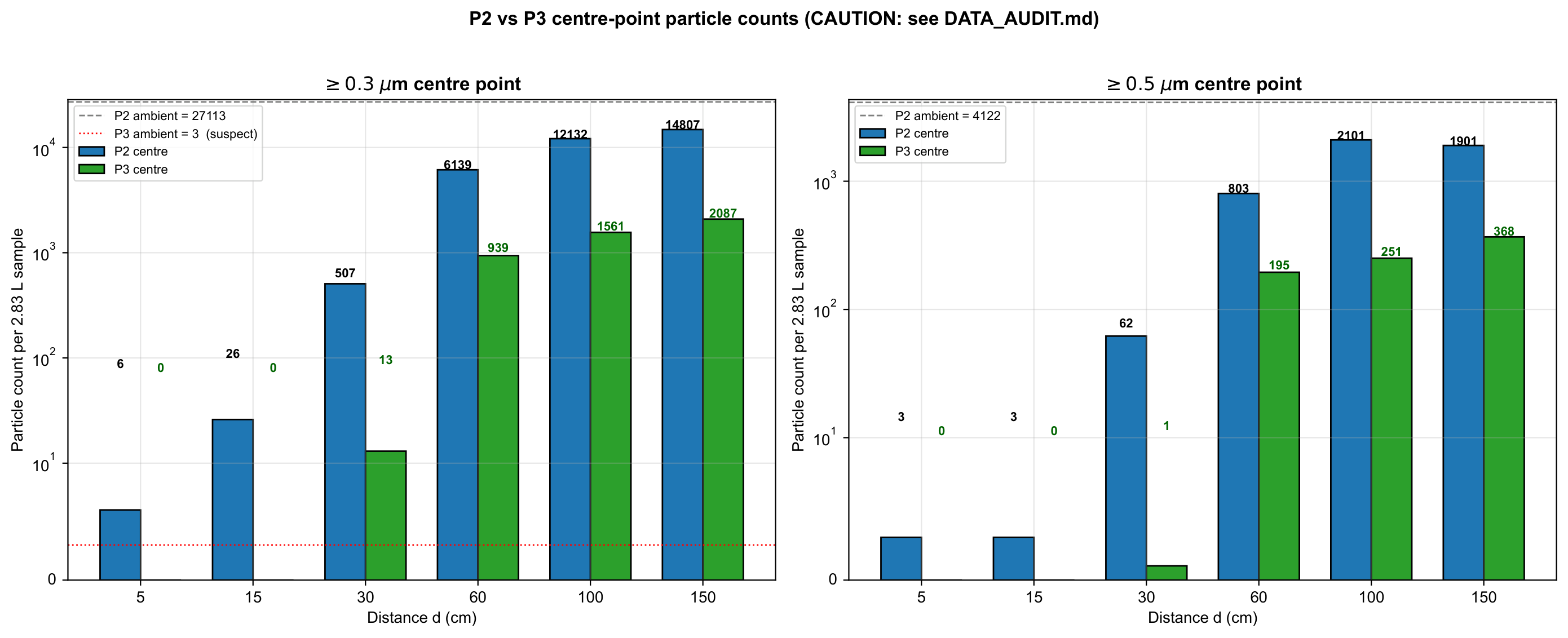
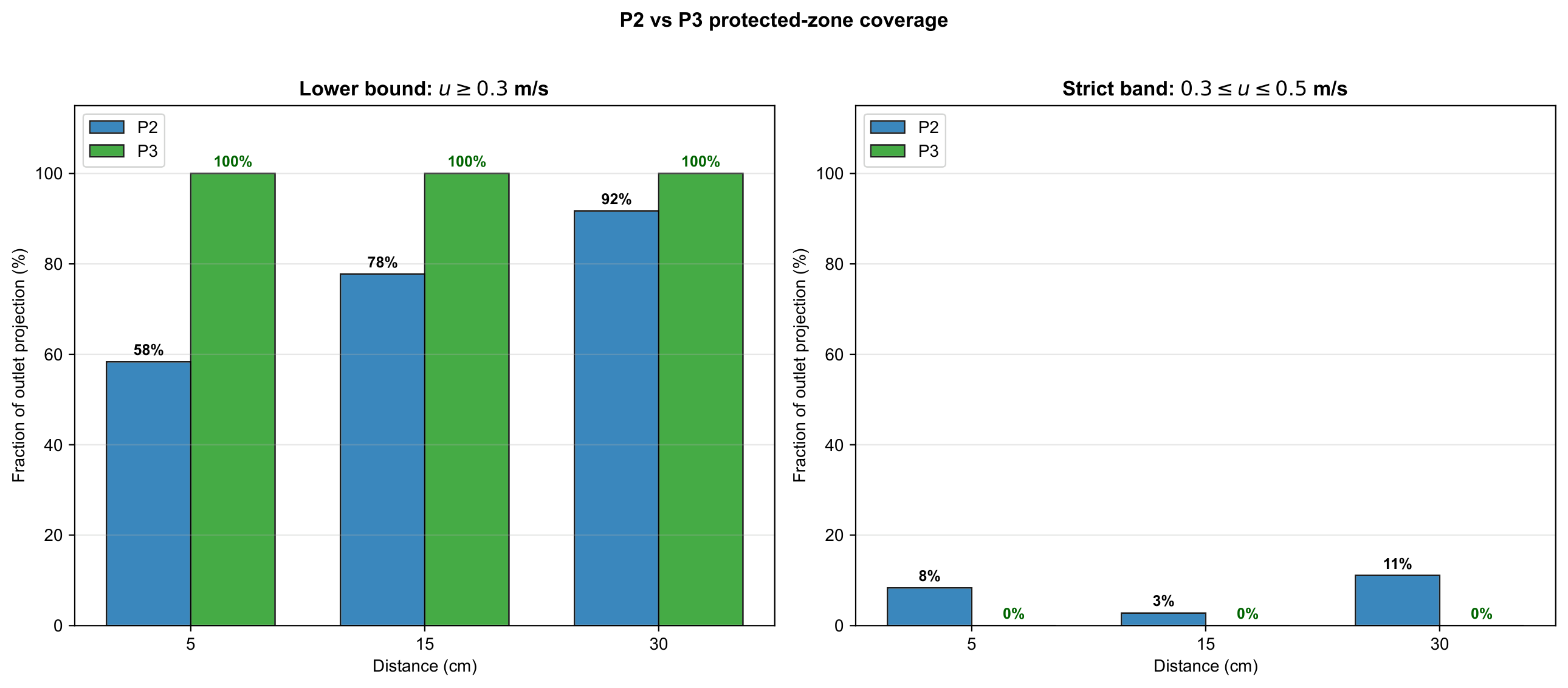
Edge particles at 30 cm: 11,500 (P2) to ∼8 (P3). Protected-zone coverage: 100% at all near-field distances — the clean sheet now reaches the edges, not just the centre.


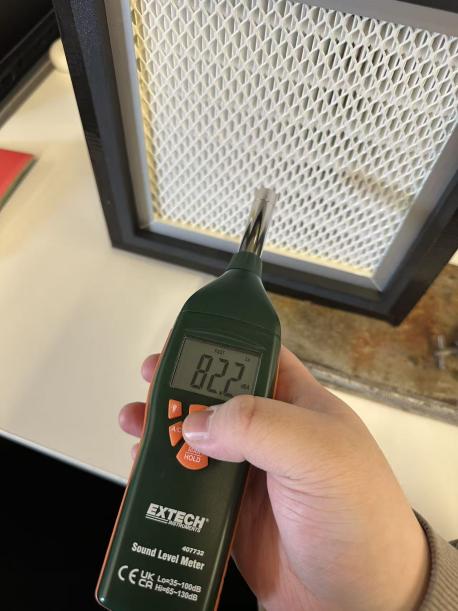
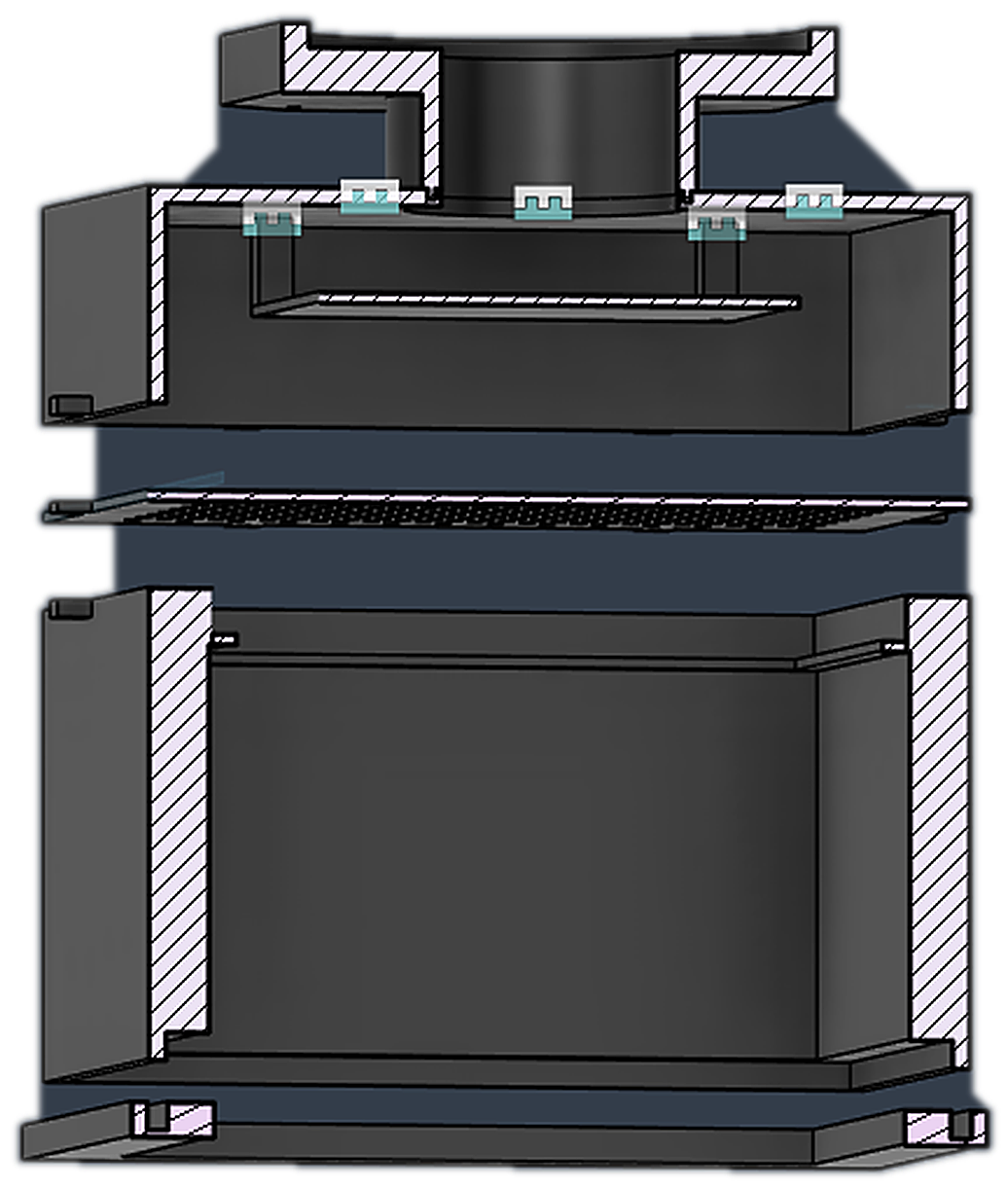
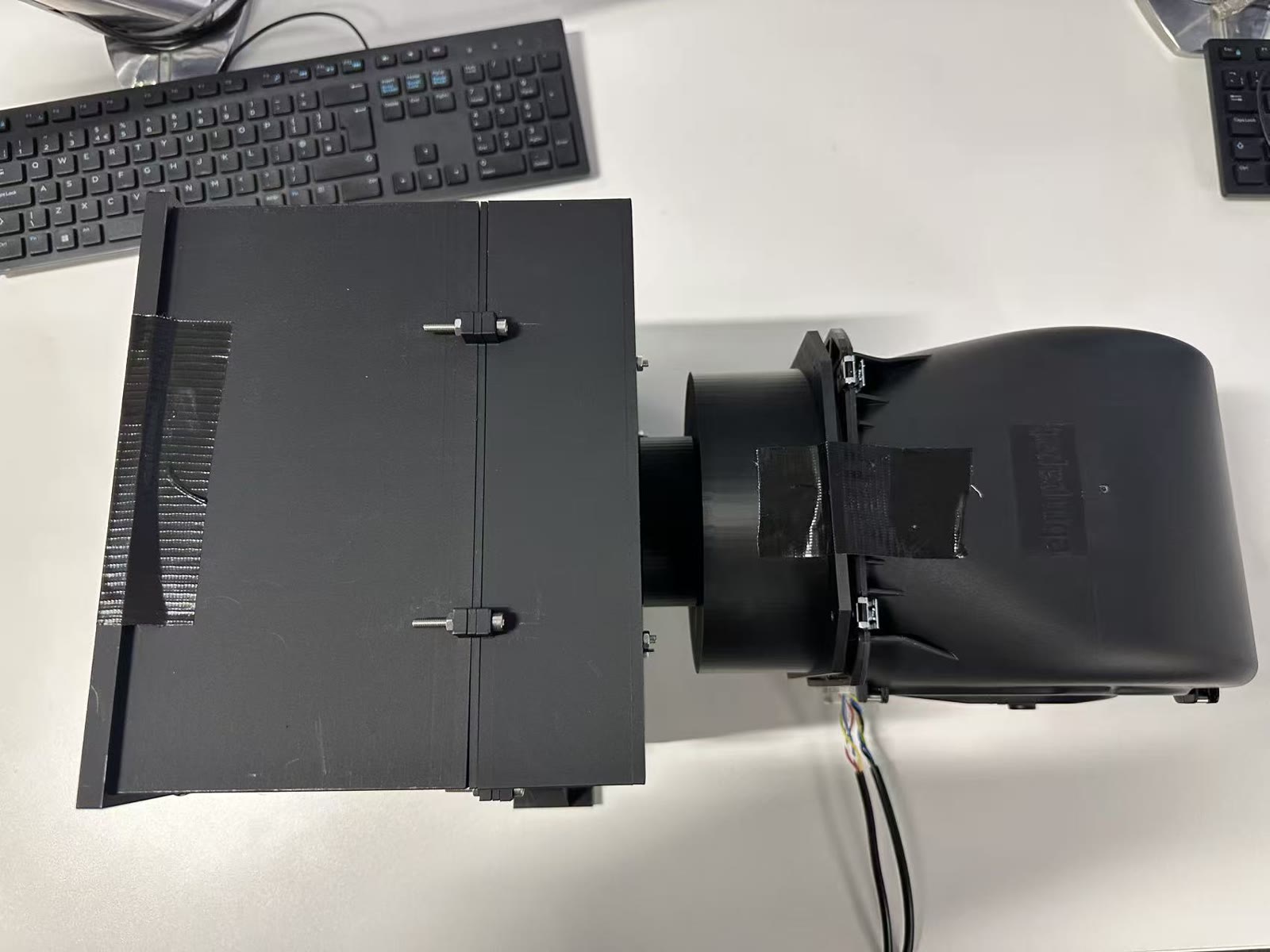
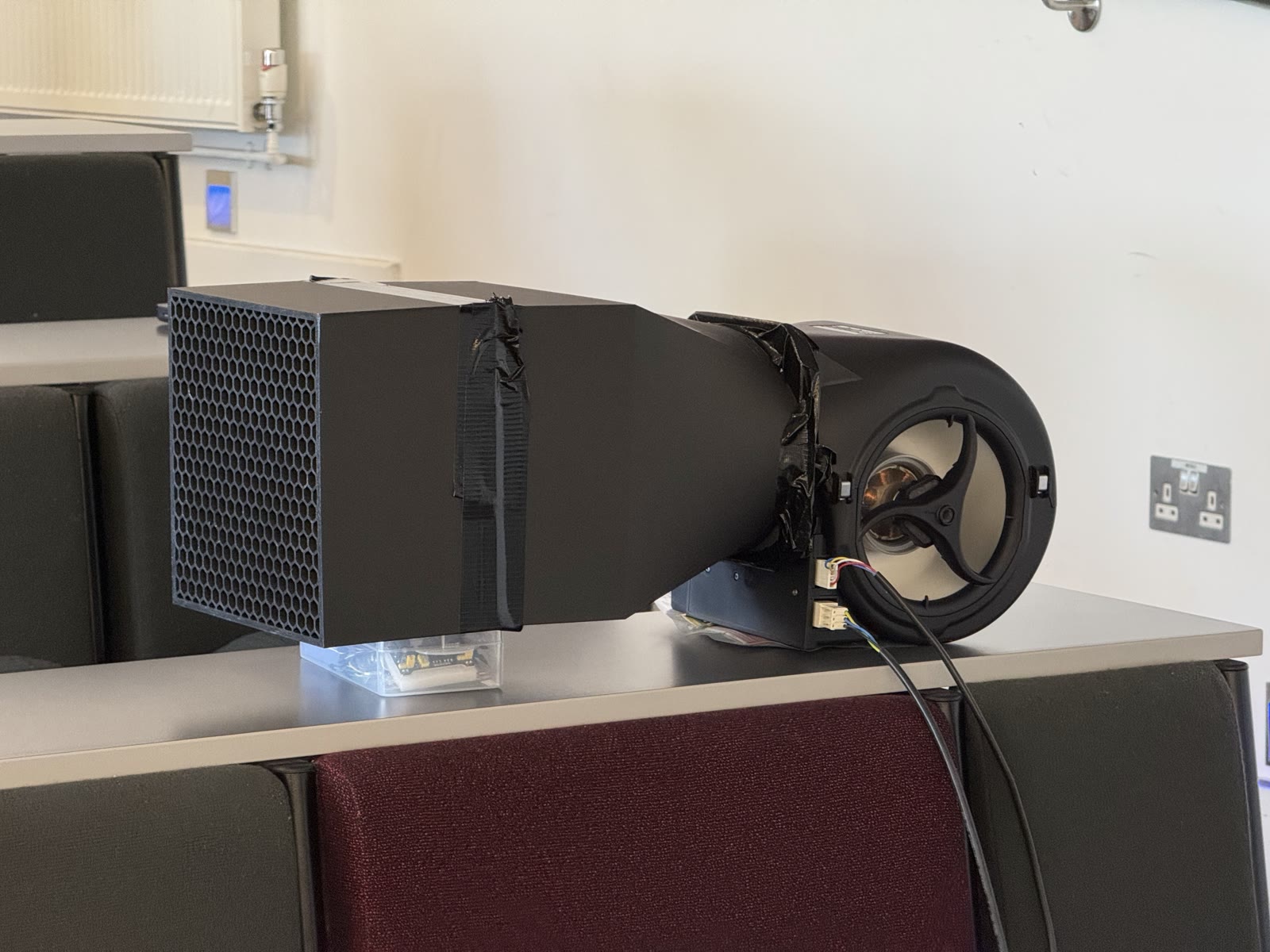
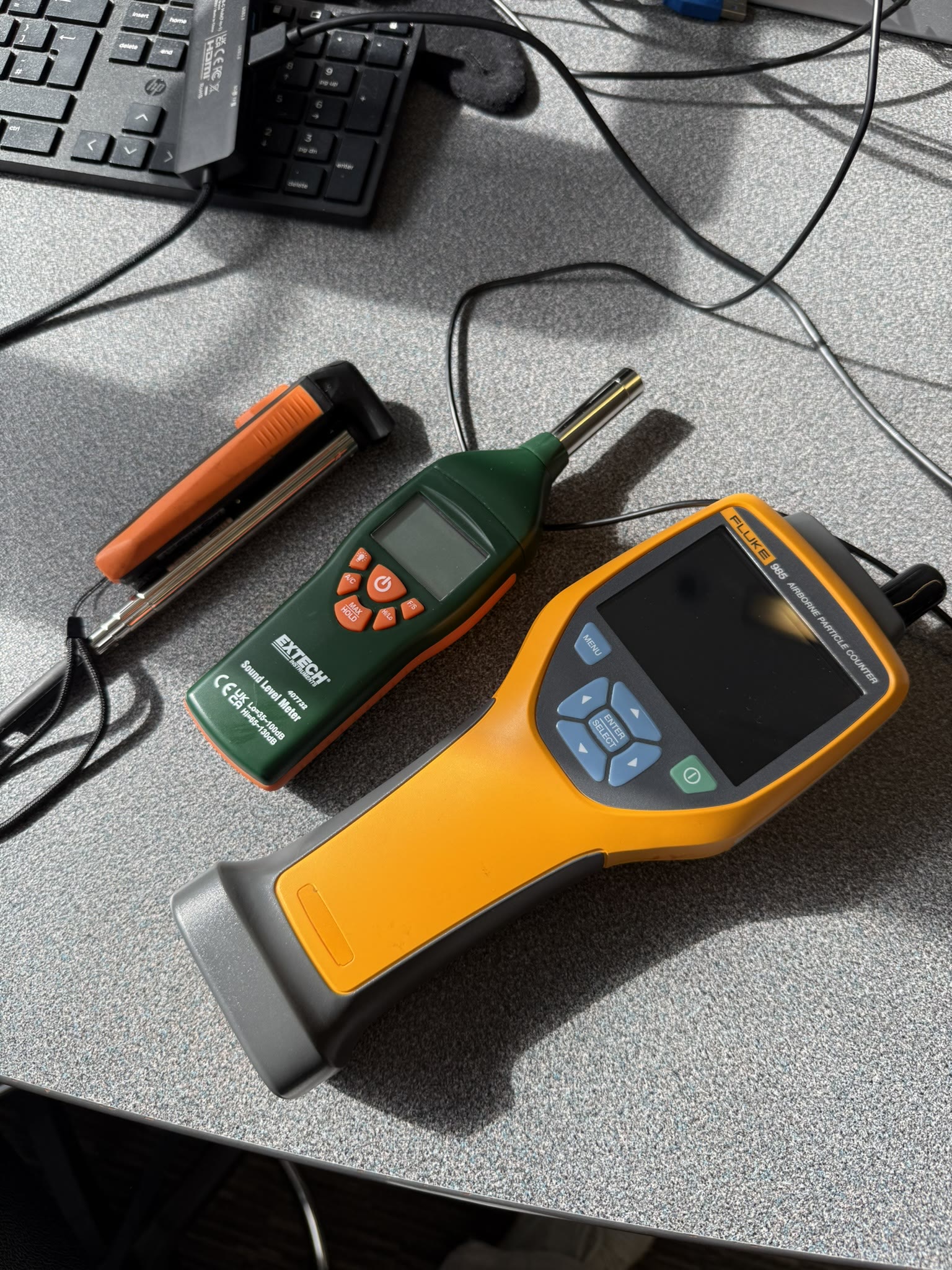
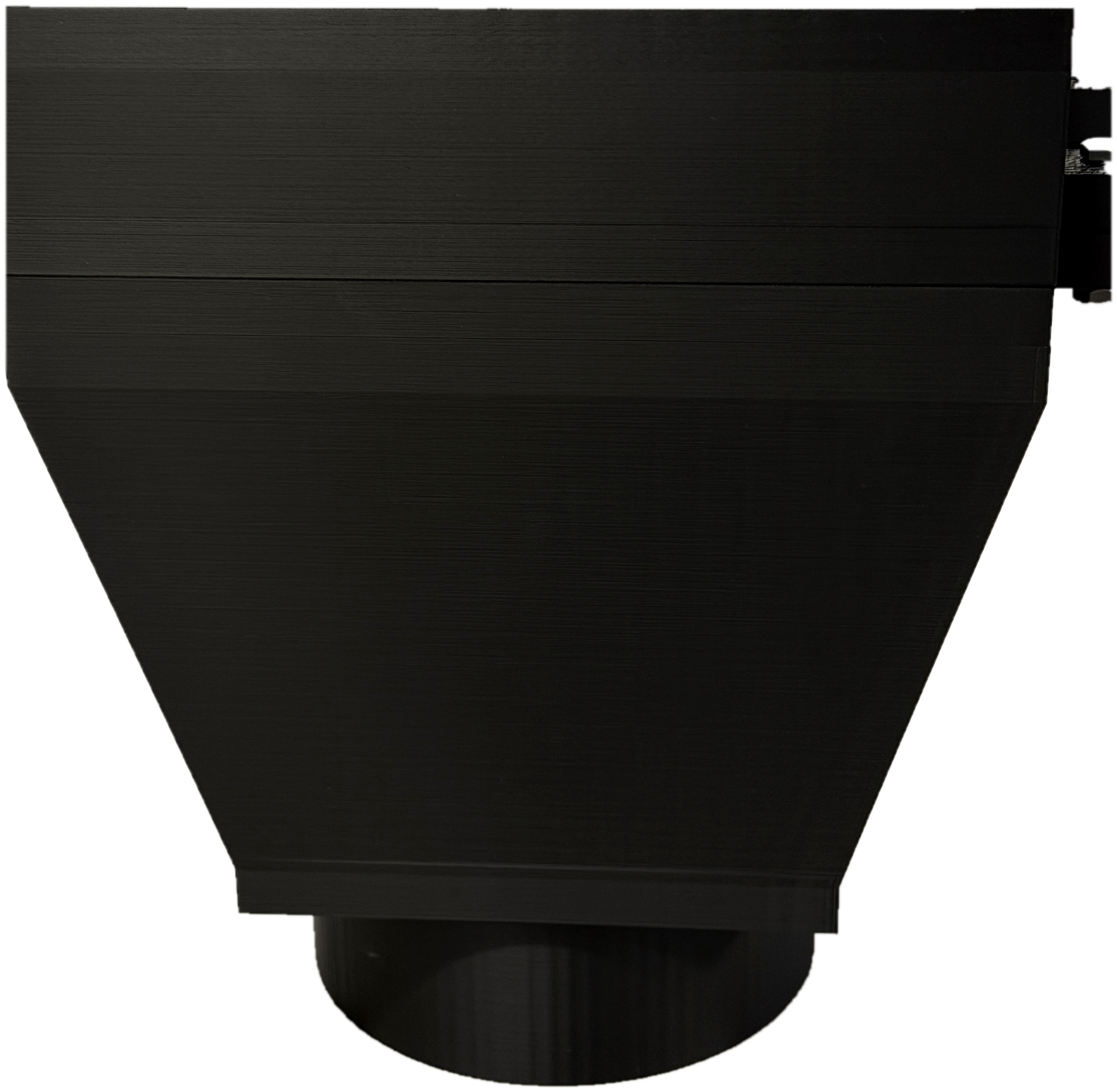
Footage and photographs of the finished P3 hardware — the fastening, filter seating, blower coupling, and the calibrated instruments behind every measurement on this page.


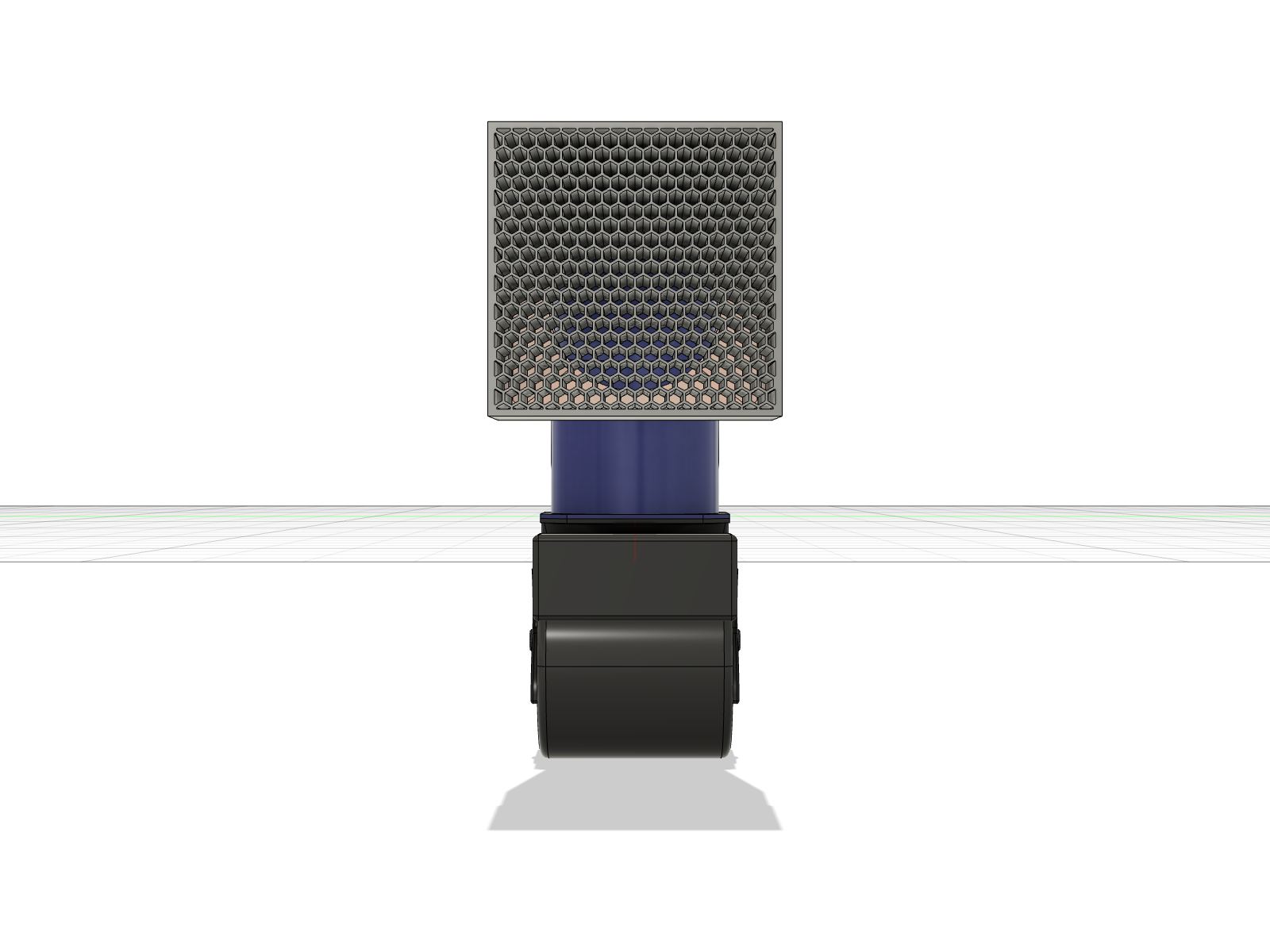
The actual STL files printed for P3. Drag to rotate, scroll to zoom — including the two-stage flow conditioner that is the project’s key contribution.
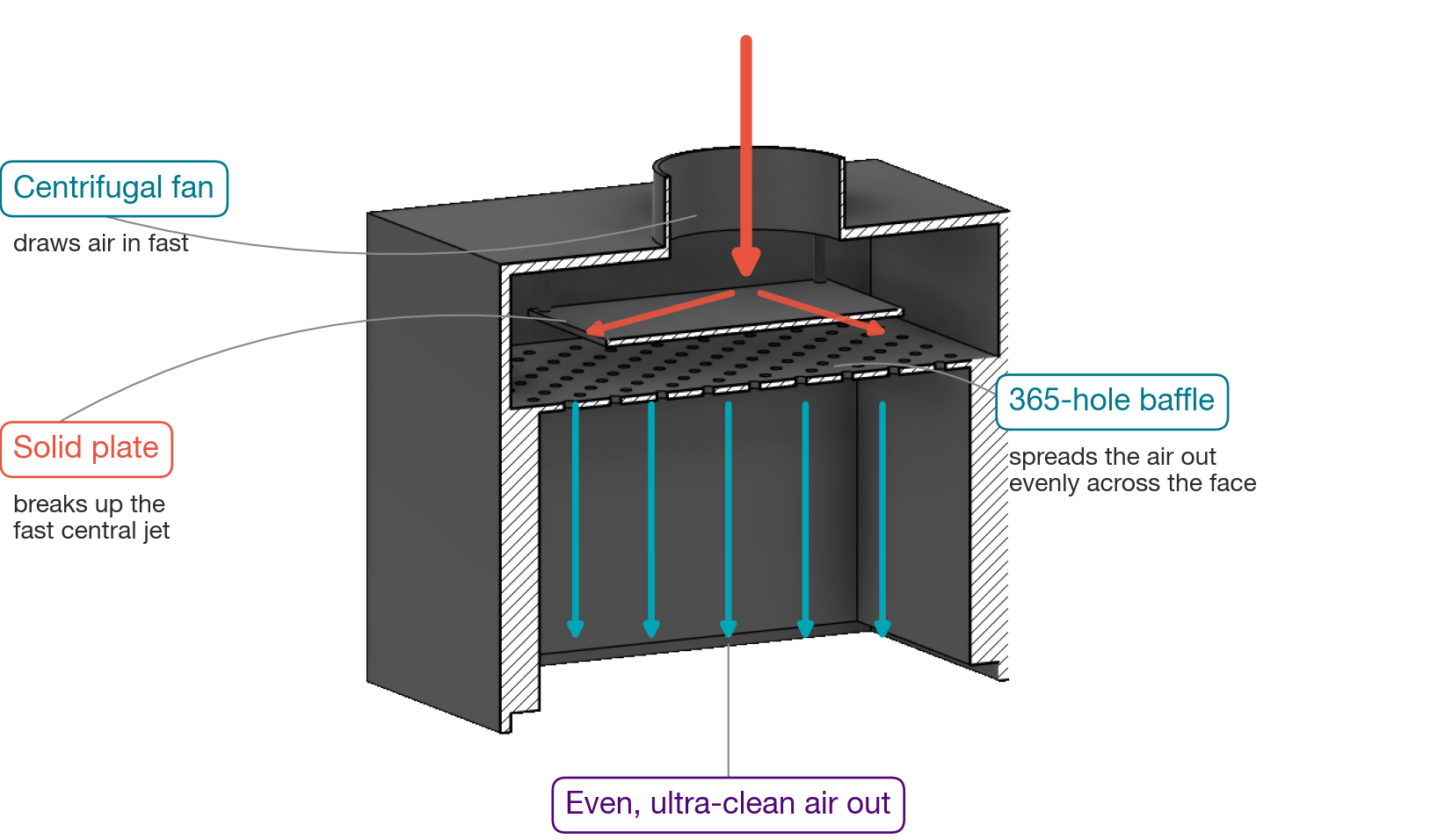
Same fan, same filter, same outlet. The only change: what happens inside the cavity before air reaches the HEPA face.
140 × 140 mm, 175 mm from outlet. Breaks the concentrated axial fan jet and deflects flow radially, distributing momentum across the cavity.
240 × 240 mm, 3 mm thick. 365 holes, 5 mm diameter. β = 12.4%. 135 mm from outlet. Creates uniform pressure drop across the HEPA face.
ΔPpp ≈ 1–3 Pa on a ∼60 Pa baseline. Added mass: 0.05 kg.
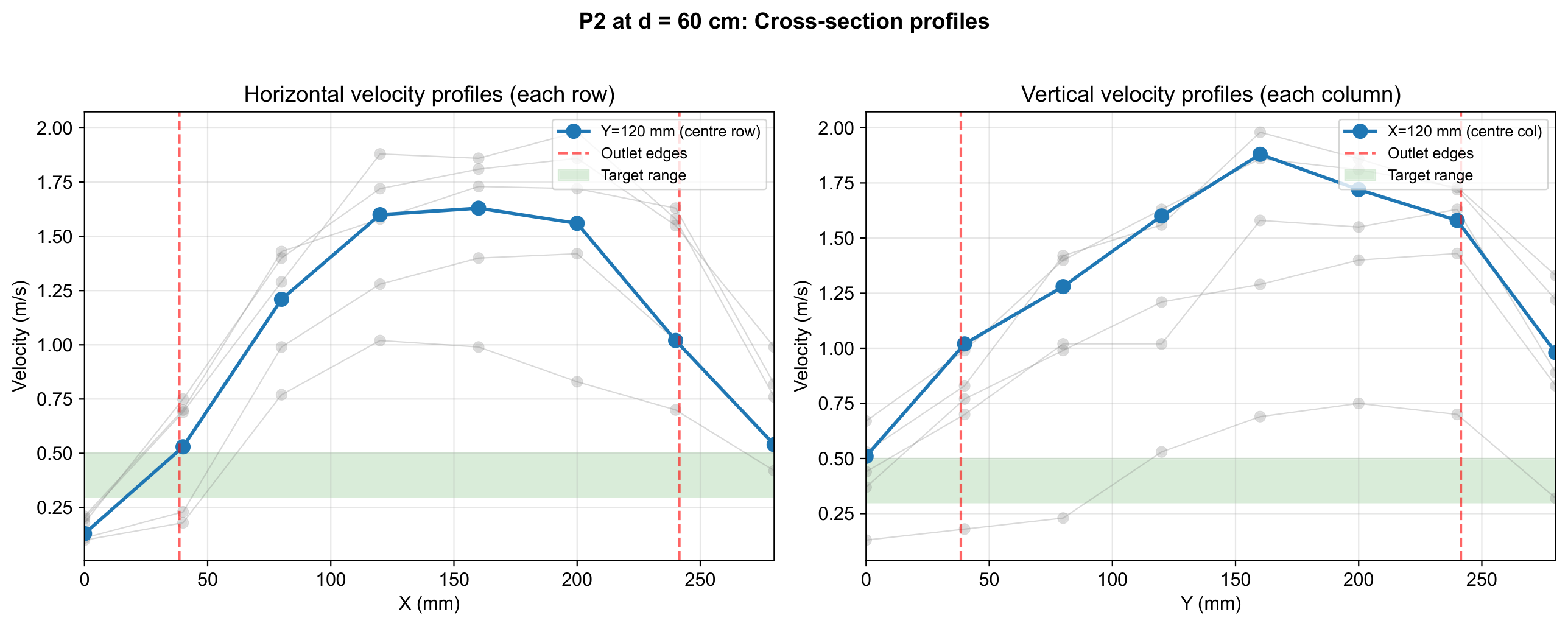
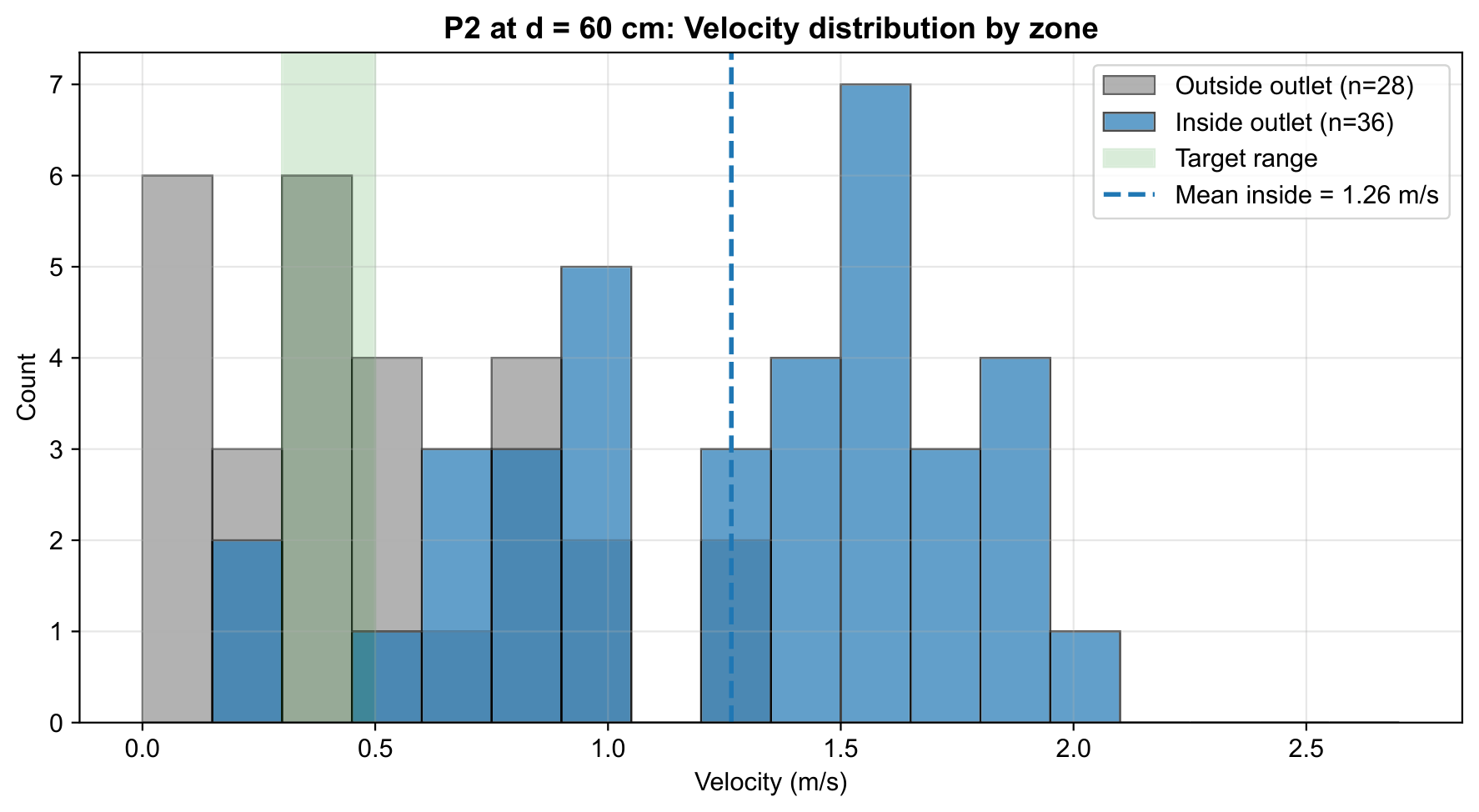
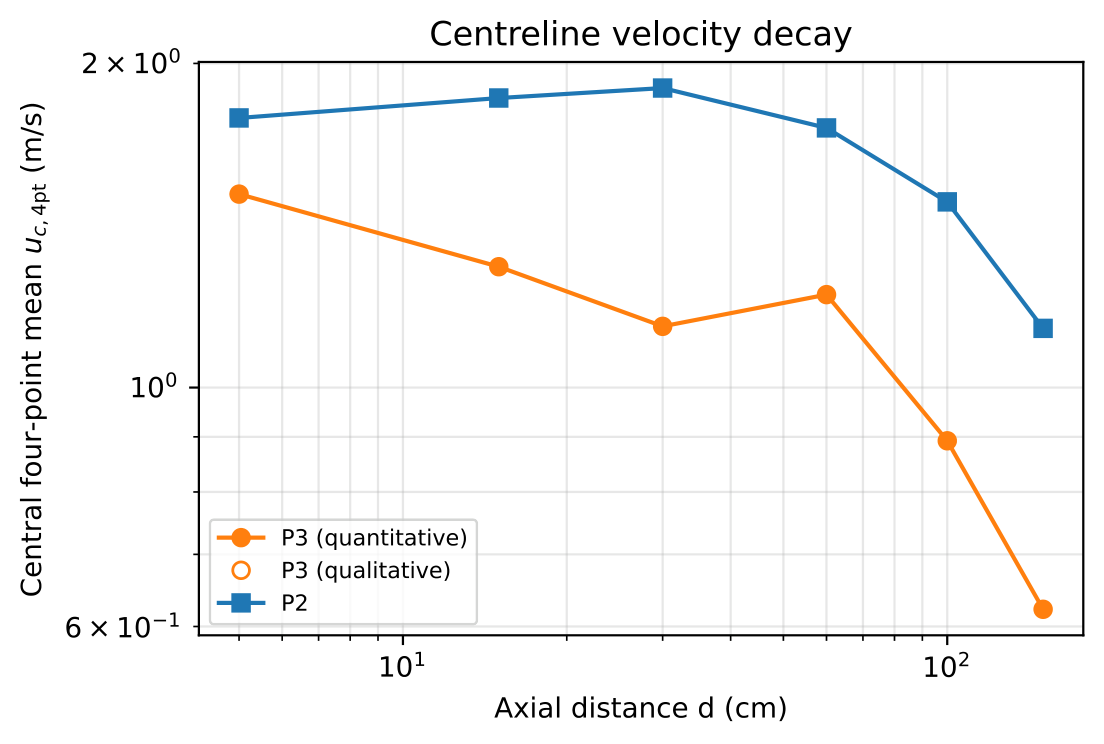
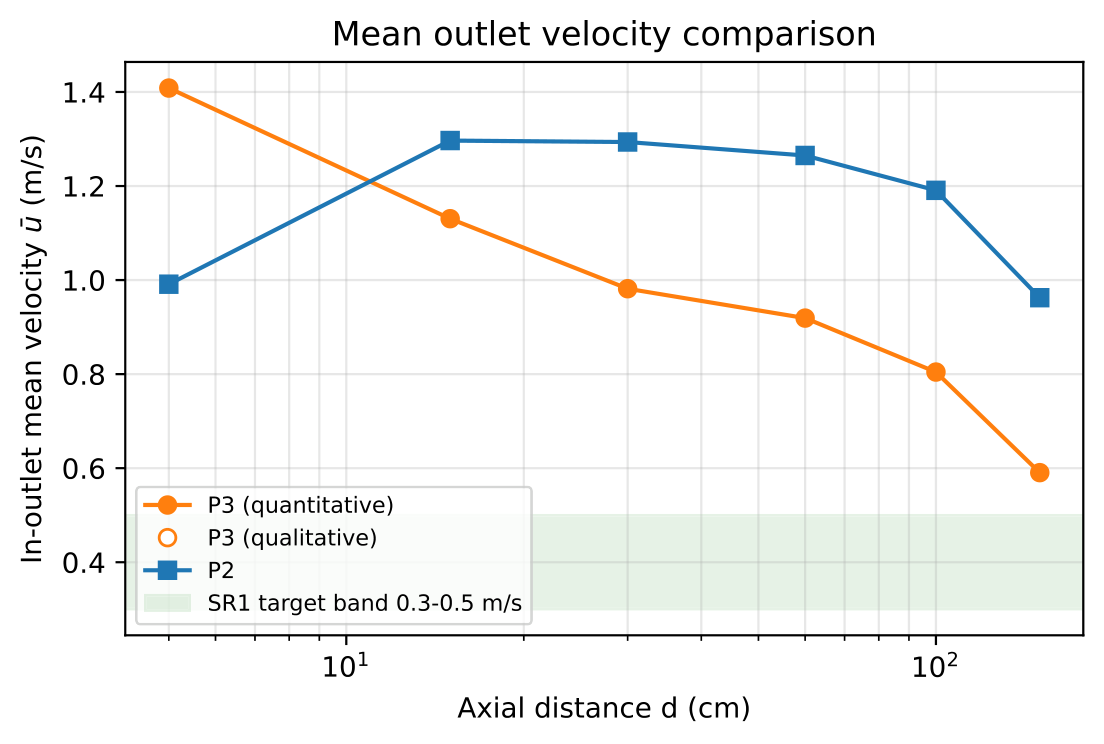
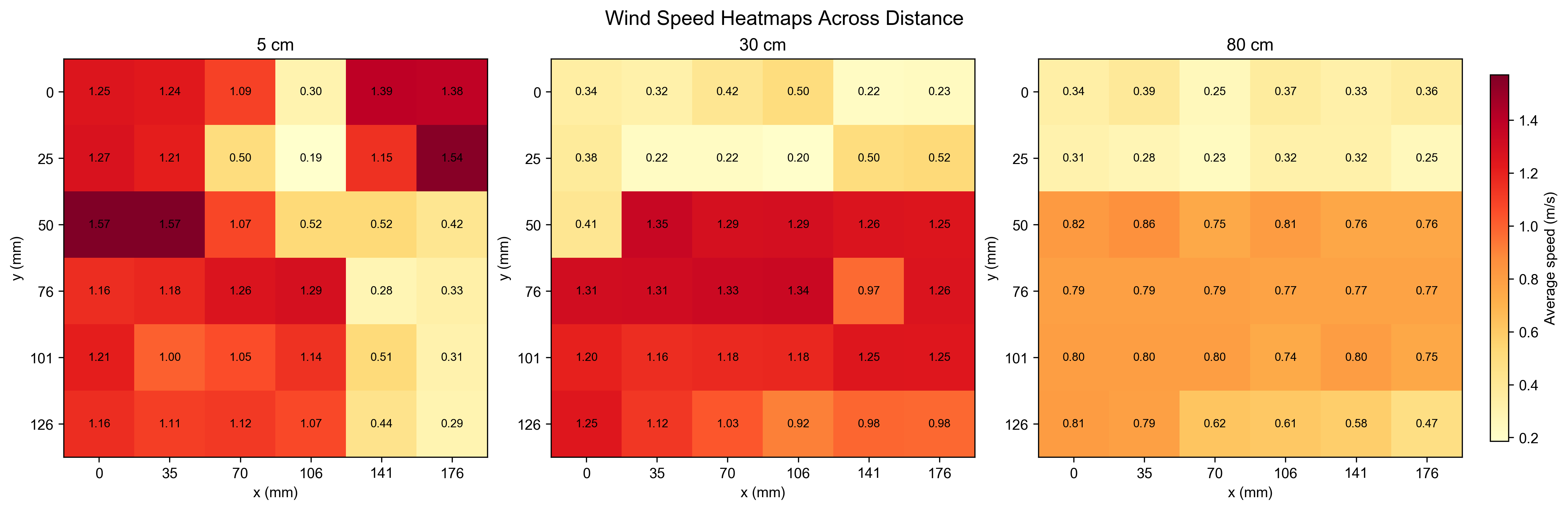
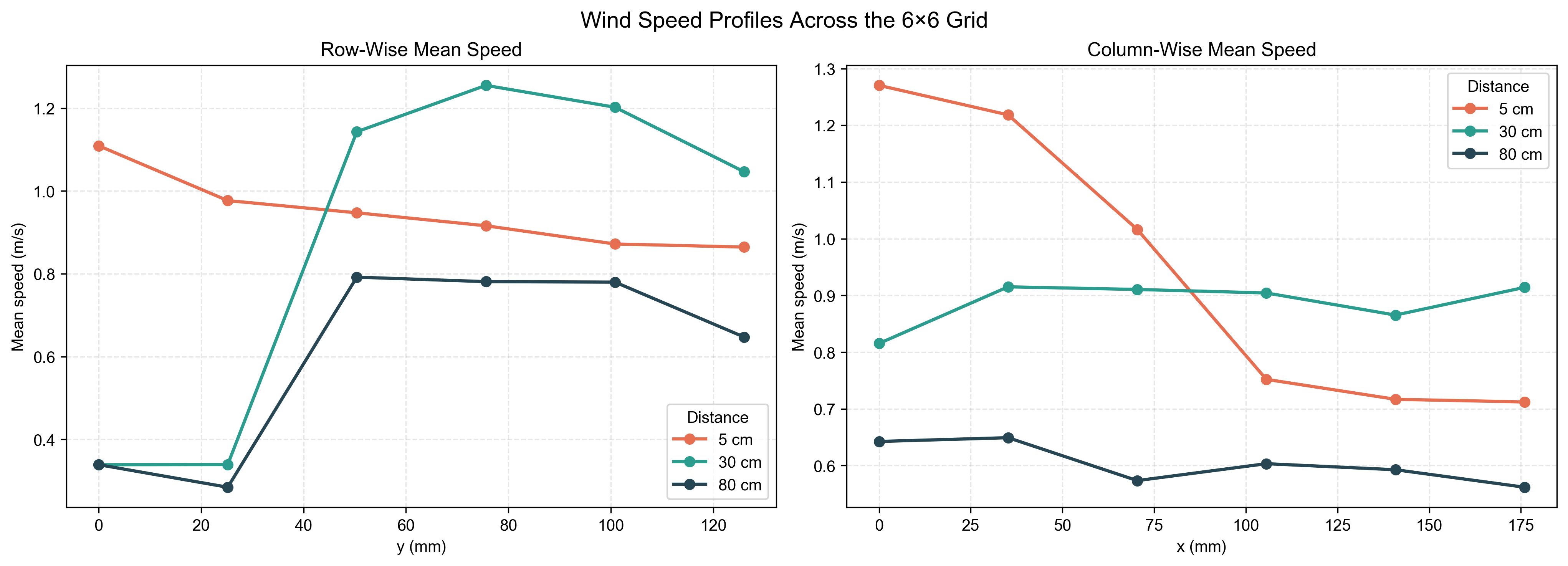
P2’s fast 2.51 m/s jet over the central ∼60% becomes a calm 1.71 m/s spread across 100% of the outlet. Momentum redistributed, not added — same total airflow, just spread evenly instead of piled into the middle.
All from physical measurements. Velocity: testo 405i (8×8 grid). Particles: Fluke 985. Noise: Extech 407732.
CV: 0.92 → 0.07 at d=5 cm
11,500 → ~8 at d=30 cm edge
≥0.3 m/s at d=5, 15, 30 cm
P3: 5 met, 1 partial, 2 unmet — the two gaps share one fix
| Distance | P2 CV | P3 CV | Reduction | P2 Protected | P3 Protected |
|---|---|---|---|---|---|
| 5 cm | 0.92 | 0.07 | 13.1× | 58% | 100% |
| 15 cm | 0.56 | 0.09 | 6.2× | 78% | 100% |
| 30 cm | 0.51 | 0.11 | 4.6× | 92% | 100% |
| 60 cm | 0.38 | 0.25 | 1.5× | 94% | 100% |
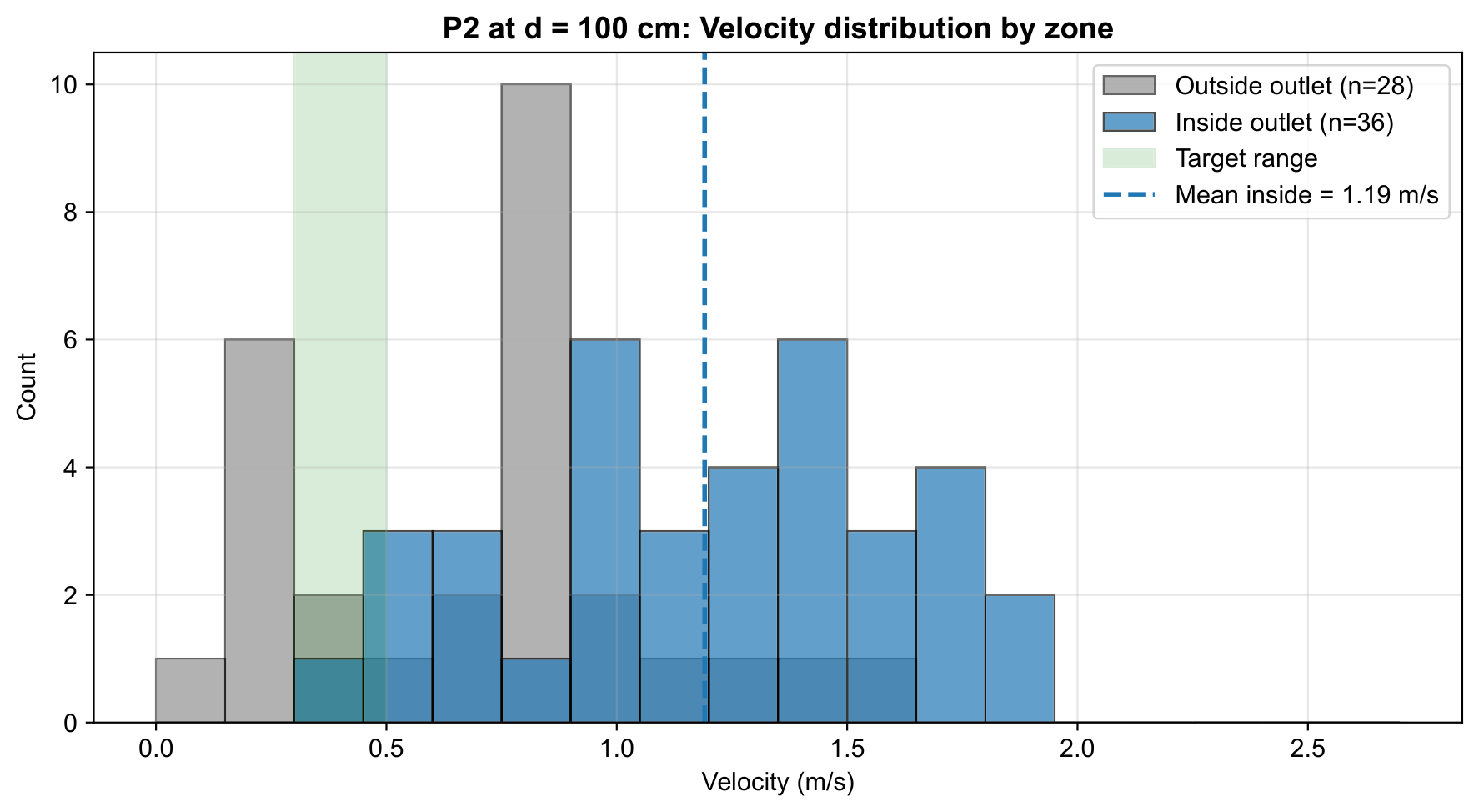
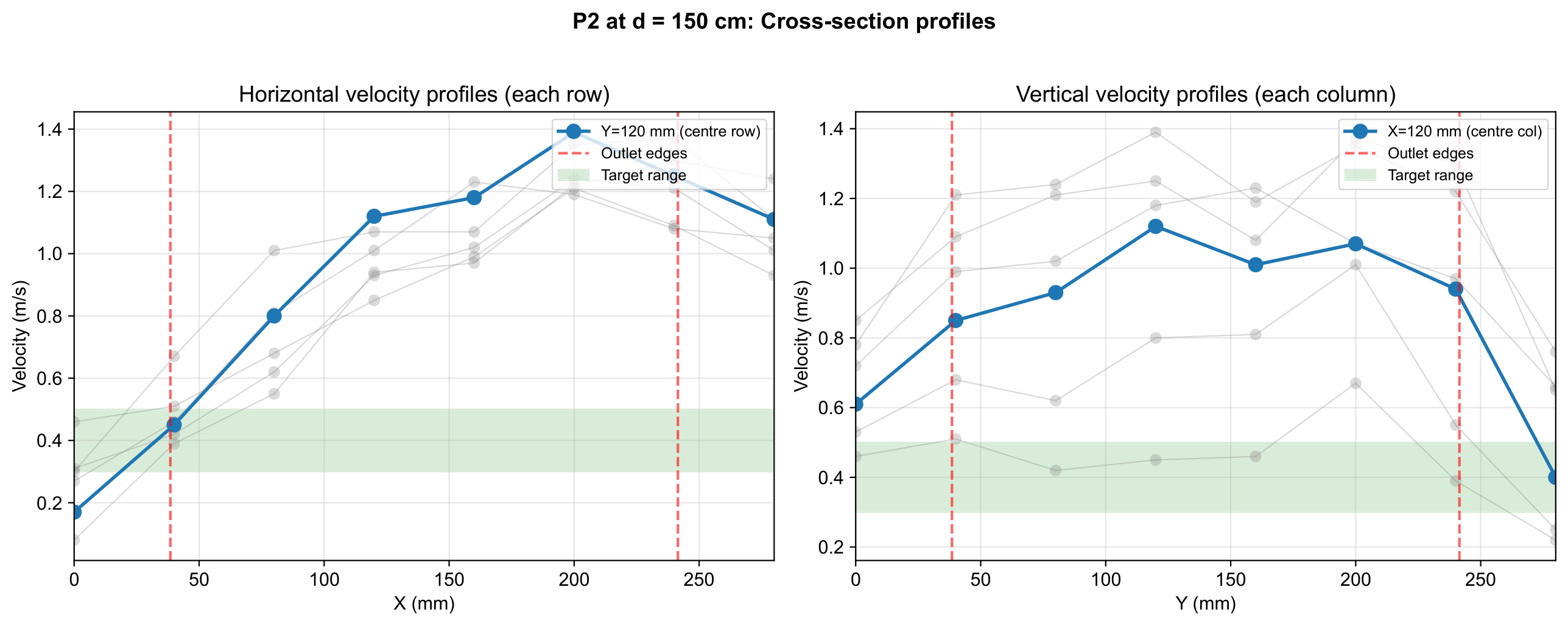
| 100 cm | 0.35 | 0.20 | 1.8× | 100% | 97% |
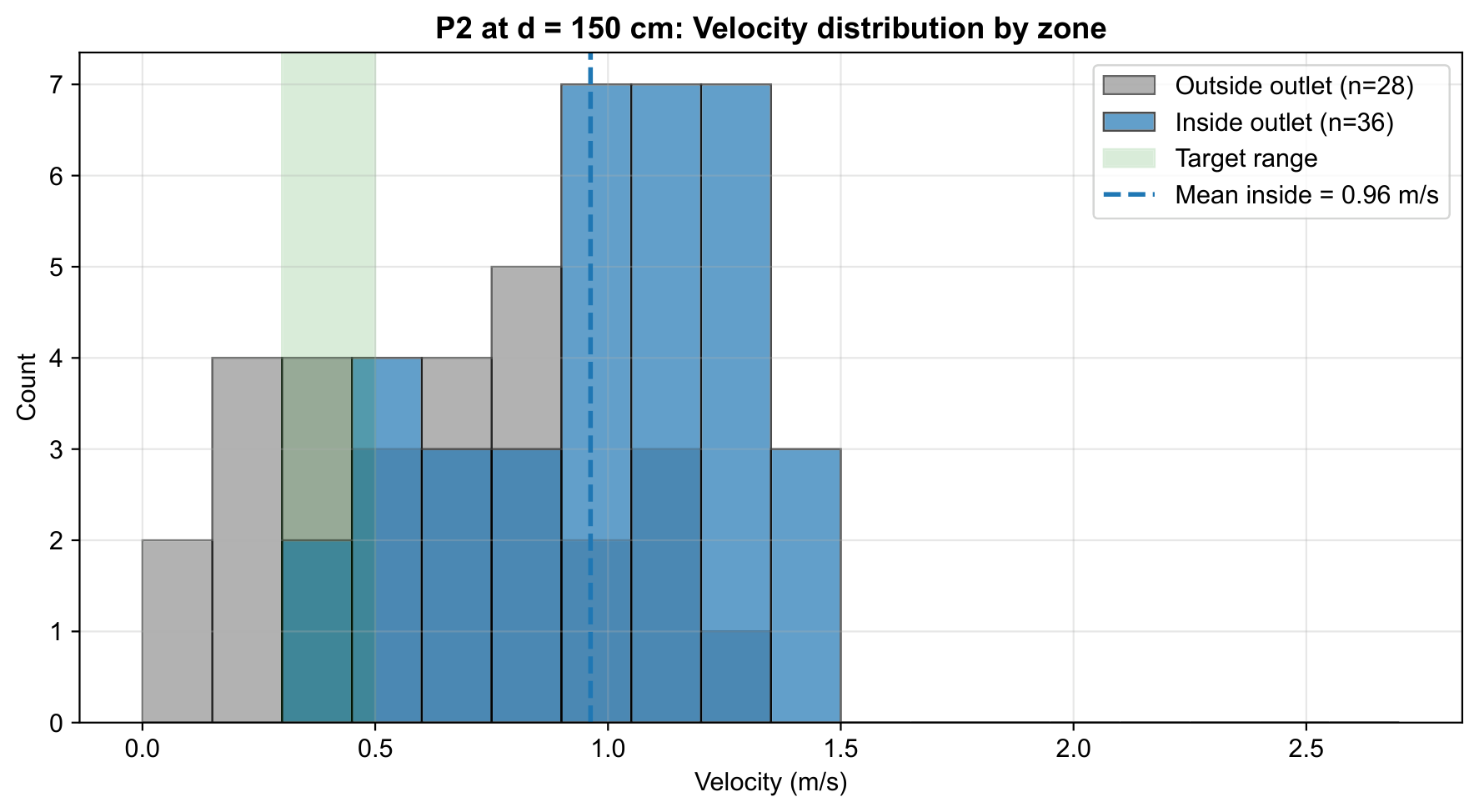
| 150 cm | 0.31 | 0.21 | 1.5× | 100% | 89% |
Near-field (d≤30 cm) primary evidence; far-field (dimmed) supporting trend. SR4 target: CV<0.25.


| SR | Requirement | P1 | P2 | P3 |
|---|---|---|---|---|
| SR1 | Outlet mean 0.3–0.5 m/s at d=30 cm | × | × | × |
| SR2 | ≈ ISO Class 5 at centre, d≤15 cm | ◔ | ◔ | ◔ |
| SR3 | H14 installed (EN 1822-4) | × | ✓ | ✓ |
| SR4 | Spatial CV < 0.25 | × | × | ✓ |
| SR5 | Footprint ≤ 0.5 m² | ✓ | ✓ | ✓ |
| SR6 | Mass ≤ 15 kg | ✓ | ✓ | ✓ |
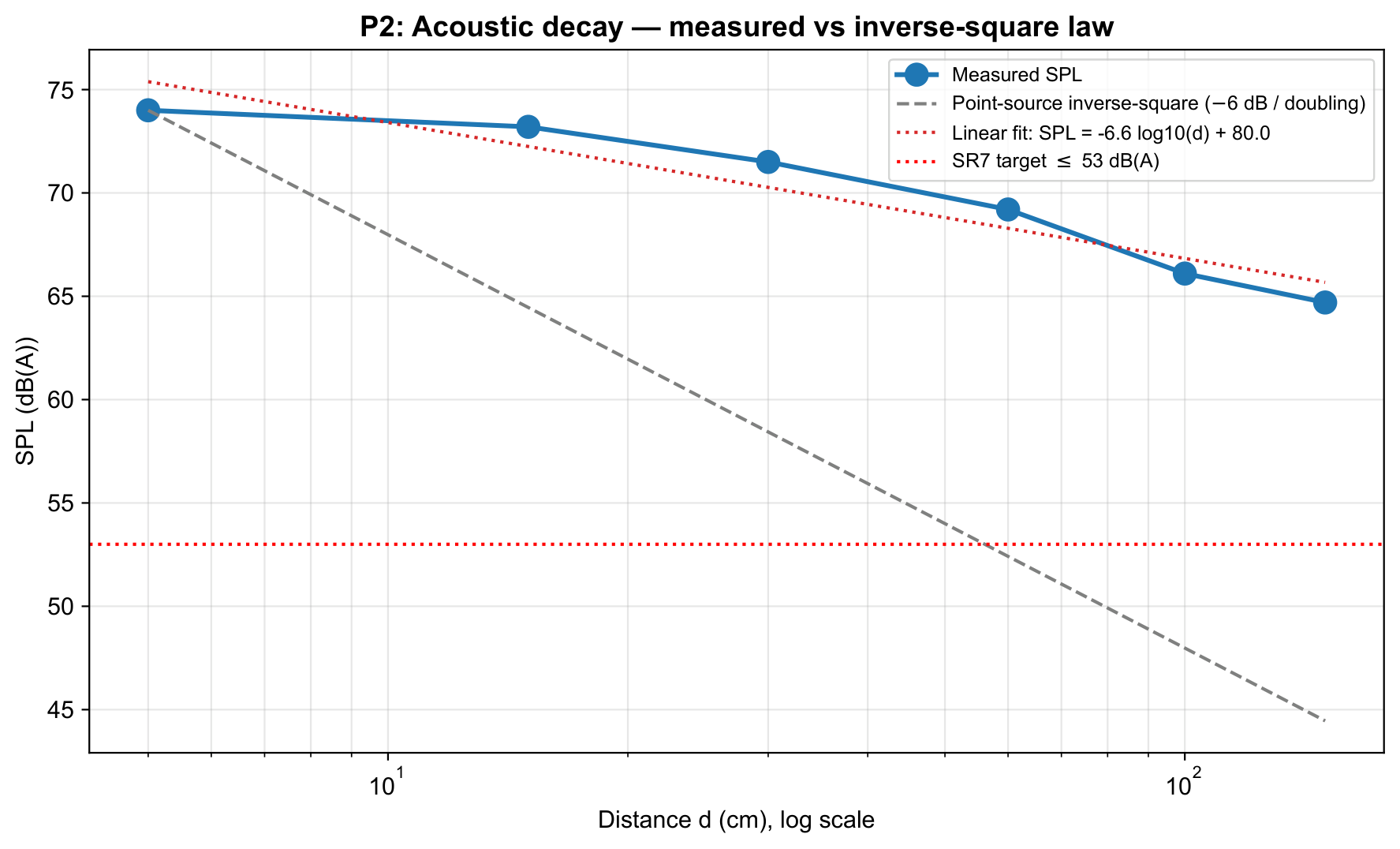
| SR7 | SPL ≤ 53 dB(A) at 1 m | × | × | × |
| SR8 | Filter accessible, hand tools | ✓ | ✓ | ✓ |
P3: 5 met, 1 partial, 2 not met. SR1+SR7 share one root cause — fix: higher β (18–25%) + 30–40% slower fan.
Same fan, same filter, same ducting, same outlet. The only variable: in-cavity flow conditioning.


| Location | P2 | P3 |
|---|---|---|
| d=5 cm, centre | 6 | 0 |
| d=5 cm, edge mean | 62 | ~3 |
| d=15 cm, centre | 26 | 0 |
| d=30 cm, edge | 11,500 | ~8 |
| Room ambient | 27,113 | |
P3 met 5 of 8 success requirements. Three remain open — stated plainly here, with their shared root cause and the validation still needed. This is a research prototype, not a certified device.
Uniform across the field, but roughly double the target speed — the fan is over-driven for the current baffle.
Driven by the same over-speed fan plus flow noise through the baffle — not a separate problem.
Particle counts are encouraging (∼8 vs 27,113 ambient), but single samples can’t support a formal ISO Class 5 claim.
SR1 and SR7 are the same problem. Both come from running the fan harder than the design needs. The fix is to raise the perforated baffle’s open-area ratio β from 12.4% to ~18–25% and slow the fan by 30–40%. That drops the 30 cm velocity into the 0.3–0.5 m/s band and cuts the noise, while the two-stage conditioner keeps the uniformity gain that P3 already proved.
Next validation (P3.1). Re-run the 8×8 velocity grid at 30 cm and the 1 m sound level at the lower fan speed; repeat particle counts at the centre and four edges across 5/15/30 cm with ≥3 samples per point and ambient logged each time. This directly retests the two open requirements without redesigning the device.
All components student-designed in Fusion 360. Audited project spend: £1,901.81.
ebm-papst D3G146-HQ13-34
EC centrifugal blower
Mass: 3.9 kg
Cost: £369.60
SPCB Bespoke H14
EN 1822-4, 99.995% at MPPS
110 mm depth, 3.0 kg
Cost: £323.96
3D-printed PLA
Designed in Fusion 360
Mass: 3.5 kg
Bio-based thermoplastic
240×240×3 mm
365 holes, 5 mm ø
β = 12.4%
Added mass: 0.05 kg
203 × 203 mm
Hex honeycomb diffuser
Footprint: 0.14 m²
10.4 kg
Single-person portable
Tool-free filter access
£1,901.81 total
Hot-wire anemometer
8×8 grid, 6 distances
Particle counter (≥0.3 µm)
2.83 L sample volume
Sound-level meter
dB(A), 5–150 cm range
Everything needed to verify, rebuild, or continue the project. Items marked Available are linked here; the rest are in the MECH0073 supplementary submission.
40-page report: PDS, SR1–SR8 verification, uncertainty, CFD cross-validation.
In supplementary submissionFull component list, suppliers and audited spend (£1,901.81).
Available — download .xlsxAs-built photos, device pan, and the calibrated instrument set.
Available — on this pageAll 7 P3 parts as STL (rotate live or download), plus the P2 Fusion 360 source.
P3 3D viewer · P2 .f3dAnemometer / particle / noise logs and the Python analysis pipeline.
In supplementary submissionThe custom web app used to log velocity / particle / noise on the measurement grid, with CSV & JSON export.
Available — open toolFilter-change steps, HEPA disposal and material recycling plan.
Planned for handoverUCL Mechanical Engineering Summer Session 2026.
UCL Mechanical Engineering • MECH0073 • 2025–2026
Supervisor: Prof. Ian Eames • Module Lead: Dr Andrea Grech La Rosa
UCL Department of Mechanical Engineering • London, UK